Switzerland advances search for a second long-range air-defense system
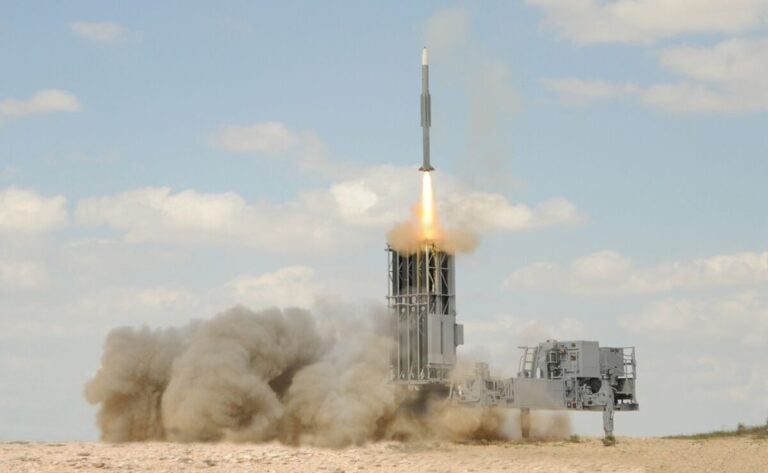
Switzerland has narrowed its competition for a second future long-range ground-based air-defense system to two contenders: Israel Aerospace Industries’ Barak MX and the SAMP/T NG system developed by the Eurosam joint venture of MBDA and Thales.
The Swiss Federal Council instructed the defense department to continue evaluating the two systems. The decision comes as Switzerland maintains plans to acquire the U.S.-made Patriot system, whose delivery has been delayed by several years.
For Bern, the choice is not solely a technical procurement decision. The government said its assessment considers technical, military and weapons-related factors alongside foreign-policy and economic-policy considerations. That combination reflects the strategic role the system would play in a broader national air-defense architecture.
A layered defense requirement
Swiss officials say they need to strengthen the country’s defenses in response to a deteriorating geopolitical environment. In the government’s view, long-range ground-to-air systems are essential, particularly when combined with short- and medium-range defenses and fighter aircraft.
Such a layered approach is intended to enable Switzerland to counter threats at greater distances, including ballistic missiles. It also reflects the need for adequate ammunition supplies, a factor that has become increasingly important as air-defense interceptors have been consumed rapidly in conflicts elsewhere.
The Federal Council said a second long-range system would expand the area that can be protected and reduce reliance on a single supplier and supply chain. That resilience argument has become central to defense planning across Europe, where governments are reassessing the risks of concentrated production capacity, constrained stocks and long delivery timelines.
From four manufacturers to two finalists
Switzerland said in May that it would examine long-range air-defense offerings from manufacturers in Germany, France, Israel and South Korea. At the time, it indicated a preference for a system produced in Europe after Patriot deliveries were pushed back.
The process has now left two candidates. SAMP/T NG represents the French-Italian option. The system is produced through Eurosam, the MBDA-Thales joint venture, and forms part of Europe’s effort to field and sustain an alternative family of high-end air-defense capabilities.
Barak MX is the Israeli option, developed by Israel Aerospace Industries. Switzerland’s continued evaluation of the system suggests that the government is weighing more than geographic origin as it considers military capability, supply arrangements and wider national interests.
The government has not announced a final selection or a procurement timetable in the material available. Its direction to continue evaluations leaves both systems in contention.
Patriot remains part of the plan
The shortlisting does not replace Switzerland’s planned Patriot acquisition. Rather, the country is continuing discussions with the United States over Patriot deliveries while seeking another long-range system that can meet its requirements.
According to the Swiss government, the United States is prioritizing Patriot deliveries to countries that have transferred their own systems to Ukraine. In that setting, Switzerland has concluded that simply abandoning the Patriot purchase without a replacement would not be viable.
The result is a procurement strategy built around diversification: retain the Patriot plan, pursue a second system, and avoid depending on one supplier or one supply chain for a capability considered vital to national defense.
Why the decision matters
Air defense is often discussed as a single category, but the Swiss decision underscores how different layers serve different missions. Short-range systems address nearer and lower-altitude threats. Medium-range systems broaden coverage. Long-range systems are designed to engage threats at distance and contribute to defense against more demanding targets, including ballistic missiles.
Building that structure requires more than choosing a launcher or interceptor. Governments must account for integration with aircraft and other sensors, availability of munitions, training, sustainment, industrial relationships and political reliability over many years. Switzerland’s stated use of foreign- and economic-policy criteria shows that it is treating those issues as part of the core procurement calculation.
The decision also illustrates the pressure that global events can put on defense delivery schedules. Delays to Patriot did not remove Switzerland’s requirement for long-range coverage. Instead, they appear to have increased the urgency of evaluating alternatives that could complement the U.S. system and strengthen supply security.
What comes next
Swiss defense officials will continue assessing Barak MX and SAMP/T NG. The eventual decision will determine which system becomes the country’s second long-range air-defense capability alongside Patriot.
Until then, the key signal is strategic rather than final: Switzerland is moving toward a more diversified, layered air-defense posture. By retaining Patriot while evaluating an additional system, it is seeking protection against both military threats and the procurement risks that arise when a critical capability depends on a single supplier.
This article is based on reporting by Defense News. Read the original article.
Originally published on defensenews.com