New task order expands SpaceX’s role in military launch
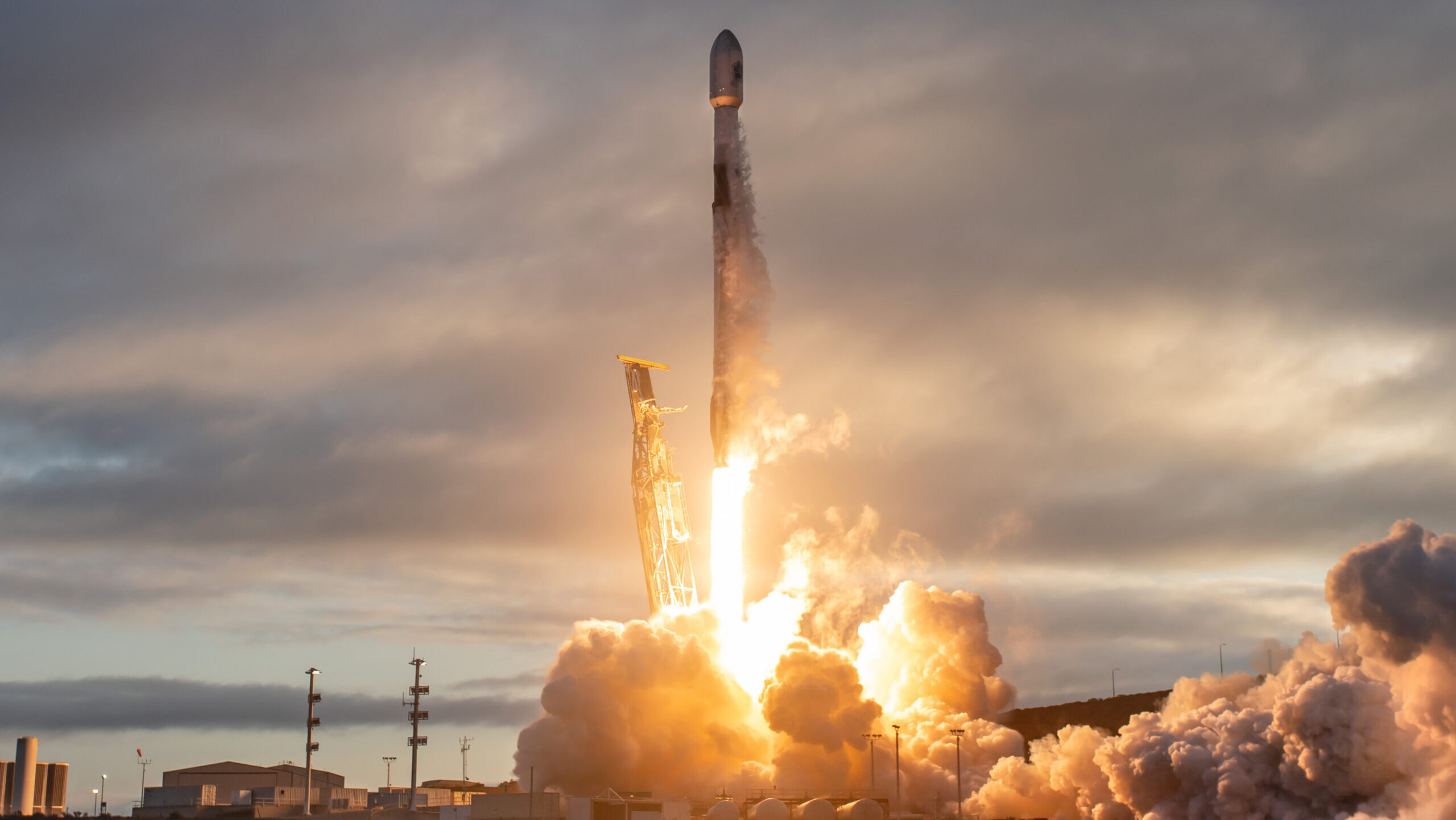
The U.S. Space Force has awarded SpaceX two additional national security launch task orders worth $1.6 billion, extending the company’s position inside one of the Pentagon’s most important space procurement pipelines. The award, announced by Space Systems Command, covers two launches scheduled for 2027 under the National Security Space Launch, or NSSL, Phase 3 Lane 1 program.
At a headline level, the announcement is about two launches. At an institutional level, it says more. The task order is the first awarded since the Space Force raised the ceiling on the Lane 1 contract vehicle by $11.4 billion on July 17, pushing the total to $17 billion. That expansion reflects a much larger planned launch cadence between 2025 and 2034, with the number of Lane 1 launches increasing from 60 to 170.
That shift matters because it signals a sustained rise in demand for military and intelligence-adjacent launch services, especially for missions the Space Force classifies as commercial-style rather than its most demanding “must-go” payloads. Lane 1 is built for easier-to-reach orbits, lighter payloads, and missions that do not require the heaviest-end assurance profile. But a program labeled lower-risk should not be mistaken for lower-importance. It is becoming a major channel for quickly fielding operational constellations.
What the launches are for
The two new 2027 launches support the service’s Space Based Sensing and Targeting portfolio acquisition executive office, often shortened to SBST. Space Systems Command did not disclose how many satellites will fly on the missions or specify the satellite types in the public announcement described in the source text.
That lack of detail is notable but not unusual in national security space. Even so, the source provides a strong hint about the broader mission area. One of the SBST office’s key responsibilities is managing the Space-Based Airborne Moving Target Indicator program, known as SB-AMTI. The planned satellites are intended to complement the Air Force’s E-7 Wedgetail, the aircraft selected to replace the aging E-3 Sentry airborne warning and control system.
The rationale behind that move is strategic rather than incremental. The Department of the Air Force sees a shift toward space-based sensing as necessary because potential adversaries field increasingly sophisticated anti-access and area-denial systems. In plain terms, high-value surveillance aircraft operating in contested environments may be more exposed than in prior decades. Space systems offer a different path for tracking and targeting support when airborne platforms face greater risk.
Why the contract matters beyond SpaceX
The award underscores how military space architecture is evolving from a smaller set of exquisite assets toward a broader mix of proliferated systems, recurring launches, and faster procurement cycles. The Lane 1 vehicle is designed as an indefinite delivery, indefinite quantity structure, meaning pre-qualified vendors compete for individual launch task orders. That arrangement gives the Space Force a mechanism to buy launches repeatedly without rebuilding the procurement from scratch each time.
For the market, the message is clear: the government expects much more launch activity in this category than previously planned. Raising the contract ceiling to $17 billion and nearly tripling the launch count suggests the service is preparing for a larger operational tempo, not just a paperwork adjustment. The Pentagon’s interest is no longer limited to prestige missions or occasional replenishment. It is building out a more routine industrial base for space access.
SpaceX is well positioned in that environment because Falcon 9 already flies at high cadence and is commonly used for missions carrying multiple satellites to low Earth orbit. The source notes that Falcon 9 often carries numerous spacecraft on a single mission, though the exact manifest for these launches remains undisclosed. That flexibility can be valuable when the government wants to place multiple systems into orbit efficiently.

The SB-AMTI backdrop
The new launch orders also connect to a much larger sensing effort already underway. On May 29, the SBST portfolio announced a separate $4.16 billion task order to SpaceX to accelerate the SB-AMTI program. That earlier award indicates these two launch orders are not isolated events. They are part of a broader campaign to move sensing and targeting capabilities into orbit at greater speed.
SB-AMTI is significant because it points to an effort to replicate or complement some of the functions historically associated with airborne surveillance and battle management, but from space. The source text does not provide the full technical architecture, and any deeper claims would go beyond the supplied material. Still, the program’s strategic purpose is visible enough: improve the military’s ability to detect, track, and support targeting against moving threats while reducing reliance on vulnerable aircraft in contested theaters.
That is a meaningful doctrinal development. Space-based sensing has long been discussed as an answer to survivability challenges, but procurement announcements like this are where strategy starts turning into deployed hardware.

Competition, secrecy, and scale
Although SpaceX is the winner here, the broader system is still competitive on paper. The source says SpaceX is one of nine firms selected to compete for orders under a related Other Transaction Authority vehicle connected to the sensing effort. The government has declined to disclose the overall value of that contract or identify the other companies involved.
That combination of competition and opacity is typical of military space acquisition, especially where operational sensing, targeting, and resilience are involved. Publicly, outsiders get contract values, rough mission windows, and selected program names. They do not get the full architecture, constellation size, or detailed payload descriptions. For analysts, that means the most useful signal often comes not from what is specified, but from what scale and cadence imply.
Here, the implication is substantial. The Pentagon is not merely experimenting with new space-based sensing concepts. It is funding launches, increasing contract ceilings, and building acquisition pathways that support repeated deployment. Those are the markers of institutional commitment.
A larger military space transition
The two-launch, $1.6 billion award should therefore be read as part of a larger transition in U.S. military space posture. Launch is becoming a recurring operational enabler for sensor networks, not just a rare event attached to singular spacecraft. The Space Force’s procurement language also suggests a more segmented launch market, where different classes of missions are steered into distinct lanes with different risk and performance assumptions.
For SpaceX, the win reinforces its status as a dominant launch provider in the U.S. national security ecosystem. For the Space Force, it adds momentum to a strategy that links proliferated launch access with space-based tracking and targeting capabilities. And for competitors, it is another reminder that winning future market share will require more than capacity alone. Providers will need to fit into a procurement system increasingly shaped by cadence, responsiveness, and integration with evolving military architectures.
The immediate facts are simple: two launches, $1.6 billion, and a 2027 schedule. The bigger story is that the United States is putting more money and structure behind a military space model built around sustained deployment of sensing and targeting assets. This contract is one more concrete step in that direction.
This article is based on reporting by Breaking Defense. Read the original article.

Originally published on breakingdefense.com