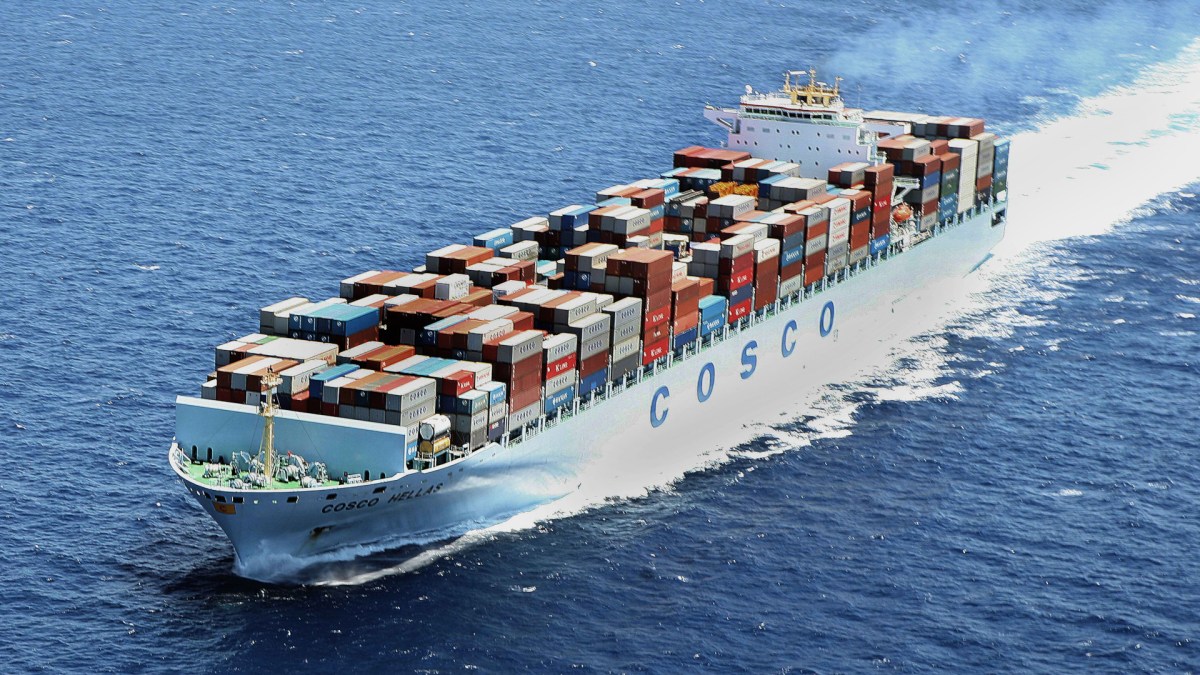
Commercial shipping is back in focus as a security vector
A new allegation involving China’s state-run shipping giant COSCO is sharpening long-running concerns about the overlap between civilian infrastructure and national intelligence collection. According to a Reuters report cited by The War Zone on September 1, 2026, U.S. officials say COSCO has used concealed equipment aboard commercial cargo ships to gather signals intelligence near the coastlines of North America, Europe, and Asia.
If the assessment is accurate, it would underscore a strategic advantage unique to China: a massive commercial fleet with routine access to global ports and sea lanes that could double as a distributed intelligence architecture. The claim is also notable because it does not describe an isolated espionage platform or a specialized naval auxiliary. It points instead to ordinary-looking merchant vessels blending into everyday trade flows.
The Chinese Embassy in Washington reportedly denied the accusations. But even without public technical evidence, the allegation fits a broader pattern that Western governments and analysts have tracked for years: the use of nominally civilian systems, companies, and networks in support of state military and intelligence goals.
What officials say the ships were doing
According to the reporting summarized by The War Zone, two unnamed officials in President Donald Trump’s administration told Reuters that COSCO has maintained a decades-long intelligence-collection partnership with Beijing. The arrangement, they said, allows the company’s ships to collect communications signals from vessels and aircraft operating across multiple theaters.
The equipment in question was described as sophisticated signals intelligence hardware rather than standard communications gear. One official said the systems were intended to help China gather information related to military communications technologies and encryption developments.
That distinction matters. Modern commercial ships already carry extensive antennas, communications systems, and electronic infrastructure for navigation, cargo operations, safety, and logistics. A covert collection suite could potentially be hidden within that broader electronic footprint, making detection substantially harder than it would be on a purpose-built spy ship.
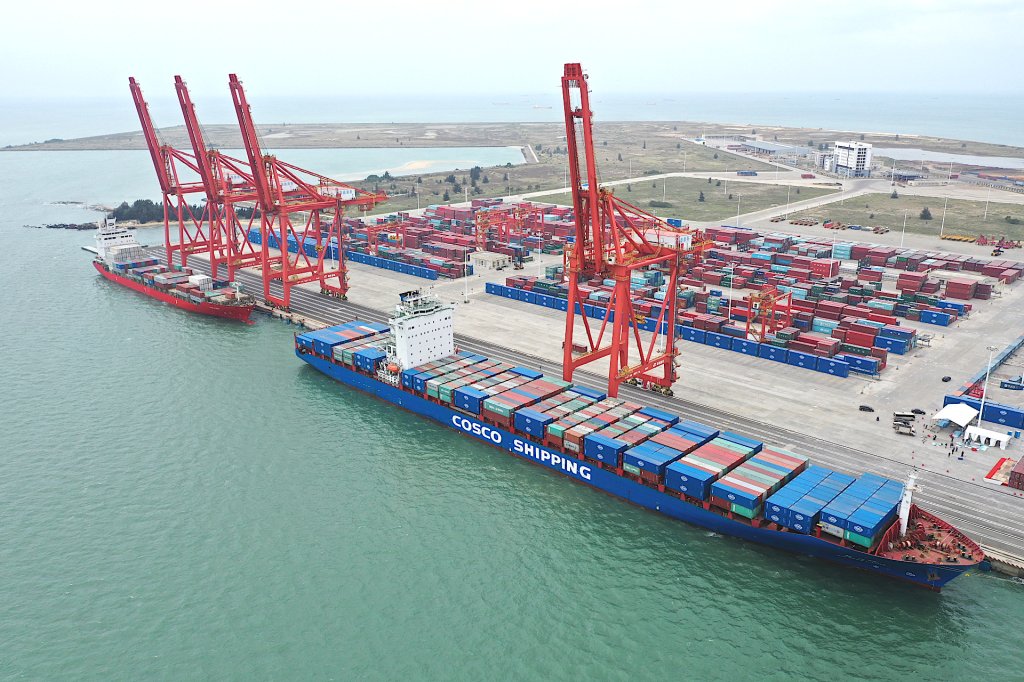
The report does not specify what types of signals were intercepted, how the systems were installed, or whether the platforms were optimized for collection in port approaches, major transit routes, or broader offshore areas. It also does not provide independent public documentation of specific vessels or collection episodes. What it does establish is the U.S. government’s apparent assessment that the activity was both deliberate and longstanding.
Why merchant ships are attractive intelligence assets
From an operational standpoint, commercial cargo vessels offer several advantages. They travel constantly, visit sensitive regions without drawing unusual attention, and can linger near chokepoints, approaches, and harbors as part of legitimate trade activity. They also create a low-visibility collection opportunity against naval movements, commercial shipping, coastal infrastructure, and airborne traffic.
Unlike military collection platforms, merchant ships are not expected to look threatening. Their presence is normal. Their routes are commercially explainable. Their communications masts and deck equipment rarely attract public scrutiny. In a world where navies and intelligence agencies are under pressure to stretch surveillance capacity across large geographic areas, embedding collection in civilian traffic would be an efficient way to widen coverage.
That is especially relevant in an era of strategic competition where communications intelligence can reveal far more than message content alone. Collection can support mapping of networks, identification of emitters, analysis of operational patterns, and study of changing encryption or transmission practices. Even partial or intermittent access can be valuable when aggregated over time.
The legal and strategic backdrop
The War Zone notes that China’s National Intelligence Law, enacted in 2017, includes provisions requiring organizations and citizens to support state intelligence work when asked. That legal backdrop is frequently cited by critics who argue that the line between public, private, and state-directed activity in China is fundamentally different from the separation assumed in many Western systems.
That does not prove every Chinese company acts as an intelligence arm. But it does mean foreign governments often assess Chinese commercial entities through a different risk lens, particularly when those firms operate at global scale in telecommunications, logistics, energy, critical minerals, or transportation infrastructure.
COSCO is a consequential example because of its reach. A state-run shipping company with worldwide operations occupies a privileged position in the global economy. It moves goods, accesses ports, interfaces with customs and terminal systems, and maintains a persistent maritime presence across regions important to both commerce and defense planning. That footprint alone makes it strategically significant even before espionage allegations enter the picture.
Implications for maritime security and alliance policy
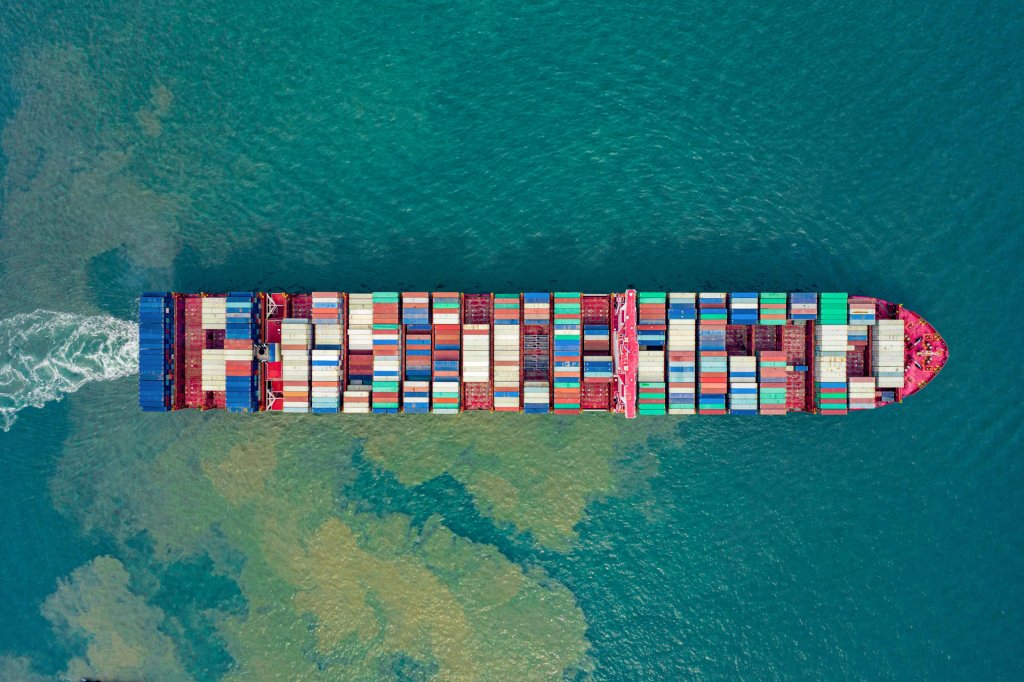
If governments conclude the allegations are credible, the policy consequences could extend well beyond COSCO itself. Port authorities, navies, customs agencies, and allied intelligence services may face pressure to increase inspection standards, review foreign commercial access, and more closely track patterns of vessel behavior around sensitive infrastructure.
The issue also complicates the traditional distinction between peacetime commerce and military surveillance. A merchant ship entering a port may still be a merchant ship in legal and commercial terms, yet also be treated as a potential sensor platform in intelligence terms. That dual-use concern is already familiar in sectors such as telecommunications and satellite services. Maritime logistics may be moving into the same category.
For allied governments, the challenge is practical as much as political. Global trade depends on high-volume, high-speed movement through ports that cannot realistically treat every vessel as a hostile platform. Screening regimes that become too intrusive risk slowing commerce. Screening that remains too permissive risks leaving intelligence gaps unaddressed.
A familiar pattern in a new domain
The broader significance of the report lies in what it says about modern competition between states. Strategic advantage increasingly comes from systems that blur categories: civilian tools with military value, commercial networks with intelligence utility, and infrastructure that supports both economic growth and geopolitical reach.
That is why the COSCO allegation resonates even without full public evidence. It aligns with a world in which data collection is decentralized, concealment is easier, and plausible deniability is built into everyday global activity. Merchant fleets do not need to look like spy fleets to be useful for espionage.
Whether additional proof emerges or not, the accusation is likely to reinforce a trend already underway in Washington and allied capitals: treating logistics networks not just as economic arteries, but as contested terrain in the intelligence competition between major powers.
This article is based on reporting by twz.com. Read the original article.

Originally published on twz.com