European drone cooperation moves deeper into production
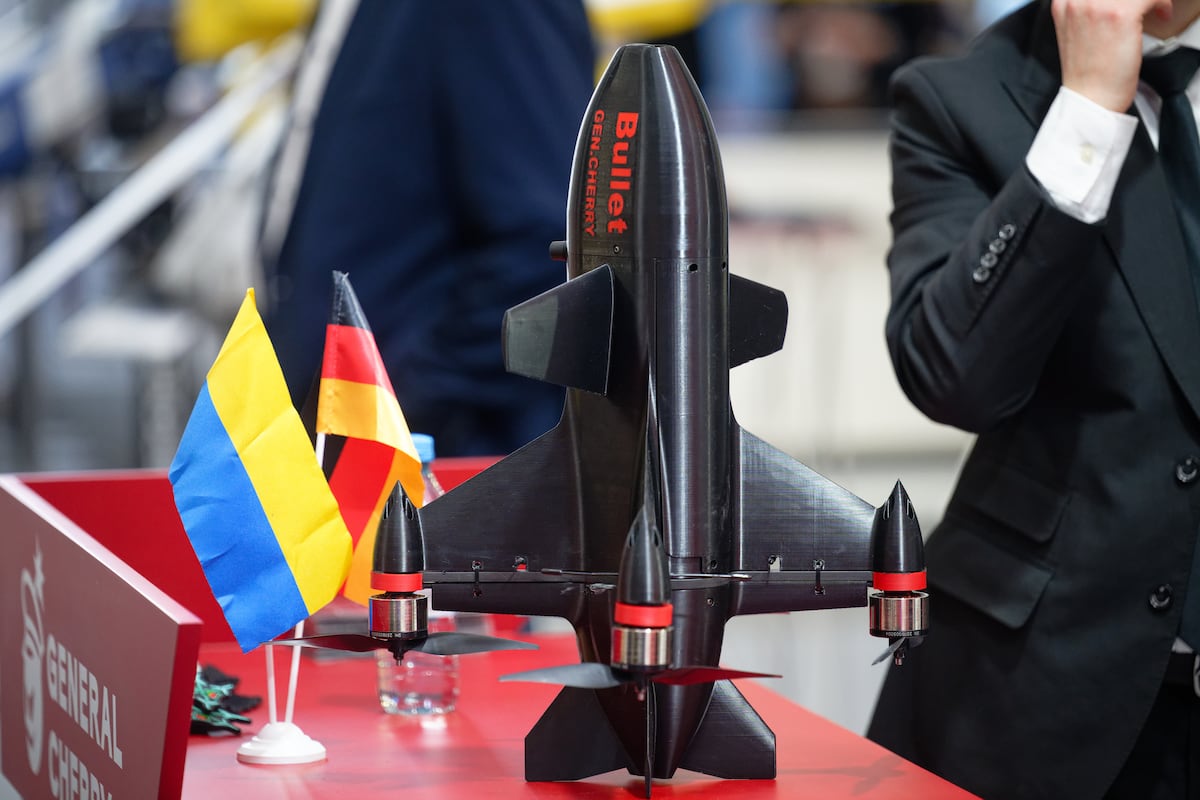
Finnish defense company Patria and Ukrainian drone manufacturer General Cherry have signed a letter of intent to jointly develop unmanned systems and start drone production in Finland. The agreement, announced Sunday, is aimed at combining Ukrainian battlefield experience in small drones with Patria’s defense-industry scale and experience in unmanned technologies.
On its face, the deal is a company-level partnership. In a broader sense, it reflects a larger shift underway in Europe’s defense sector: Ukrainian drone expertise is no longer being treated only as wartime improvisation, but increasingly as a source of industrial capability that Western European firms want to integrate into future force planning.
What the two companies said
According to the source text, the companies intend to work together on unmanned vehicles tailored to Western European defense requirements. Patria said the partnership would reinforce its expertise in unmanned defense systems and drone development, while also supporting plans to begin manufacturing in Finland.
Mikko Leino, Patria’s executive vice president for defense and weapon systems, described unmanned defense systems as central to the future of defense. That language matters because it places drones not at the edge of procurement strategy, but near its center. For a major European defense company to frame the partnership that way suggests unmanned systems are now seen as core infrastructure for future military capability.
General Cherry co-founder Stanislav Hryshyn said the company’s battlefield experience, combined with Patria’s technological capabilities, could help drive deeper changes in European and global security architecture. The claim is ambitious, but it aligns with the broader trend identified in the source: Europe is moving to absorb hard-earned Ukrainian drone know-how into its own production base.
Why Finland matters
The decision to start production in Finland is strategically significant. It means the partnership is not limited to design collaboration or technology sharing. It points toward a manufacturing footprint inside the European Union’s northern defense-industrial space, closer to regional customers and likely better aligned with Western procurement systems, certification processes, and supply-chain planning.
For Finland, domestic drone production also fits a wider European push for defense readiness and local manufacturing depth. The war in Ukraine has exposed how quickly stockpiles can be depleted and how difficult it can be to scale production during a crisis. Establishing manufacturing capacity in Finland could help reduce dependence on distant supply chains while broadening Europe’s access to combat-tested drone designs.
The source does not provide a production timeline or specify whether Patria will build existing General Cherry models, new co-developed systems, or both. Patria also did not immediately answer questions on those points. That leaves the operational scope unresolved, but the industrial direction is clear: the partners want a route from Ukrainian experience to Finnish production lines.
Ukraine’s battlefield lessons are becoming exportable
General Cherry produces multiple types of drones, including one-way first-person-view strike drones and interceptor drones. The company says its systems are used by more than 200 military units across the Armed Forces of Ukraine. That level of operational use gives the company a practical credibility that many emerging drone firms lack.
In the current European defense environment, battlefield proof is commercially and strategically valuable. Governments are under pressure to buy systems that can be fielded quickly, adapted rapidly, and informed by real combat conditions rather than long theoretical development cycles. Ukrainian manufacturers have spent years iterating under precisely those pressures.
That is one reason partnerships like this are gaining traction. They offer a way to combine Ukraine’s accelerated innovation cycle with the compliance, manufacturing, and contracting capabilities of established European defense firms. If successful, that model could shorten the path from prototype to deployable capacity.
Part of a wider European pattern
The Patria-General Cherry announcement is not happening in isolation. The source text explicitly places it within a broader wave of European defense-industrial cooperation with Ukrainian drone makers. It notes that German Chancellor Friedrich Merz announced plans in December to produce various Ukrainian drones in Germany. It also says Ukrainian UAV companies including Skyeton and Ukrspecsystems are partnering or investing in the United Kingdom to produce drones there.
Taken together, those moves suggest that European governments and industry are converging on a common conclusion: drone capability has become too important to leave fragmented, slow-moving, or heavily import-dependent. Instead, they are building channels that localize production while preserving access to the design knowledge developed in Ukraine’s war effort.
This is a meaningful change in defense industrial policy. Europe has long supported joint programs in aircraft, missiles, and land systems, but small and medium unmanned systems are increasingly being treated with the same seriousness. The difference is tempo. Drone development cycles are faster, unit costs can be lower, and battlefield lessons accumulate quickly, which can make traditional procurement frameworks look sluggish.
What this could mean for Western Europe
If the Finnish production plan moves ahead, Western European militaries could gain improved access to systems shaped by current operational demands. That does not automatically guarantee large-scale procurement, but it does improve the odds that regional buyers can source drones from within Europe while drawing on Ukrainian design and combat experience.
The partnership could also intensify competition among European drone suppliers. Established firms now have an incentive to pair manufacturing scale with highly adaptable unmanned platforms. Smaller drone specialists, meanwhile, may seek similar partnerships to avoid being sidelined as governments consolidate purchasing around domestic or regionally produced systems.
There is also a political dimension. Expanding industrial cooperation with Ukrainian firms helps bind Ukraine more tightly into Europe’s security economy, even before any larger institutional questions are settled. In that sense, production agreements can serve both procurement goals and strategic alignment.

A small announcement with larger implications
Many letters of intent never become major production programs. The unanswered questions around timing, volumes, and product scope mean this agreement still has execution risk. But even at this preliminary stage, the announcement is notable because it captures where the European defense market is moving.
Drone capability is becoming central to planning, not supplementary. Ukrainian firms are becoming partners in Europe’s industrial base, not just wartime suppliers. And countries such as Finland are positioning themselves as production nodes in a rapidly expanding unmanned systems ecosystem.
The Patria-General Cherry deal therefore matters beyond the immediate companies involved. It is another signal that Europe’s response to the drone age is shifting from observation to industrialization, with local production and battlefield-tested design increasingly brought together under one roof.
This article is based on reporting by Defense News. Read the original article.
Originally published on defensenews.com