Japan’s readiness problem is a decision-timing problem
Japan’s military planners face a constraint that is less visible than aircraft inventories, missile ranges or defense budgets: time. A new analysis in War on the Rocks argues that the crucial issue in a regional crisis may be whether Japanese and U.S. authorities can make, interpret and implement decisions quickly enough to disperse forces before an adversary’s first missile salvo.
The article centers on a 2022 wargame in which bilateral planners confronted a familiar operational requirement. U.S. forces would need to move away from concentrated bases before an attack. Participants initially believed Japan could grant emergency access to private land only after an attack had begun. If that interpretation were correct, the legal trigger for access would arrive after the moment when access was most useful.
One participant identified a different reading of the relevant law: an earlier cabinet option that other experts had overlooked. The episode does not settle what Tokyo would choose in a future crisis. It does, however, illustrate the importance of separating what the law permits from what political leaders may ultimately decide to authorize.
Procedures can become operational constraints
Military contingency planning often treats legal, bureaucratic and political assumptions as fixed facts. The analysis warns that this can turn untested interpretations into hard constraints. In practice, an assumption about approval timing can shape where forces are based, whether they can disperse, and how much warning time commanders need before an attack.
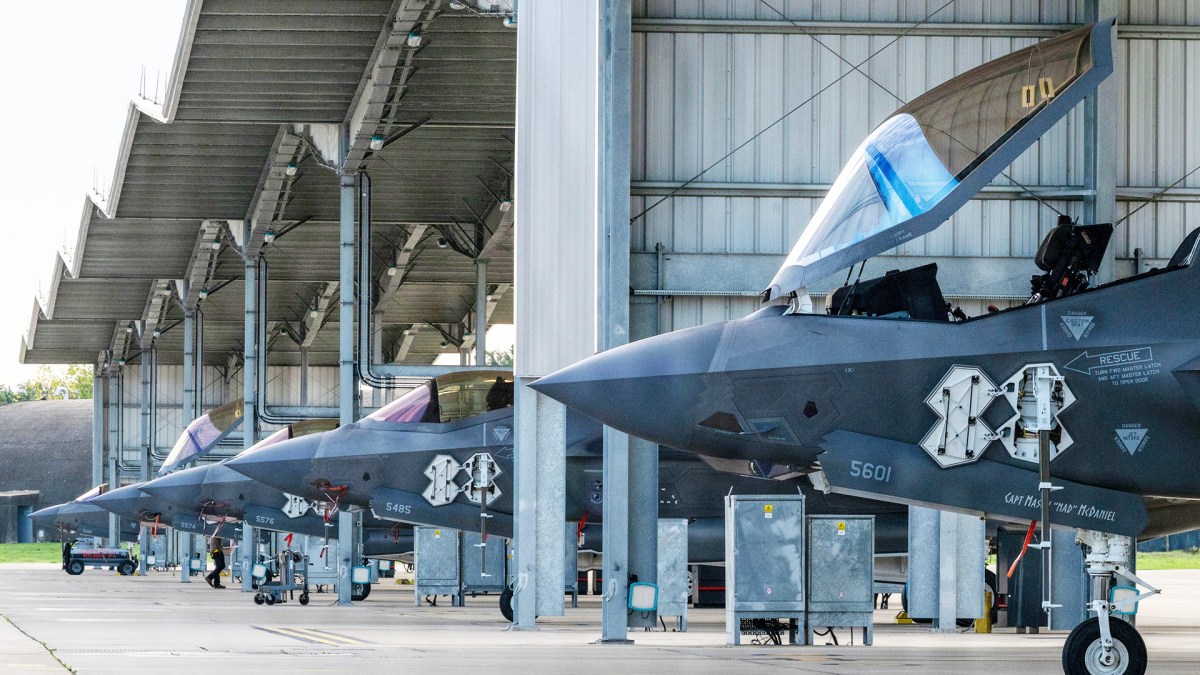
For Japan and the United States, that matters because the article frames force dispersal as a central requirement for operating under the threat of missile attack. Concentrated forces at known bases can be vulnerable. But dispersal depends on more than transport plans and available sites. It also depends on access authorities, the timing of cabinet decisions, coordination across civilian and military institutions, and a shared understanding of what can be done before a crisis crosses a formal threshold.
The author’s argument is not that planners can predict the Japanese cabinet’s actions in a future emergency. Rather, planners can examine the practical pathways available under current law and policy. That work can identify procedural room to maneuver without assuming that political approval is automatic.

Why wargames need to challenge assumptions
The 2022 exercise described in the article provides a broader lesson for alliance planning. Wargames are often used to test military concepts, force posture and logistics. They can also be used to test the assumptions that surround those concepts. A rule thought to prohibit action may be interpreted differently; an approval process thought to take days may have a faster path; or a necessary coordination step may be missing altogether.
According to the analysis, the useful question is not simply whether a constraint exists. It is when that constraint becomes binding, who can act before it does, and whether the timeline leaves leaders with meaningful choices. That is especially relevant when an operational requirement has to be completed before the event that formally triggers emergency authorities.
The author recommends a more deliberate cycle of scrutiny. Wargames should challenge assumed constraints, exercises should normalize workable solutions, and policymakers should examine the timelines for both decisions and implementation. This would require participation from civilian institutions as well as military organizations, because legal authority and political judgment cannot be separated from operational planning.
Preserving options without precommitting leaders
The analysis presents procedural flexibility as a way to preserve options, not as a substitute for democratic decision-making. Japanese leaders would still determine what the country authorizes in a crisis. U.S. planners would still have to account for political uncertainty. But identifying lawful and administratively viable options before a crisis could reduce the risk that uncertainty is mistaken for impossibility.
That distinction is important in the article’s discussion of Japan, China and Taiwan. The author argues that a conflict over Taiwan would affect Japanese sovereignty and that Japan’s security is tied to the positioning of Japanese and U.S. forces. Yet the piece cautions against two opposite conclusions: that Japan is inherently too rigid to act, or that Washington can do little except wait for Tokyo to decide at the last possible moment.
Instead, it calls for allied planners to make time itself a subject of planning. The relevant timelines include not only an adversary’s attack sequence, but also the time needed to interpret authorities, obtain approvals, secure land access, move personnel and equipment, and coordinate between governments.
The strategic value of administrative preparedness
Hardware remains essential to deterrence and defense. The argument here is that readiness also depends on whether institutions can translate available capabilities into action quickly enough. A legal option that exists only on paper, or an access arrangement that is discovered during a crisis, may provide little practical value.
For the U.S.-Japan alliance, the proposed approach is therefore a form of preparedness that can be pursued before political decisions are required. It does not predict a crisis or dictate a response. It tests assumptions, clarifies timelines and exposes where a delay could close off operational choices.
In that sense, the article’s central warning is straightforward: the most consequential constraint may not be a missing platform or an absent authority. It may be the interval between recognizing a need and being able to act on it.
This article is based on reporting by warontherocks.com. Read the original article.
Originally published on warontherocks.com