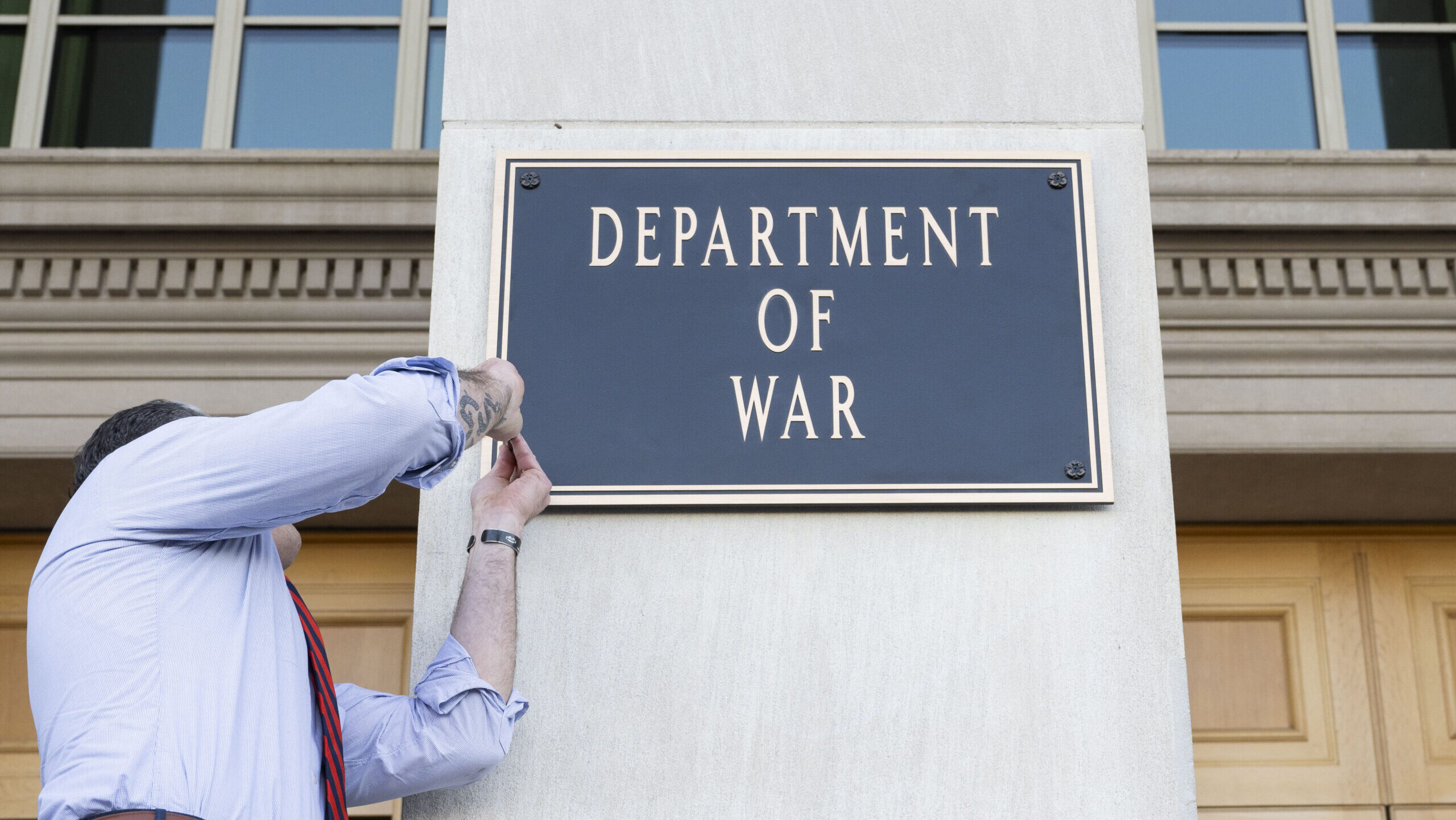
House appropriators move $1 trillion defense bill forward
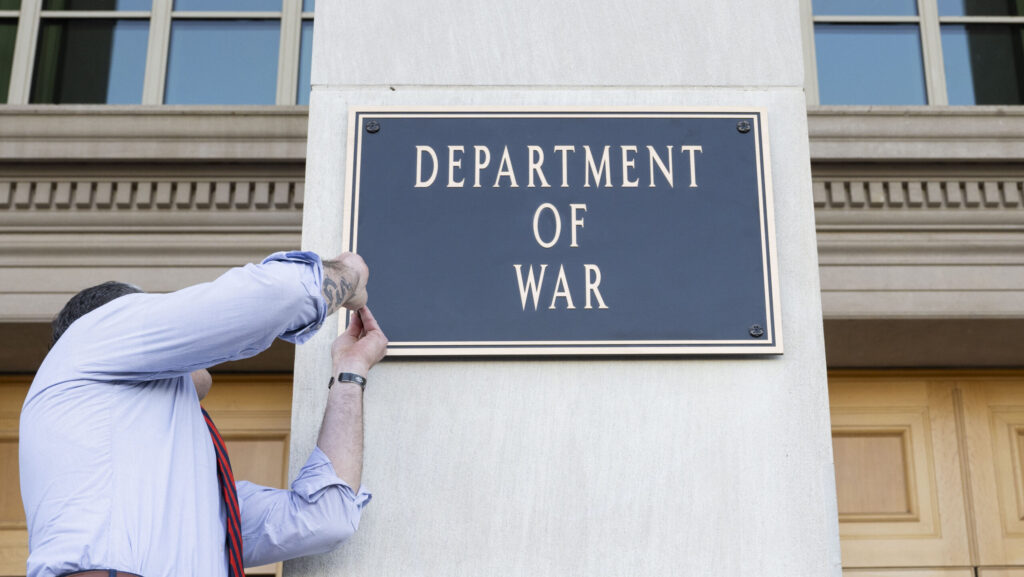
The House Appropriations Committee has advanced a fiscal 2027 defense spending bill totaling $1 trillion, pairing the enormous topline with a politically charged amendment to rename the Department of Defense as the "Department of War." The measure passed on a 34-27 party-line vote after a lengthy markup session in which Republicans turned back every Democratic amendment that failed to fit within a narrow bipartisan lane.
The combination of spending scale and symbolism makes the bill notable even before it reaches the full House. On the budget side, the legislation underscores how central defense remains to congressional appropriations politics. On the messaging side, the renaming provision injects an overt ideological fight into a spending bill that would normally revolve around force structure, procurement, readiness, and oversight. Together, those choices signal that the defense debate in Washington is now as much about posture and identity as it is about dollars.
According to the source material, only two amendments survived the nearly eight-hour markup. One was a bipartisan manager’s package of relatively uncontroversial provisions. The other was a Republican-backed package of culture-war amendments offered by Rep. Ken Calvert of California, chair of the defense appropriations subcommittee. That package included the provision to change the department’s name.
A symbolic rename with real political consequences
Supporters of the change argued that the older title better captures the Pentagon’s full mission. Rep. Ben Cline of Virginia said the current name emphasizes only one dimension of what the institution is meant to do. In that view, restoring the historic framing is not merely branding. It is an attempt to foreground deterrence, combat preparation, and the ability to wage war when required.
Opponents countered that the proposal is expensive, unnecessary, and strategically tone-deaf. Rep. Betty McCollum of Minnesota, the top Democrat on the defense appropriations subpanel, argued during markup that the change would carry a measurable cost. She cited a Congressional Budget Office estimate placing the expense of implementing the rename across the department at up to $125 million.
That argument matters because it shifts the debate from rhetoric to tradeoffs. Even in a trillion-dollar bill, opponents can plausibly ask whether tens or hundreds of millions should be spent on signage, systems, paperwork, and institutional updates instead of operational needs. McCollum’s question, as reflected in the source text, was straightforward: what programs or activities would be squeezed if leadership had to absorb that cost?
The amendment package containing the rename passed 32-25, showing that the proposal had strong enough support within the committee’s Republican majority to survive, but not enough to erase its partisan character. That split points to the likely future of the provision. It may energize supporters who see it as a statement of military seriousness, but it also gives critics a concrete example of symbolic politics driving appropriations language.

Democratic amendments fail across the board
The markup also highlighted how little room the minority had to shape the bill. Democrats offered amendments on spending priorities and accountability, but none survived. That outcome is important because it means the committee product moved forward largely on majority terms, preserving controversial provisions while blocking efforts to redirect or constrain funding.
One of the clearest examples involved advanced procurement funding for a proposed Trump-class battleship. McCollum sought to eliminate $1 billion for the program, arguing that Congress should not provide that money before the Navy has completed the ship’s concept design. Her objection was framed as a basic fiscal-governance issue: lawmakers should not commit substantial sums to a platform whose design work is still incomplete.
That amendment failed in a voice vote after limited debate, according to the source text. Even without a full design in place, the committee’s Republican majority was unwilling to strip the funding. The episode offers a window into a broader pattern in defense budgeting, where momentum behind a program can outrun the normal expectations of sequencing and validation. Critics see that as a recipe for waste or cost growth. Supporters often argue it is necessary to keep industrial and strategic timelines moving.
Another failed amendment came from Rep. Rosa DeLauro of Connecticut, the ranking Democrat on the full committee. While the extracted source text cuts off before describing the measure in full, it is clear that the proposal did not succeed, reinforcing the larger story of a markup dominated by party-line discipline.
What the committee vote signals next
The bill’s advancement does not settle its final form, but it does shape the next phase of the debate. Appropriations measures frequently evolve as they move through the House, face Senate scrutiny, and are reconciled with broader spending negotiations. Still, committee action matters because it establishes the opening position and shows where the political energy lies.
In this case, that opening position is unusually aggressive. A trillion-dollar defense bill already guarantees attention. Adding the "Department of War" language ensures that debate over the measure will extend beyond topline funding and into the meaning of U.S. military policy itself. Advocates will portray the rename as a restoration of clarity and resolve. Opponents will cast it as a costly and inflammatory gesture with little operational benefit.
The procurement fights embedded in the markup may prove just as consequential over time. The clash over the Trump-class battleship funding reflects an enduring tension in defense budgeting: how early Congress should commit money to ambitious programs, and how much evidence lawmakers should demand before doing so. Those questions tend to persist long after the symbolism of a headline amendment fades.
For now, the committee has delivered a bill that is fiscally massive, procedurally disciplined, and politically provocative. Its passage on party lines suggests that defense spending, once an area that often drew broader bipartisan consensus on core structure, is increasingly being used to carry wider ideological battles. Whether that strengthens the bill’s support among the majority or complicates its path later in the process will become clearer as the measure moves through Congress.
This article is based on reporting by Breaking Defense. Read the original article.

Originally published on breakingdefense.com