Embraer and Anduril move to add a strike role to the C-390
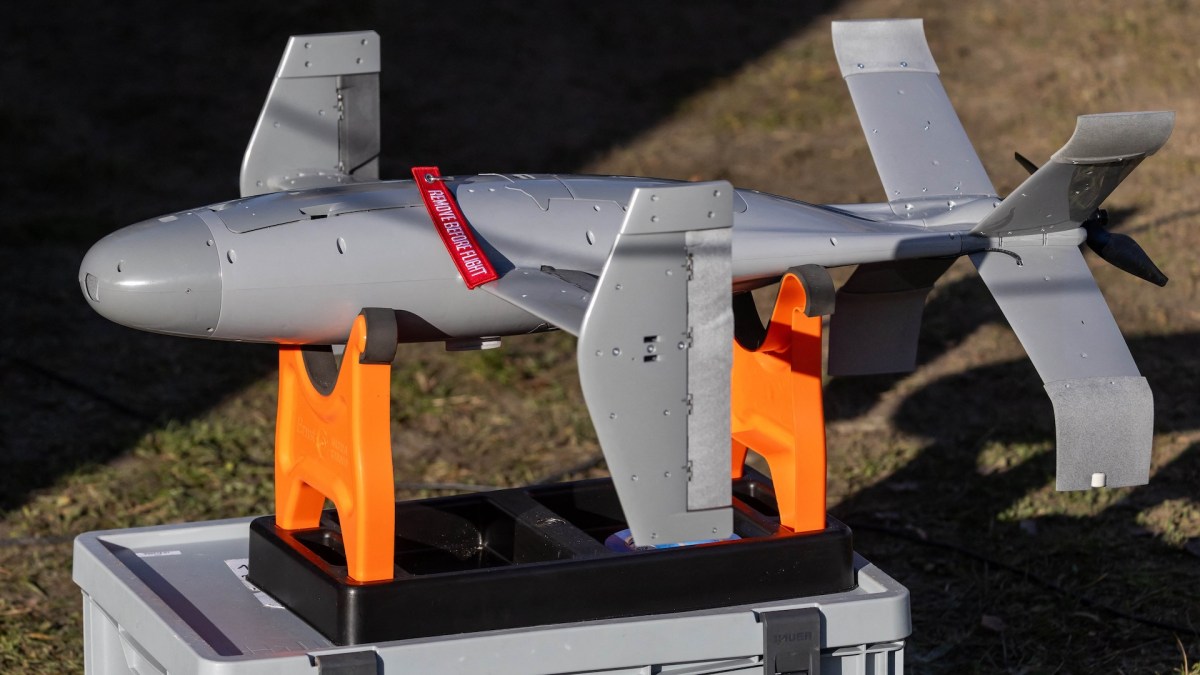
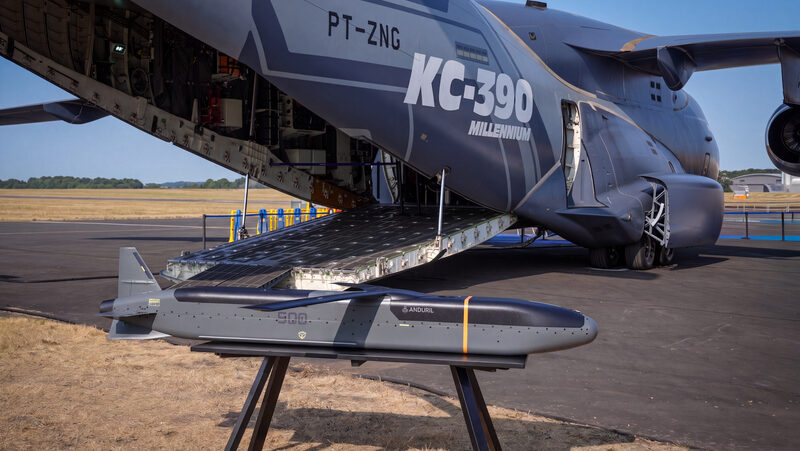
Embraer and Anduril are pursuing a new weapons concept for the C-390 Millennium that would push the aircraft beyond its current transport mission set and into offensive operations. At the Farnborough Airshow, the companies announced a memorandum of understanding to work on integrating Anduril’s palletized Barracuda-500M cruise missile onto the C-390.
If the effort moves from agreement to fielded capability, it would mark the first offensive capability added to the C-390 design, according to the supplied report. That alone makes the announcement more than a routine airshow partnership. It suggests a broader shift in how militaries may want to use medium airlifters: not only for logistics and mobility, but also as launch platforms for stand-off weapons that can be deployed rapidly and at scale.
The concept centers on a palletized weapon, meaning missiles can be loaded as cargo rather than requiring a purpose-built strike aircraft configuration. That approach has become increasingly attractive as militaries look for ways to expand missile-launch capacity without waiting for entirely new aircraft programs. A transport aircraft already in service, especially one used by multiple allied countries, can become a more flexible combat asset if it can deliver stand-off effects from inside a familiar logistics framework.
For Embraer, the significance is especially clear. The C-390 has built its profile as a transport and tanker platform. Adding an offensive option would widen its operational appeal and reposition the aircraft in competitions where buyers are looking for multi-role flexibility rather than narrowly defined mission types.
Customer demand is shaping the pitch
Embraer defense chief Bosco da Costa Jr. said the company is receiving demand for the concept from several countries, citing interest from Europe and Asia while declining to name specific customers. That detail matters because it frames the announcement as a response to market demand rather than a purely speculative technology exercise.
The current C-390 operator base already spans Brazil, Portugal, Hungary, and the Czech Republic, while additional orders have come from the Republic of Korea, the Netherlands, Austria, Uzbekistan, Sweden, the United Arab Emirates, Slovakia, and Lithuania. A palletized strike capability would therefore land in a growing international fleet rather than a niche domestic program. Even if only a subset of customers want such an option, the potential addressable market is broader than that of a single-country modification effort.
Anduril, for its part, is positioning the Barracuda family around affordability, scalability, and rapid production. In the statement cited in the report, the company described the combination as a way to give allied militaries massed stand-off effects from a proven airlift platform. That phrasing reflects a core operational concern now shaping procurement across many defense markets: how to generate more missile volume without depending solely on small fleets of high-end tactical aircraft.
The airlifter-as-arsenal concept also carries a strategic logic. In a conflict where dispersed operations, supply resilience, and munition availability matter as much as platform survivability, the ability to turn a transport aircraft into a launcher could complicate an adversary’s planning. It can also offer a more adaptable force structure for countries that may not be buying large numbers of dedicated strike aircraft.
No test date yet, but speed is part of the message
There is still a large distance between a memorandum and an operational capability. Costa declined to provide a timeline for a first test of the Barracuda-on-C-390 concept. That missing schedule is important because integration work of this kind involves not just physical carriage and release mechanics, but also mission systems, targeting workflows, software, safety certification, and operational doctrine.
Even so, Embraer emphasized that it believes the work can move quickly, pointing to Anduril’s flexible methods. The emphasis on speed fits the current defense-industrial climate, where militaries increasingly want shorter development cycles and faster adaptation of existing platforms. Rather than launching a long, bespoke program, companies are under pressure to show that they can pair mature airframes with modular payloads and bring them to market quickly.
The C-390 is particularly suited to that argument because it is already a modern transport aircraft with an expanding global footprint. If Embraer can add modular offensive capabilities while preserving the aircraft’s transport utility, the company could strengthen the platform’s value proposition for both existing and prospective customers.
A larger pattern at Farnborough
The Barracuda announcement did not happen in isolation. Embraer also used Farnborough to outline other defense developments around the C-390 and its wider portfolio. Costa said the company expects to deliver the first two C-390 aircraft for the United Arab Emirates by 2028, roughly two years after signing. Embraer also announced two C-390 training-system deals for Sweden and Austria.
Beyond the transport line, the company said it is expanding Saab Gripen production at its Brazilian facility from 16 planned aircraft to 36, with the additional jets intended for international customers rather than Brazil. Costa also outlined planned improvements to the A-29, including fifth-generation avionics, new datalinks, and a focus on the counter-uncrewed-aircraft mission. He declined to provide a test timeline for a Northrop-designed boom being developed for the KC-390 in a separate teaming effort aimed at the U.S. Air Force.
Taken together, those announcements show Embraer trying to widen the strategic relevance of its defense products. The company is not only selling aircraft; it is building a narrative around modularity, exportability, training infrastructure, and mission expansion. The proposed Barracuda integration fits that narrative neatly because it turns a successful transport into a candidate for a broader class of military operations.
For Anduril, the partnership extends its push to place autonomous and scalable munitions into more platforms and procurement channels. For Embraer, it offers a way to make the C-390 more attractive in a market increasingly focused on flexible, stand-off, and rapidly deployable capabilities. The absence of a test timeline means the effort remains at an early stage. But as a signal of where customer demand and industry strategy are converging, the agreement is meaningful now, even before the first missile is ever loaded onto a pallet.
This article is based on reporting by Breaking Defense. Read the original article.
Originally published on breakingdefense.com