A new U.S. electronic warfare aircraft just made a conspicuous appearance near one of Europe’s most sensitive frontiers
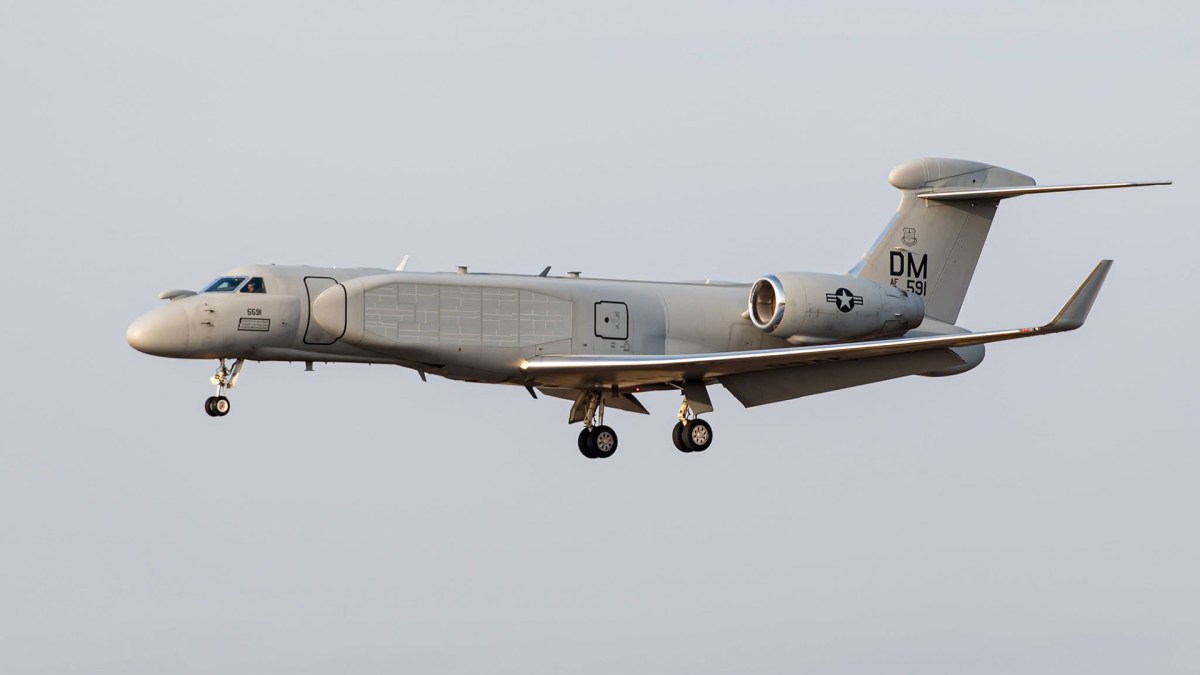
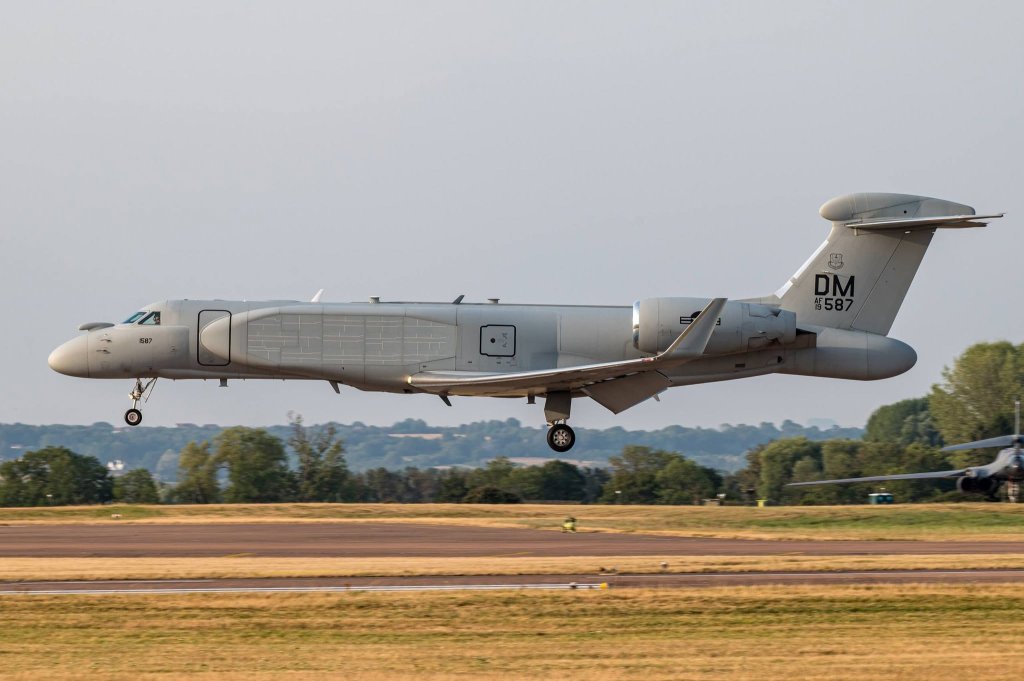
A U.S. Air Force EA-37B Compass Call electronic warfare aircraft flew near Russia’s Kaliningrad enclave on August 18 as part of what officials described as a specialized reconnaissance and electronic warfare package over the Baltic Sea. The flight drew attention not simply because of where it took place, but because the EA-37B remains a rare and closely watched platform in the U.S. inventory.
According to reporting from The War Zone, the mission involved the EA-37B operating alongside an E-3 AWACS airborne warning aircraft and an ARTEMIS II surveillance plane. A Polish military official told the outlet that the package had been deployed near the Kaliningrad Oblast, with the EA-37B relocated from Greece to Powidz in Poland for the operation.
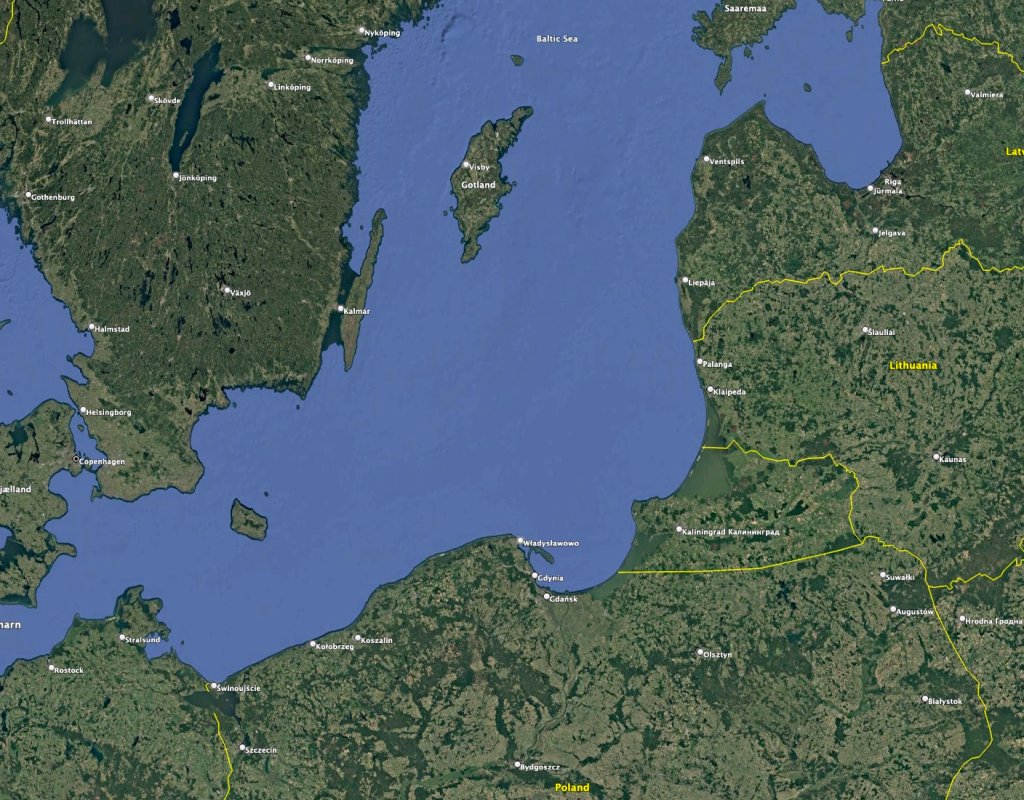
The activity unfolded against a tense regional backdrop. Kaliningrad, Russia’s heavily militarized Baltic exclave between Poland and Lithuania, has long been one of NATO’s most strategically sensitive reference points. Any unusual concentration of reconnaissance, early warning, and electronic warfare assets near the enclave is likely to be scrutinized for what it says about alliance readiness, Russian posture, and the expanding role of electromagnetic operations in deterrence.
What the mission included
The reported package combined three distinct capabilities.
- The EA-37B is designed for electronic warfare, including the disruption or suppression of adversary communications and other electromagnetic effects.
- The E-3 AWACS provides broad-area airborne surveillance and command-and-control support.
- The ARTEMIS II aircraft contributes intelligence, surveillance, and reconnaissance collection.
Taken together, that mix points to more than a routine single-aircraft patrol. It suggests a coordinated effort to collect, monitor, and potentially shape the electromagnetic environment near a strategically important Russian military outpost.
The Polish official cited by The War Zone also said Polish ground forces were arrayed near the salient, though no further detail was provided on their role, numbers, or equipment. That omission leaves the full operational picture unclear, but it indicates the activity may have involved a broader regional posture than the air package alone would suggest.

NATO called the activity routine, but the platform matters
NATO publicly downplayed the mission as part of normal defensive preparedness rather than a response to any single trigger. A NATO spokesperson told The War Zone that allies are constantly honing their defensive abilities. A separate NATO official clarified that the activity was allied in nature and controlled by the United States, not by NATO as a command structure.
That distinction is important. It means the flight should not automatically be read as a formal NATO operation, even though allied aircraft and territory were involved. It also underscores how much strategic signaling in Europe now takes place through multinational but nationally controlled missions that sit between routine reassurance and overt crisis response.
Even if characterized as routine, the inclusion of the EA-37B makes the sortie notable. The aircraft is the Air Force’s new Compass Call variant, and any deployment near Russia’s borders provides an early look at how Washington may integrate the platform into European theater operations.
Why Kaliningrad remains so sensitive
Kaliningrad occupies an outsized role in European defense planning because of its geography and military concentration. Positioned on the Baltic Sea and separated from mainland Russia, it borders NATO territory directly. Its location creates persistent anxiety around the so-called Suwalki corridor, the narrow land connection between Poland and Lithuania that links the Baltic states to the rest of the alliance.
Because of that geography, surveillance and electronic warfare activity near Kaliningrad carries both tactical and political weight. Tactically, it can help monitor Russian air-defense behavior, communications patterns, and force posture. Politically, it signals attention to a flashpoint that defense planners have long treated as vulnerable to rapid escalation.
The War Zone reported that the mission took place amid concerns about increasing Russian aggression in the region and worrying Russian naval operations in the Baltic Sea. Those concerns help explain why a specialized package would attract notice even in the absence of any declared emergency.

The larger shift toward electromagnetic competition
One reason the flight matters beyond a single day’s operations is what it says about the direction of military competition. Electronic warfare is no longer a supporting niche layered on top of conventional surveillance. It is increasingly central to how militaries probe, protect, and contest modern battlespace conditions before any overt conflict begins.
The EA-37B’s appearance near Kaliningrad reflects that shift. A package built around surveillance aircraft and an electronic warfare jet is built to understand and influence the invisible systems that underpin air defense, command and control, and military communications. In practical terms, that means preparedness today is not only about moving forces, but about mapping and contesting the spectrum.
That trend is especially pronounced in the Baltic region, where proximity compresses warning time and raises the value of persistent collection. Aircraft that can gather intelligence, build situational awareness, and potentially complicate an adversary’s use of the spectrum are becoming more visible tools of day-to-day deterrence.
What remains unclear
Several details remain unresolved based on the available reporting. U.S. Air Forces in Europe had not publicly filled in the mission’s exact purpose. The role of the Polish ground forces mentioned by the Polish official was not explained. And while open-source trackers detected unusual air activity, the full scope and duration of the package were not detailed in the source text provided.
That uncertainty limits how far the mission can be interpreted. It would be too strong to treat the sortie as evidence of an imminent crisis. The supported claim is narrower but still significant: a rare U.S. electronic warfare aircraft was used in a U.S.-controlled allied reconnaissance and EW package near Kaliningrad, and regional officials linked the activity to a broader environment of concern in the Baltic.

The strategic signal
Even with those caveats, the operation sends a clear message about priorities. The United States and its allies are investing visible attention in the Baltic theater, and they are doing so with advanced sensing and electronic warfare assets, not just traditional patrol aircraft.
For defense watchers, the most important point may be that the EA-37B is already appearing in exactly the kind of contested, politically sensitive airspace where future deterrence missions are likely to concentrate. That makes this flight more than a curiosity. It is an early indicator of how a new generation of U.S. electromagnetic warfare capability may be employed in Europe’s most tightly watched frontier zone.
This article is based on reporting by twz.com. Read the original article.
Originally published on twz.com