White House strategy shifts military tech priorities toward swarms, deployed AI, and startups
A new White House technology strategy is framing emerging technology less as a research agenda and more as an operational one. According to Defense One, the plan pushes the U.S. military toward faster adoption of drones, autonomy, and AI-enabled systems, with a particular emphasis on capabilities relevant to deterring China in the Indo-Pacific. It also aims to make it easier for younger defense technology companies to reach federal buyers.
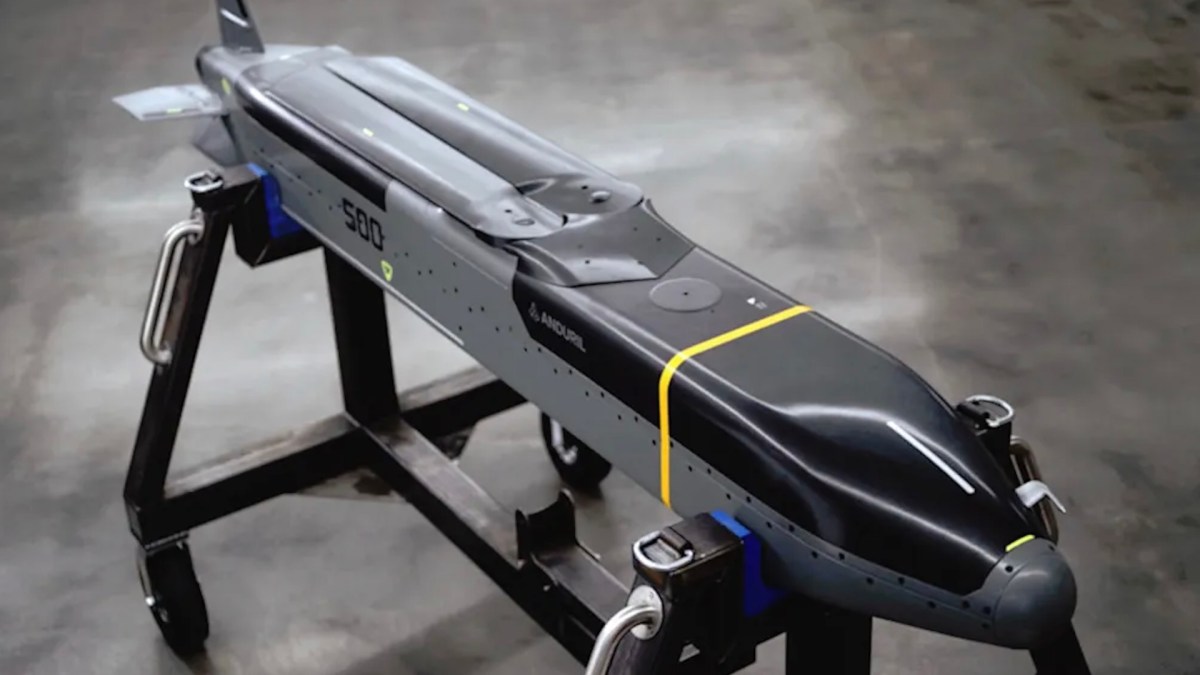
The central idea is straightforward: the Pentagon needs more experimentation, more fielding, and more flexible combinations of systems rather than continued dependence on a small number of exquisite platforms. In practice, that means greater attention to lower-cost autonomous systems, including swarms, and a stronger push to get emerging tools into real military workflows.
The strategy arrives at a moment when U.S. defense planners are trying to reconcile two pressures at once. One is the need for scale in a potential Pacific conflict, where mass, resilience, and replacement matter. The other is the need for speed, since software, autonomy, and commercial innovation now move far faster than traditional defense acquisition cycles. The White House document, as described by Defense One, attempts to answer both pressures at once.
Swarms and attritable systems move closer to the center
One of the clearest signals in the strategy is its support for mixed formations of advanced and lower-cost systems. Defense One reports that the plan calls for “optimal combinations” of cheaper or attritable platforms deployed in larger numbers to complement smaller fleets of more sophisticated assets. That language matters because it treats quantity and survivability as strategic features, not just budget compromises.
That emphasis aligns with years of debate inside the Pentagon over whether the U.S. can afford to rely too heavily on expensive, hard-to-replace systems in a high-intensity conflict. Swarms of drones, autonomous support platforms, and distributed sensing networks promise a different model: one that spreads risk, expands coverage, and can adapt more rapidly when conditions change.
The strategy reportedly identifies undersea systems, space, and AI and autonomy as priority areas for research and spending. All three categories are closely tied to Indo-Pacific deterrence. Undersea systems matter because of the region’s geography and the centrality of naval competition. Space remains essential for communications, navigation, targeting, and missile warning. AI and autonomy cut across both, enabling decision support, machine teaming, and unmanned operations.
Within that framework, multi-agent systems and swarm intelligence stand out as especially important. Those technologies suggest the administration wants to move beyond single-platform autonomy and toward coordinated machine behavior across many assets. If that view holds in budgeting and procurement, it could shape not just what the military buys, but how it expects future operations to work.
A broader opening for defense startups
Another major theme is market access. Defense One says the strategy would broaden the federal market for young defense technology startups and create more room for experimentation. For smaller companies, that matters as much as any technical priority. Many defense startups can build prototypes quickly, but struggle to navigate procurement rules, certification pathways, and the long timelines that separate demonstration from revenue.
If the administration can lower those barriers, it could expand the supplier base for military technology at a time when officials increasingly say innovation cannot come only from large incumbents. Faster contracting, more permissive testing, and clearer demand signals would all make it easier for newer firms to survive long enough to become real suppliers.
This is also where the strategy intersects with industrial policy. A broader federal market would not simply buy more gadgets; it would shape which companies can scale inside the U.S. defense ecosystem. That has implications for talent, venture capital, and the long-term competitiveness of the U.S. defense-industrial base.
The article notes that earlier efforts to field autonomous systems at scale have often been uneven. Even when defense leaders publicly backed lower-cost drones and collaborative autonomy, internal acquisition practices and legacy commitments slowed progress. The Replicator program is cited as an example: widely promoted as an important pathfinder, but funded at only $1 billion. The new strategy appears to be an attempt to move beyond that mismatch between rhetoric and resources.
The AI fault line: innovation versus concentration
Yet the strategy is not being presented as an unqualified win for innovation. Defense One argues that it also doubles down on a specific approach to AI development, one that favors a small set of well-connected U.S. technology companies. In that critique, the administration is accelerating some forms of defense innovation while narrowing the field in one of the most consequential technology areas.
The concern is not that AI is being prioritized. It clearly is, and the military’s interest in deployed AI, autonomy, and decision support is unlikely to fade. The concern is that if policy channels too much support toward a handful of firms, the government may reduce competition among approaches and overlook solutions commanders actually need.
That matters strategically because AI in defense is not one market. It includes frontier models, edge deployment, mission-specific software, robotics, command-and-control tools, and systems built for contested environments with intermittent connectivity and strict security constraints. A policy that appears pro-AI in general may still leave critical gaps if it favors only one segment of that stack.
Defense One goes further, arguing that such concentration could benefit China by slowing the U.S. military’s access to the most practical tools. Whether that proves true will depend on implementation, but the warning reflects a recurring concern in national security technology policy: speed alone is not enough if the selection process becomes too narrow.
What to watch next
The larger test will be whether the strategy changes behavior across the defense system rather than merely sharpening official language. Priority lists are common; procurement change is harder. The strongest indicator of seriousness will be whether programs, contracts, and budgets begin to reflect the stated focus on swarms, distributed autonomy, and easier entry for startups.
Three signs will be especially important. First, whether federal buyers create real pathways for smaller firms to move from pilots to production. Second, whether autonomous and swarm systems receive sustained funding rather than one-off demonstrations. Third, whether AI policy remains open enough to support multiple technical approaches instead of consolidating around a few preferred vendors.
For the military, the strategy signals that autonomy and AI are no longer side bets. They are increasingly being treated as core to deterrence planning, especially in the Indo-Pacific. For industry, it suggests opportunity, but also a more competitive fight over who gets to define the next generation of defense technology. And for policymakers, it sharpens an old question in a new form: how to move faster without narrowing the innovation base that speed is supposed to unlock.
- The strategy emphasizes drones, swarms, space, undersea systems, AI, and autonomy.
- It aims to widen access for younger defense technology firms.
- Critics argue its AI approach could overly favor a small group of major companies.
This article is based on reporting by Defense One. Read the original article.
Originally published on defenseone.com