Army prepares a new template for intelligence procurement
The U.S. Army is drafting a new document intended to reshape how it asks industry for intelligence capabilities. According to remarks reported by Breaking Defense from the TechNet Augusta conference, the service is preparing a “characteristics of need,” or CoN, for intelligence that outlines operational problems soldiers face across sensing, collection analysis and data exploitation. Rather than prescribing a narrowly defined system, officials want the document to give companies room to propose different ways of solving those problems.
That may sound procedural, but it signals a broader shift in defense acquisition logic. For years, military buyers have often translated emerging needs into detailed requirements early in the process, which can narrow the field of potential solutions before technology options have been adequately explored. The CoN approach appears to be an attempt to reverse that sequence: define the problem, then widen the aperture for responses.
What the Army says it wants
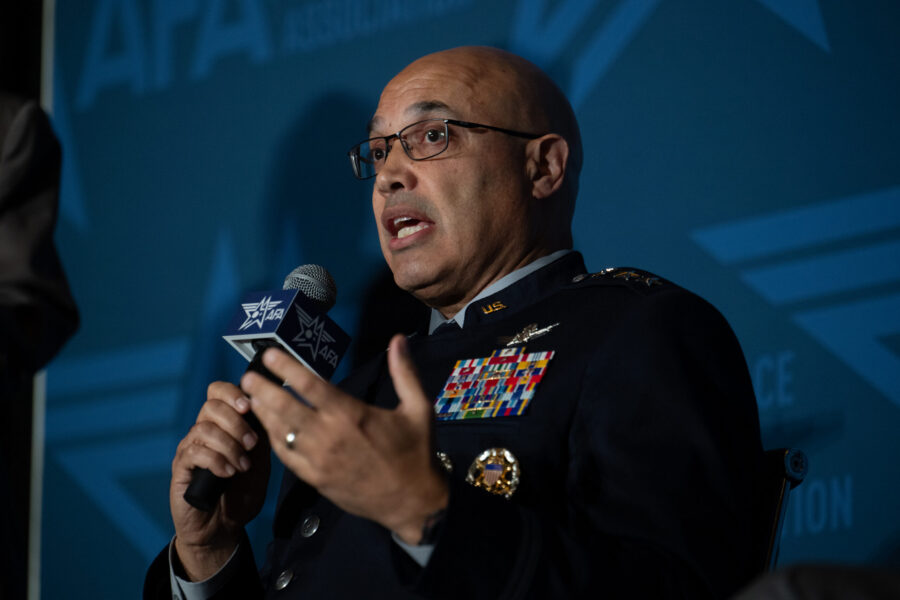
Joseph Welch, the Army’s portfolio acquisition executive for command and control and counter-command and control, said the intelligence CoN is already “teed up” for senior leader review, with a decision expected soon. In his description, the document is meant to function as a guiding reference rather than a rigid shopping list. When questions arise about whether a capability fits the direction the Army should be heading, he said, that is the kind of document officials will look to as a “north star.”
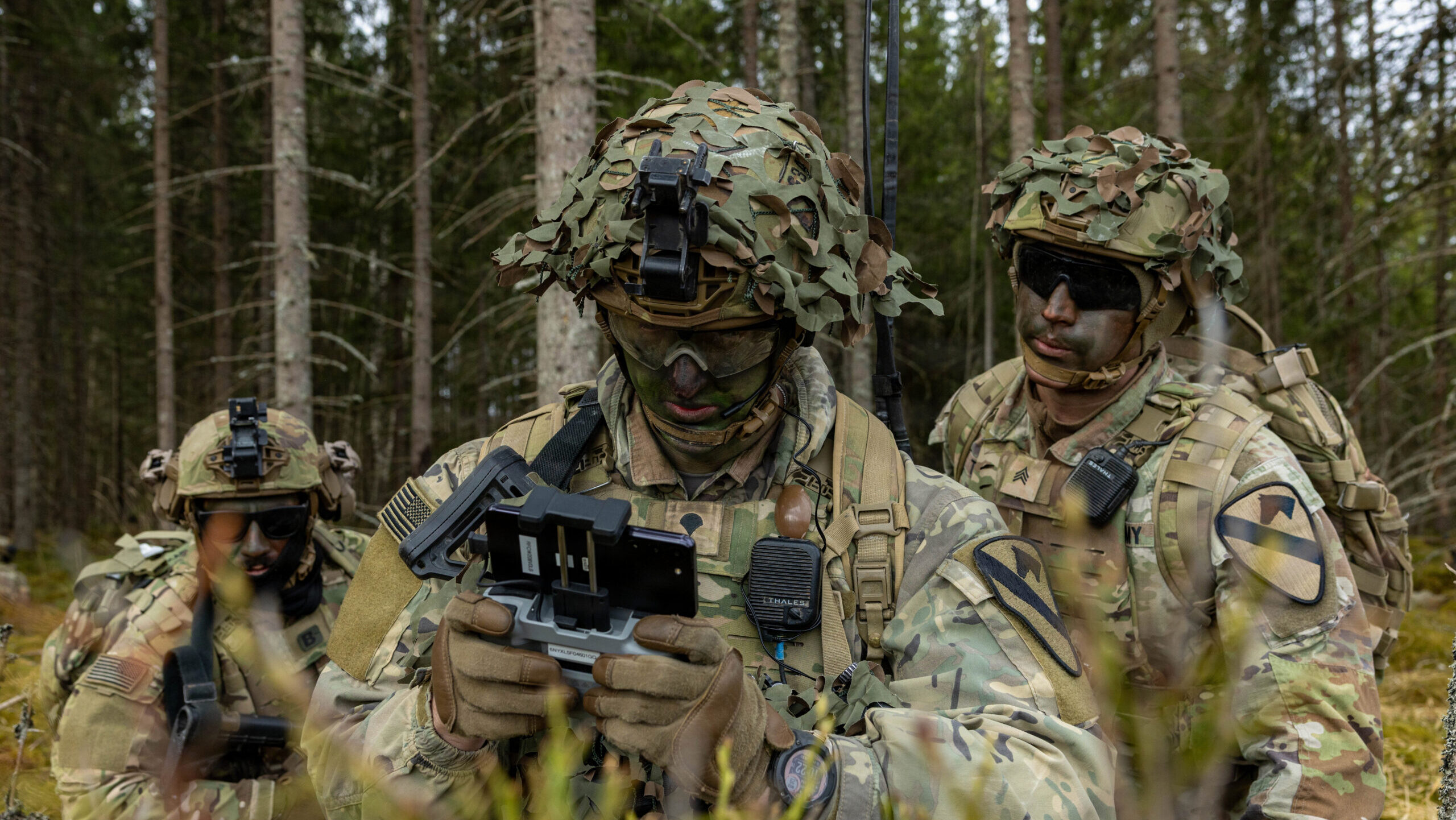
The underlying premise is that intelligence problems are changing too quickly, and in too many operational settings, for a purely prescriptive requirements process to remain efficient. Welch told conference attendees that recent overseas operations, the mission at the southern border, and broader experimentation and prototyping efforts have all underscored the need for intelligence tools that are flexible, rapidly deployable and adaptable to specific missions and organizational levels.
Those priorities matter because intelligence systems rarely live in isolation. They sit inside larger command-and-control and operational ecosystems, where collection, analysis and distribution cycles can break down if one part of the architecture becomes too brittle. A broader solicitation approach could help the Army identify tools that fit more fluidly into those environments.

Why the CoN model matters
The intelligence document would be the third CoN in Welch’s portfolio. Breaking Defense reports that earlier versions covered next-generation command and control in May 2024 and electromagnetic spectrum operations in February. Welch said those prior documents have already produced results by opening the door to a wider range of solutions than the Army’s previous requirements process allowed.
That is an important point because it suggests the service sees the CoN not as a one-off experiment, but as a repeatable acquisition method. In the electromagnetic spectrum area, the report says the approach has already allowed Army commanders to seek ideas from industry across a broad set of signals intelligence and electronic warfare challenges, and that effort is still underway.
If the Army applies the same model to intelligence more broadly, contractors may face a procurement environment that rewards integration, adaptability and speed over compliance with a highly specific technical blueprint. That does not eliminate requirements; it moves them to a different level of abstraction. The service is still defining what it needs, but it is doing so in operational terms first.
A signal to defense industry
For companies trying to sell into the Army, the message is straightforward: solutions do not need to fit a narrow, prewritten mold to earn attention. Instead, firms may be asked to show how their technologies address real battlefield or mission problems across sensing, collection, analysis and exploitation. That can benefit nontraditional vendors, software-heavy firms and integrators whose strengths may be easier to demonstrate through mission outcomes than through compliance with a legacy requirement set.
It may also intensify competition. A broader problem statement invites more concepts, more architectures and more claims of relevance. That can be healthy for innovation, but it also puts more pressure on the Army to evaluate proposals coherently. Opening the aperture only helps if the service can assess very different ideas against a stable set of operational priorities.
The CoN framework is therefore as much about internal discipline as external openness. If it is going to serve as the Army’s “north star,” as Welch described it, the document has to be specific enough to guide decisions while remaining flexible enough to avoid freezing technology choices too early.
Why intelligence is a logical next step
Intelligence may be especially well suited to this approach because the category cuts across hardware, software, communications and data handling. The report identifies sensing, collection analysis and data exploitation as focal areas, and each of those can involve multiple technical layers. A narrow requirement written too soon could miss better combinations of sensors, processing tools, networking methods or workflow software.
The Army’s recent emphasis on rapidly deployable terrestrial signals intelligence and electronic warfare capabilities also hints at the kind of operating context driving this change. Commanders, Welch said, continue to emphasize the need to improve and accelerate those capabilities. That suggests the service is looking for systems that can move with operational demands rather than remain bound to static procurement assumptions.
Just as important, Welch said these documents can be updated as conditions change or lessons are learned. That update mechanism is a practical admission that the Army’s operating environment and the underlying technology base are both moving targets. In that sense, the CoN is less a fixed specification than a maintained statement of direction.
Potential advantages and limits
The strongest case for the CoN model is that it could reduce the mismatch between how quickly threats evolve and how slowly defense requirements are often written and approved. If the Army defines the problem more broadly, it may discover options that conventional procurement frameworks would have screened out too early. That could be particularly valuable in fields shaped by software iteration, data fusion and increasingly contested electronic environments.
Still, a less prescriptive front end does not automatically guarantee faster fielding or better outcomes. The Army will still need to turn promising ideas into funded programs, tested systems and deployable capabilities. Broader problem statements can produce creativity, but they can also produce ambiguity if the follow-through is weak. The source material does not claim those downstream issues have been solved, only that the Army sees the approach as useful enough to expand.

A wider acquisition shift could follow
Breaking Defense reports that Welch plans to continue developing CoNs across his portfolio, with another one expected to focus on mission command. That indicates the intelligence document is part of a larger acquisition transition, not an isolated policy note. The Army appears to be building a portfolio-level habit of telling industry what operational outcomes matter while leaving more room for competing technical answers.
For the defense sector, that is a meaningful shift. It suggests the Army wants to buy against mission problems with greater flexibility, especially in areas where technology changes quickly and traditional requirement-writing can become a constraint. Whether the model delivers better systems will depend on execution. But as a signal of intent, the intelligence CoN shows an Army that is trying to widen the solution space before it narrows the purchase order.
This article is based on reporting by Breaking Defense. Read the original article.
Originally published on breakingdefense.com