The Baltic rearmament push is becoming an industrial strategy, not just a shopping list
Estonia, Latvia and Lithuania are preparing to spend about €12.2 billion in European Union Security Action for Europe, or SAFE, loans on weapons, equipment and ammunition, with first contracts expected within weeks. The scale of the planned procurement is substantial for three small frontline states, but the more important signal may be how they want to spend it. Baltic officials are not simply looking for fast deliveries from foreign primes. They are pushing for local production, maintenance capacity and at least partial technology transfer.
That emphasis reflects lessons drawn from Russia’s invasion of Ukraine and from the broader European struggle to expand defense manufacturing. The source text makes the Baltic view explicit: industrial capacity is now treated as an extension of battlefield capacity. In practical terms, that means governments are trying to ensure that critical ammunition, armored systems and support capabilities can be produced or sustained close to the eastern flank rather than sourced entirely from abroad under peacetime assumptions.
Lithuania is positioning itself as both customer and manufacturing base
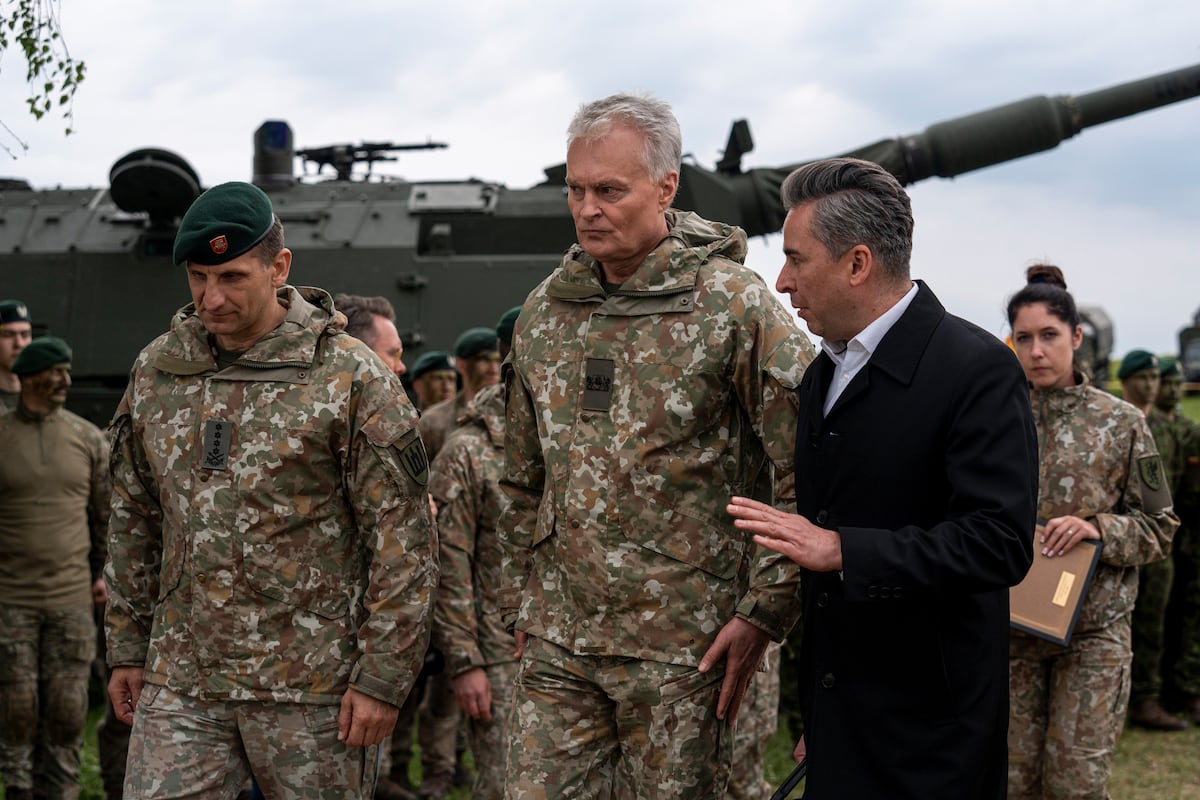
Lithuania appears to be the most advanced in articulating this dual-track approach. President Gitanas Nauseda said the country has used the war in Ukraine as a catalyst to attract defense investment from foreign companies while building domestic production capacity to secure supplies during a conflict. He also argued that Lithuania should be seen not only as a sales destination, but as a place where companies can build durable industrial positions for the region and the alliance.
The source material says Lithuania has been allocated €6.38 billion in SAFE loans, with much of the funding expected to support purchases of tanks, infantry fighting vehicles and ammunition from European suppliers. Nauseda cited concrete examples of industrial anchoring already underway, including Rheinmetall choosing Lithuania for regional ammunition production and KNDS France and KNDS Germany for assembly and maintenance work related to military equipment.
Why the Baltics want more than off-the-shelf procurement
The Baltic position is driven by geography, alliance role and recent supply-chain experience. Lithuania, along with Latvia and Estonia, sits on NATO’s eastern flank and is treating procurement resilience as inseparable from deterrence. Buying advanced systems without local maintenance, repair or manufacturing can solve one problem while creating another: dependence on external production cycles and transport routes in a crisis.
Officials at the DAIMEX Baltic conference stressed that a large share of production should be located in the three countries and that partial or full technology transfer is preferable to complete off-the-shelf purchases. That does not mean foreign suppliers are unwelcome. It means foreign participation is increasingly being judged on whether it leaves behind capacity, skills and sovereign options rather than only finished equipment.
Regional spending is being tied to long-term industrial integration
The most consequential part of the Baltic strategy may be its attempt to tie urgent rearmament to longer-term integration into European and transatlantic supply chains. Vincas Jurgutis of the Lithuanian Defence and Security Industry Association said there has been a major post-2022 push to develop Lithuanian defense companies and include them in larger programs carried out with foreign partners. That suggests policymakers are trying to avoid a boom-bust cycle in which emergency security spending rises sharply but domestic industry remains shallow.
If that strategy works, the Baltics could emerge not just with larger arsenals but with more embedded roles in munitions, vehicle support and other defense production niches. That would matter well beyond national borders. Europe’s rearmament problem is partly a capacity problem, and smaller states that can host, assemble or maintain key systems can become important nodes in a wider defense network.
The challenge will be speed, scale and execution
The ambition is clear, but execution will be difficult. Rearmament programs typically collide with long lead times, workforce shortages and industrial bottlenecks. Nauseda’s call for industry to “deliver fast and on time” captures the tension. The Baltic states want both urgency and structural change. They need weapons quickly, but they also want manufacturing footprints that take years to build and mature.
There is also an implicit bet that suppliers will accept more demanding terms in exchange for access to large, subsidized procurement flows. Some will. Others may prefer cleaner export deals with less localization. How those negotiations unfold will help determine whether Baltic defense spending becomes a durable industrial turning point or remains mostly a rapid acquisition cycle with limited domestic spillover.
Even so, the direction is unmistakable. For the Baltic states, rearmament is no longer just about buying against risk. It is about using wartime lessons and EU financing to reshape where defense capability resides. In that model, a tank order or ammunition contract is not only a procurement event. It is also a decision about who can sustain deterrence when the supply chain itself becomes part of the front line.
This article is based on reporting by Defense News. Read the original article.
Originally published on defensenews.com