Two days of intercepts expose the fragility of military transit rules
Austria says it scrambled Eurofighter Typhoon fighter jets on two consecutive days after U.S. military aircraft movements triggered concern over flight permissions, administrative handling, and airspace verification. The incident, reported by Defense News, did not ultimately amount to a confirmed illegal airspace violation, but it still underscored how sensitive military overflight can be in a neutral European country that requires prior approval for foreign military transit.
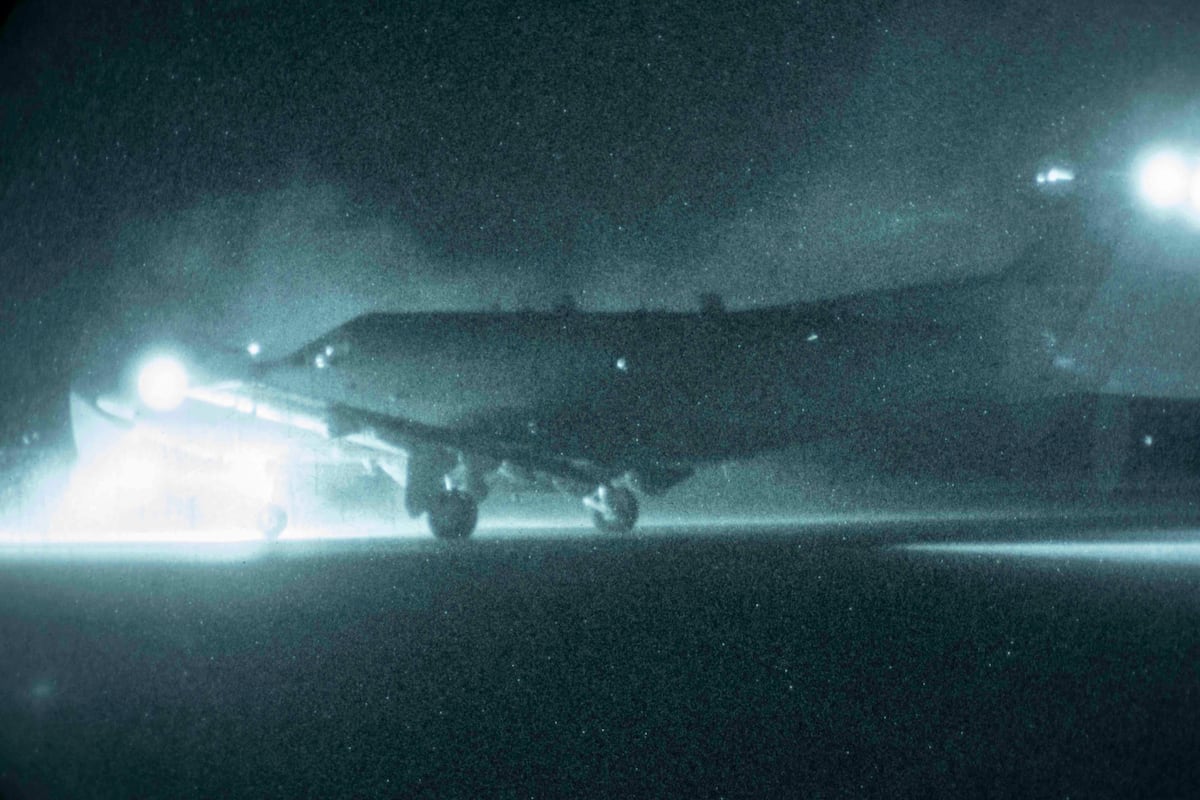
According to the supplied source text, the events took place on May 10 and May 11 and involved modified PC-12 turboprop aircraft used by the U.S. military primarily for signals intelligence and scouting operations. The U.S. designation for the aircraft is U-28. Initial media reports in German suggested unauthorized intrusions into Austrian airspace, but the Austrian military later pushed back on that claim.
What happened over the two days
The sequence described in the source is bureaucratic as much as operational. Austria says the U.S. Air Force had filed for an overflight permit for two aircraft on May 10 but did not use that approval. Later that day, two different U.S. Air Force aircraft approached Austrian airspace without prior announcement. Austrian jets were scrambled to meet them, but those aircraft turned back before crossing the border.
The next day, the U.S. refiled the overflight permit and used it. Even then, Austria sent fighter jets to verify that the planes flying through its airspace matched the aircraft covered by the approval. Austrian military spokesperson Michael Bauer described the May 11 response as a “priority A intercept,” which the source identifies as the highest urgency level in Austrian air force nomenclature.
That escalation is revealing. Even in a case where approved transit was later claimed, Austrian authorities still considered airborne visual confirmation necessary. Bauer’s remark that “some things you have to see for yourself,” as cited in the report, captures the point: paperwork alone was not enough to settle the matter once inconsistencies had appeared.
Verification remained unresolved
One of the most notable details in the report is that Austria had not fully resolved the matter as of Wednesday. Defense News says later reporting by Der Standard cited the Austrian government as saying the verdict was still out on whether the planes that overflew Austrian airspace were in fact the ones for which a permit had been issued. That lingering uncertainty suggests the issue was not simply an overreaction to misleading media coverage. It was a real identification and compliance question.
The U.S. European Command offered a narrower explanation, saying the flight took place after an administrative error in the overflight clearance paperwork was corrected. That account points to process failure rather than deliberate violation. But even if the cause was administrative, the episode shows how quickly a documentation mismatch can become an air sovereignty issue when military aircraft are involved.
Why Austria is especially sensitive
Austria’s posture is central to the story. The country is not a NATO member, and its perpetual neutrality is enshrined in its constitution. The source text states that foreign military transit by land or air requires prior approval and is generally granted only if unrelated to a war. That makes compliance with flight permissions more than a technical matter. It is directly tied to Austria’s legal and political identity.
The report also places the incident in a wider geopolitical context, noting that Austria was the fifth European country to close its airspace to U.S. activity related to the war in Iran. Vice Chancellor Andreas Babler said Austrians want “nothing to do with Trump’s politics of chaos and his war,” according to the source text. Whatever the broader diplomatic implications, that line helps explain why even an administrative mismatch involving U.S. aircraft would be handled with unusual seriousness.
In other words, the intercepts were not just about air traffic management. They sat at the intersection of neutrality, alliance politics, regional security, and domestic political signaling. When a neutral state has publicly distanced itself from a U.S.-linked conflict, it has strong incentives to demonstrate strict control over its skies.

A reminder that procedure is strategy
Military aviation stories often focus on hardware, tactics, or confrontation. This one is more instructive because it shows how procedural details can become strategically meaningful. A filed permit that is not used, aircraft that differ from those expected, a second filing the next day, and the need for visual confirmation all point to an environment in which administrative precision matters as much as flight capability.
The geography reinforces the seriousness. The May 11 intercept reportedly occurred over the Totes Gebirge mountain range in Upper Austria, more than 60 kilometers from the German border. That means the issue was not confined to a frontier approach; it extended into airspace where the Austrian military felt compelled to verify exactly what was flying overhead.
Why this matters beyond Austria
The bigger lesson is that military mobility in Europe depends on more than alliance assumptions or routine flight planning. It also depends on the ability to navigate country-specific legal constraints, especially in states outside NATO or in politically sensitive periods. Administrative mistakes can carry operational and diplomatic costs.
From the supplied record, Austria is insisting on that principle. No confirmed illegal incursion was established, but fighter jets were still launched on back-to-back days, and questions remained open after the flights. That makes this a meaningful military and geopolitical development: a case where sovereignty enforcement, neutrality, and paperwork failures converged in plain view.
This article is based on reporting by Defense News. Read the original article.
Originally published on defensenews.com