The Coast Guard has locked in a major new icebreaker contract
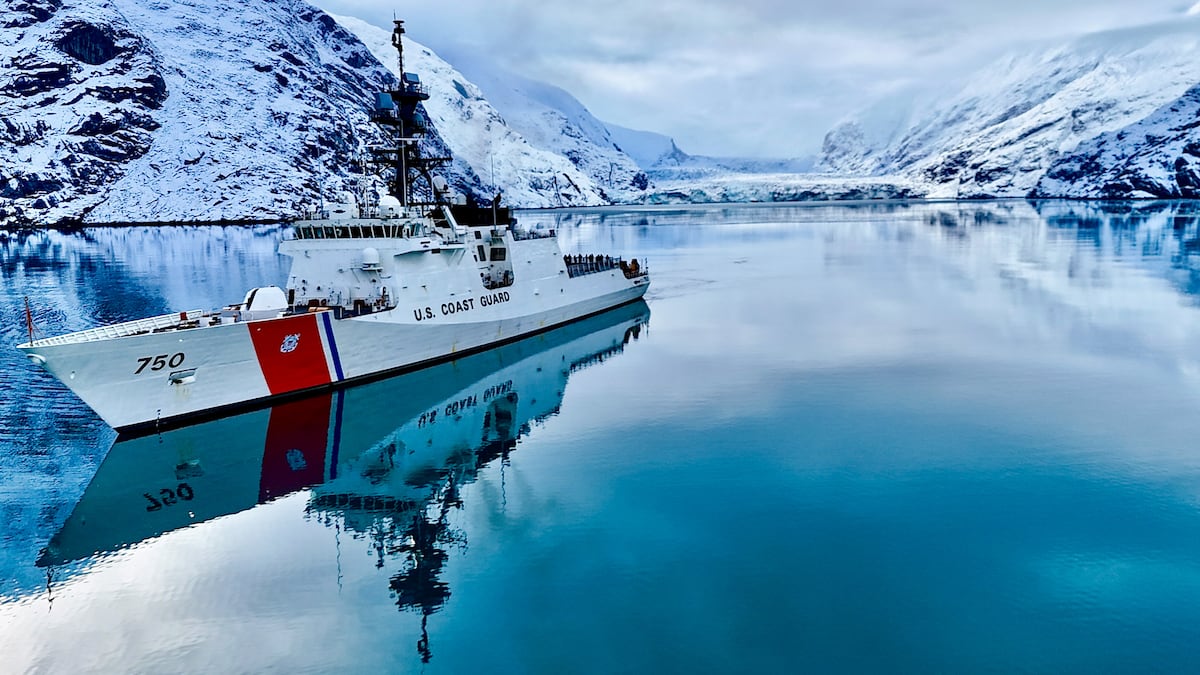
The U.S. Coast Guard has finalized a contract with Davie Defense to build and deliver five Arctic Security Cutters, a deal announced by the shipbuilder on May 13 and valued at $3.5 billion. The cutters will form a new class of Arctic icebreakers and add to a broader U.S. effort to expand polar capability as the Arctic grows in strategic importance.
The agreement is a consequential step for a service that has long operated with a limited icebreaking fleet. According to the source report, the Coast Guard currently has one heavy polar icebreaker, the USCGC Polar Star, and two medium polar icebreakers, the USCGC Healy and the USCGC Storis. The Storis recently returned to homeport after a 36-day Arctic deployment and was the first icebreaker to join the fleet in more than two decades.
That baseline helps explain why the new contract matters. It is not a marginal fleet adjustment. It is part of a larger attempt to rebuild U.S. capacity in a region where access, presence, and logistics increasingly carry geopolitical weight.
How the ships will be built
Davie Defense, the U.S. arm of the UK-owned maritime group Inocea, will build three of the ships at Gulf Copper facilities in Galveston and Port Arthur, Texas. Two more will be built at the company’s affiliate shipyard in Helsinki, Finland.
The international construction arrangement has already drawn political scrutiny. During an April 28 House subcommittee hearing on the Coast Guard’s fiscal 2027 budget, Rep. John Garamendi questioned whether using a Finnish yard conflicted with the SHIPS for America Act, a 2025 measure aimed at revitalizing the U.S. maritime industry.
Coast Guard Commandant Adm. Kevin E. Lunday defended the arrangement by citing the 2024 ICE Pact among the United States, Canada, and Finland. He said the service needed to leverage Finland’s proven shipbuilding capability first in order to bring more work back onshore and rebuild the U.S. defense industrial base over time.
That answer captures the balancing act behind the program: the U.S. wants more domestic shipbuilding strength, but it also wants to accelerate delivery by relying on a country with deep expertise in building ice-capable vessels.

Timeline and strategic purpose
The first cutter is scheduled for delivery in 2028, and the contract runs through February 2035. In a statement quoted in the report, Lunday called finalizing the contract “decisive action” to guarantee American security in the Arctic.
He also described the cutters as essential to upholding U.S. sovereignty against aggressive economic and military actions by adversaries in the region, saying they will help the Coast Guard control, secure, and defend the northern border and maritime approaches.
The article links the contract to President Donald Trump’s executive orders to expand the icebreaker fleet. It also says the five ships in this award will bring the total number of cutters being manufactured to 11.
Those details show a program moving beyond planning rhetoric and into industrial execution. Delivery dates remain years away, but the Coast Guard is now tying its Arctic ambitions to specific hulls, yards, and funding commitments.
Why the Arctic matters to the Coast Guard
The Coast Guard’s role in the Arctic extends beyond traditional search-and-rescue imagery. In the report’s framing, the service is preparing for missions shaped by the region’s increasing geopolitical importance. That includes asserting sovereignty, securing maritime approaches, and maintaining access in contested or difficult environments.
Icebreakers are central to that mission because they make presence possible where ordinary vessels cannot operate effectively. A thin fleet constrains persistence and flexibility. A larger one expands the government’s options for patrol, logistics, and response in northern waters.
The program also intersects with industrial policy. Building some of the ships in Finland while using Texas facilities for others reflects a hybrid approach: obtain near-term capability from established expertise while trying to rebuild domestic capacity in parallel.

A larger fleet transition is underway
The contract arrives as the Coast Guard works with an unusually large funding backdrop. According to the article, the Department of Homeland Security says the service is using the $25 billion provided by the fiscal 2025 budget reconciliation package and has already ordered more than $13 billion in assets and services.
That context suggests the Arctic Security Cutter effort is part of a wider recapitalization push rather than an isolated procurement. The Coast Guard is trying to replace long-standing scarcity with a larger, more modern fleet able to meet strategic demand in polar regions.
The finalization of the Davie Defense contract does not resolve every question about shipyard mix, schedule, or long-term industrial strategy. But it does mark a concrete advance in U.S. Arctic fleet expansion. For a service that has spent years with only a small number of polar-capable ships, that is a material development.
The immediate takeaway
The essential point is straightforward: the Coast Guard has moved ahead with a multibillion-dollar contract to add five Arctic Security Cutters, and it is doing so in response to both strategic pressure and long-recognized fleet shortages. With the first delivery expected in 2028 and construction split between Texas and Finland, the program reflects both urgency and industrial compromise.
As Arctic competition sharpens, the United States appears increasingly willing to spend, partner, and accelerate in order to close a capability gap it has carried for years. This contract is one of the clearest signs yet that the icebreaker shortage is no longer being treated as a distant problem.
This article is based on reporting by Defense News. Read the original article.

Originally published on defensenews.com