The Army faces scrutiny over a retreat from a newly built drone warfare unit
A bipartisan group of U.S. lawmakers is demanding that the Army explain why it is shutting down a specialized drone battalion less than a year after creating it, opening a new front in the wider argument over how quickly the service is adapting to a battlefield increasingly shaped by unmanned systems and electronic warfare.
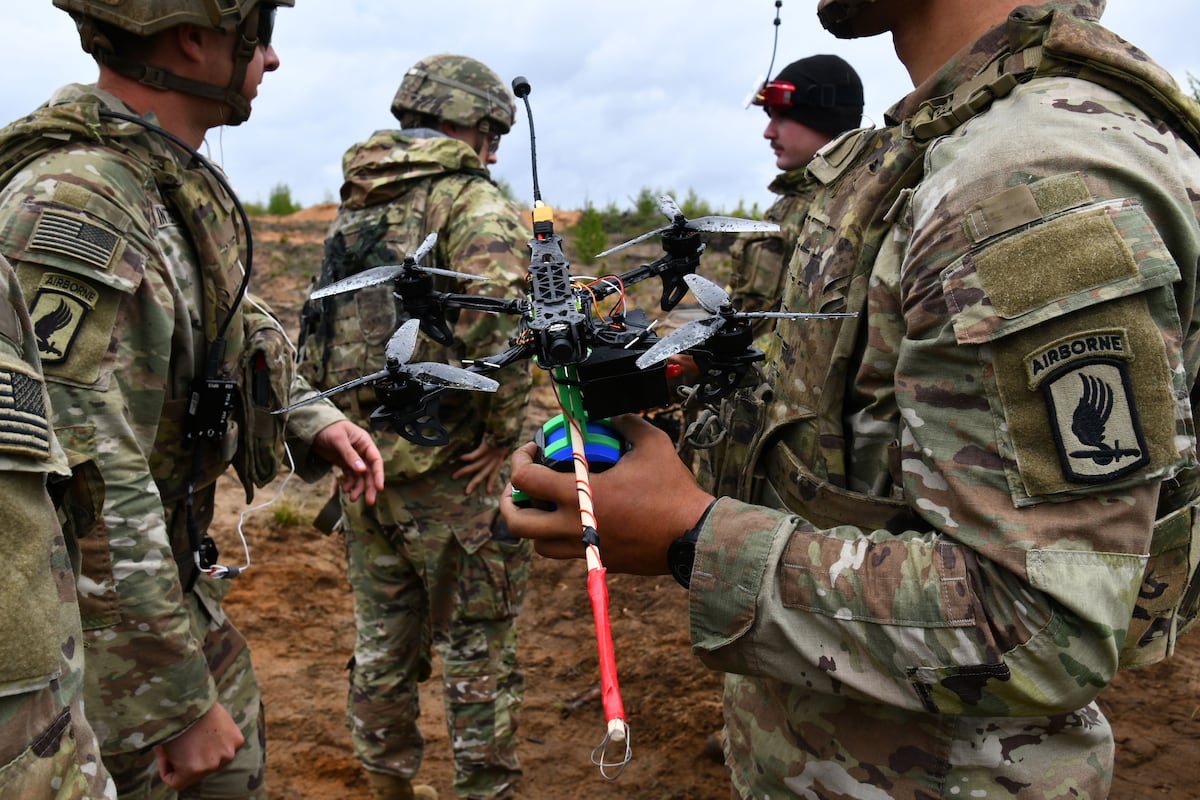
At issue is the 600-member Unmanned Assault Battalion, formed within the 173rd Airborne Brigade. The unit was established to study tactics and operational lessons from Ukraine’s long war against Russia and translate them into U.S. military practice. According to the lawmakers’ September 1 letter, closing the unit now risks cutting off one of the Army’s clearest institutional pathways for learning from a conflict that has become a laboratory for modern drone warfare.
The lawmakers asked whether the decision originated inside the Army or followed direction from senior Pentagon leadership. They requested a response by September 21. Their concern is not only about one battalion. It is about whether the Army is stepping back from a hard but necessary modernization effort at precisely the moment when wars around the world are underscoring the importance of drones, rapid adaptation, and electronic contestation.
Why this battalion mattered
The concern expressed in the letter rests on a straightforward strategic logic. Ukraine’s battlefield experience has shown how quickly relatively low-cost unmanned aircraft can alter reconnaissance, strike operations, force protection, and the tempo of frontline adaptation. The Army’s specialized battalion was intended to absorb those lessons in a focused way rather than asking conventional formations to improvise them on top of their standard missions.
That design made the unit notable. Instead of treating drones as a narrow supporting capability, the battalion represented an effort to build expertise, doctrine, and training around systems that are increasingly central to combat. The lawmakers described the unit as a prudent response to a changing character of warfare, arguing that conventional organizations often struggle to adapt at the speed modern conflict demands.
Their warning is that dismantling such a formation could slow the Army’s learning curve just as adversaries and allies alike are demonstrating how fast tactics are evolving. The letter argues that eliminating the battalion may limit the U.S. military’s ability to learn directly from Ukrainian forces and weaken efforts to modernize drone warfare quickly enough to stay competitive.

A decision tied to broader Army turbulence
The shutdown does not appear in isolation. The source report places it in the middle of an unusually unsettled period for Army leadership and modernization policy. The battalion is expected to return to its airborne infantry role after participating in the multinational Exercise Saber Junction this month. Lawmakers said they understood the closure to be connected to Acting Army Chief of Staff Gen. Christopher LaNeve’s “back to basics” message, which ordered the force to refocus on its primary combat mission.
On its face, that message may sound conventional rather than controversial. Armies routinely emphasize core warfighting competence, especially after periods of organizational experimentation. But the dispute here turns on what now counts as basic. For critics of the decision, drone warfare is no longer an optional add-on or specialized boutique field. It is part of the foundation of contemporary land combat. From that perspective, reverting a dedicated drone formation back to a standard infantry identity is not a return to basics. It is a sign that the definition of battlefield basics may already be outdated.
The debate is sharpened by leadership churn. The report notes that Defense Secretary Pete Hegseth has fired more than a dozen top leaders, while former Army Chief of Staff Gen. Randy George, who had pushed drone innovation through his Transformation in Contact initiative, was removed at Hegseth’s behest. The Army has not yet received a nominated successor. Outgoing Army Secretary Dan Driscoll, who had supported modernization and acquisition reform, also resigned on short notice this week amid friction with Hegseth.
That instability matters because modernization programs rarely survive on momentum alone. Specialized units, experimental structures, and new concepts often depend on senior champions. When those champions leave suddenly, institutional support can fade before new structures have time to prove themselves.
The strategic risk lawmakers are flagging
The lawmakers connect the battalion’s closure to a wider concern about “uneven and inconsistent” support for Europe and Ukraine. In their view, shutting down a unit built around Ukrainian lessons sends the wrong signal operationally and politically. Operationally, it may reduce the Army’s capacity to integrate live combat insights into training and doctrine. Politically, it may suggest a weakening commitment to learn from allies confronting one of the most drone-saturated wars in recent memory.
The timing also increases the stakes. The report says the United States remains in a war with Iran that has stretched beyond six months, while also facing missile stockpile shortages and extended deployments. In that environment, choices about force design are not abstract. They shape how quickly the Army can absorb new tactics, field workable concepts, and prepare soldiers for conflicts where drones and electronic warfare are not peripheral threats but constant features of the battlespace.
What makes this episode especially consequential is that it exposes a deeper institutional tension. Militaries must preserve readiness for conventional missions, but they also have to evolve when the tools and rhythms of war change. The Unmanned Assault Battalion represented one answer to that challenge: create a purpose-built organization and let it specialize. The apparent decision to dissolve it suggests another answer is gaining ground: fold those lessons back into traditional structures and avoid letting innovation become organizational distraction.

What comes next
The immediate next step is the Army’s response to Congress. Lawmakers want a clear explanation of who made the decision and why. But the larger issue will outlast that reply. The Army still has to decide how it will institutionalize drone warfare knowledge if a dedicated battalion is no longer part of the plan.
If the service can show that it has a broader, credible path for integrating lessons from Ukraine and other theaters into standard formations, the battalion’s closure may come to look like reorganization rather than retreat. If not, the decision will likely be seen as a warning sign that modernization remains vulnerable to leadership turnover, shifting political priorities, and an overly narrow reading of what conventional readiness requires.
For now, the lawmakers’ intervention has turned an internal force-structure decision into a public test of whether the Army’s modernization agenda is keeping pace with the battlefield it says it is preparing to fight on.
This article is based on reporting by Defense News. Read the original article.
Originally published on defensenews.com