Virginia gives agrivoltaics a formal legal footing
Virginia has moved agrivoltaics from an emerging concept toward a more durable policy category. A bill signed on June 17 creates a state definition for agrivoltaics, describing it in part as the intentional co-location of agricultural production and solar energy generation on the same land. That may sound procedural, but the change matters because definitions often determine what kinds of projects can be proposed, financed, reviewed and defended in local permitting fights.
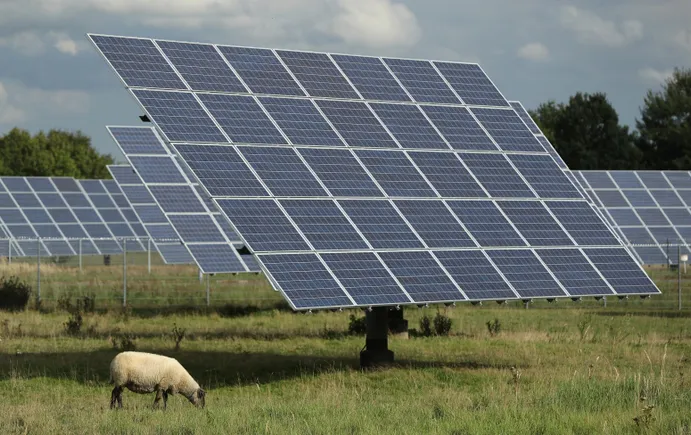
The new law arrives as states try to reconcile two pressures that increasingly collide on the same acreage: the need for more renewable power and the need to preserve productive farmland. Agrivoltaics is pitched as one answer to that tension. Rather than treating solar development and agriculture as mutually exclusive land uses, the model aims to keep farming active while panels generate electricity overhead or alongside crops, grazing operations or habitat-supporting plantings.
Supporters quoted in the source coverage argue that Virginia is still early in that process, which is precisely why this definition could have outsized influence. In an early-stage market, the first legal standards often shape what “counts” as a credible project and what does not. By spelling out the principle that agriculture must remain central to the site, Virginia is signaling that agrivoltaics is not simply ordinary solar with a thin rural branding layer attached.
What the law says projects must do
The law does more than coin a term. It says agrivoltaic projects must be designed to prioritize and sustain agricultural productivity while simultaneously integrating renewable energy generation. It also says agriculture must continue over the life of the solar project, that the site must be part of a commercial agricultural operation, and that there must be decommissioning provisions intended to protect the land’s agricultural resources.
Those requirements address one of the core concerns surrounding solar build-outs in rural areas: whether farmland is being functionally removed from production for decades. By tying agrivoltaics to ongoing commercial agriculture, Virginia is establishing a higher bar than simply allowing sheep to pass through a fenced site once in a while. The state is indicating that the agricultural side of the equation must be operationally real and durable.
The law also says projects should ensure flexibility for farmers to adapt to market conditions and support operational needs. That clause is important because agricultural systems are not static. Crop choices change. Grazing patterns change. Equipment needs change. A solar layout that works only for one narrow scenario can quickly become a constraint rather than a partnership. The flexibility language suggests policymakers are trying to avoid locking farms into rigid site designs that look multifunctional on paper but fail in practice.

Why Virginia’s timing matters
Virginia is not starting from zero, but it is still early enough that policy design can shape the sector. According to the source material, the state has 13 agrivoltaic projects listed by the National Renewable Energy Laboratory. Most are either grazing or habitat-based projects rather than crop-focused systems. That makes the newly defined category notable not just for the solar industry, but for agricultural planners and counties that may be encountering these proposals for the first time.
The state’s first crop-based agrivoltaics project launched in October, and Governor Abigail Spanberger held the bill-signing ceremony there. The site, the Piedmont Environmental Council’s Community Farm at Roundabout Meadows in Loudoun County, is modest at 17 kilowatts DC, but it was built to generate roughly 130% of the farm’s energy needs. Small demonstration projects like that do not transform a grid by themselves. What they do provide is a working example for regulators, farmers and investors who want to understand whether crop production and solar hardware can coexist beyond the pilot stage.
Virginia also already has large non-crop examples. The source notes that Skipjack Solar Center, a 175-megawatt DC sheep-grazing project across 2,200 acres, is the state’s largest agrivoltaic project overall. Foxhound Solar, at 108 megawatts DC on 580 acres, is cited as the largest habitat project and was designed to support pollinators. Together, those examples show that agrivoltaics can span a broad spectrum, from farm-scale energy resilience to utility-scale land-use strategies.
What was left out may matter too
The final bill omitted language that would have created a stakeholder group to set criteria for qualifying projects, determine how they should be monitored and consider permitting or other incentives. On its face, that might look like a missed opportunity. Definitions are useful, but implementation frameworks are what determine whether a category becomes investable and enforceable.
Still, the source reports that the Spanberger administration plans to create that group on an executive basis. If that happens, the practical work of defining performance expectations could continue outside the statute itself. That may prove consequential, because the hardest questions around agrivoltaics are not semantic. They involve evidence: how much agricultural output must be maintained, how site design should be evaluated, what forms of monitoring are credible and what kinds of incentives actually lead to better dual-use outcomes.
Without that layer, the term could drift. With it, Virginia has a chance to turn a broad legal definition into a functioning project standard.

A template other states will watch
For the solar sector, the law may widen the path for distributed generation and reduce uncertainty for developers trying to assemble land-use cases in agricultural regions. For farmers, it could create another option for stabilizing income without entirely displacing production. For local governments, it offers a clearer vocabulary for evaluating proposals that do not fit traditional zoning assumptions.
The broader significance is that agrivoltaics is moving from demonstration status toward governance. As more states confront land competition between food, habitat and energy production, the policy question is no longer whether dual-use solar exists. It is how states define it tightly enough to reward serious projects while preventing superficial ones.
Virginia’s new law does not settle that debate. But it gives the state a starting point with sharper legal edges, and in a sector still defining itself, that alone can alter what gets built next.
This article is based on reporting by Utility Dive. Read the original article.
Originally published on utilitydive.com