Gas Turbine Demand Has Reached a New Scale
Siemens Energy says its gas services backlog has risen to 69 gigawatts after the company shipped 6 gigawatts of turbines in the three months ending June 30, 2026 and booked 15 gigawatts of new orders during the quarter. The figures, disclosed during the company’s fiscal third-quarter earnings discussion, point to an energy market that is leaning far more heavily on conventional generation equipment than many recent planning assumptions suggested.
The immediate takeaway is not just that demand is strong. It is that demand is now durable enough to force long-cycle manufacturing expansion. Siemens executives said lead times across the company are running three years or more, a sign that turbine orders are no longer a short-lived spike tied to isolated projects. Instead, utilities, grid operators, industrial users, and large power buyers appear to be placing equipment orders on the expectation that electricity supply constraints will persist for years.
The company’s numbers help explain why. Sales in Siemens Energy’s gas services division rose 62% year over year to 10 billion euros, while its grid technologies business also posted major order growth. The combination matters because it shows pressure on both sides of the electricity system: generation capacity is in demand, and so are the transformers and switchgear needed to move power through increasingly stressed transmission and distribution networks.
Why the Market Is Tightening
Christian Bruch, Siemens Energy’s president and chief executive, said the addressable market for gas turbines could reach 120 gigawatts a year, with roughly half of that demand coming from the United States. That comment aligns with a broader structural shift now visible across the power sector. Hyperscale data center development, especially in the U.S., has created concentrated new power demand that utilities cannot always meet quickly with existing infrastructure or planned renewable capacity alone.
At the same time, grid interconnection queues remain crowded, large transmission projects move slowly, and major electrical equipment has become a bottleneck in its own right. In that environment, gas turbines have regained strategic value because they can provide dispatchable output, support grid reliability, and in some cases be deployed on timelines that, while still long, may look more bankable than waiting on uncertain network upgrades.
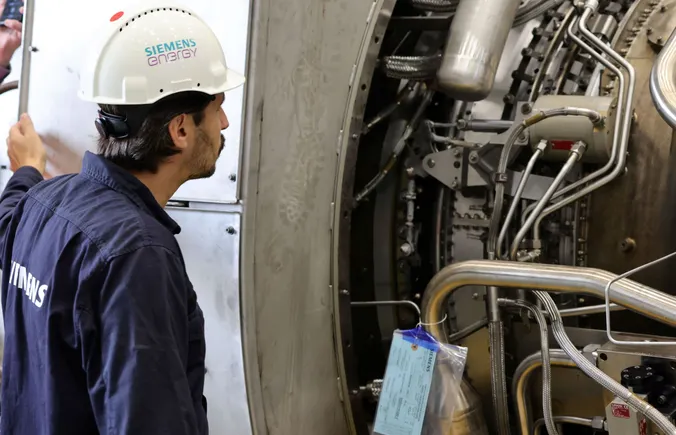
Siemens’ reported order flow suggests customers are acting on that logic now rather than treating gas capacity as a fallback option. The company added about 30 units of medium-sized gas turbine manufacturing capacity since 2025 and expects to deliver 15 to 16 gigawatts of gas turbines this year. It also has about 35 units of large gas turbine manufacturing capacity and plans to add another 15 units in 2027.
For medium-sized turbines, Siemens said it plans to expand from roughly 80 units currently to about 100 by 2028. That is a notable buildout for a sector often described as mature. Manufacturers do not add this kind of capacity unless they see sustained order visibility and confidence that customers will tolerate long waits for equipment.
The Grid Equipment Story May Be Just as Important
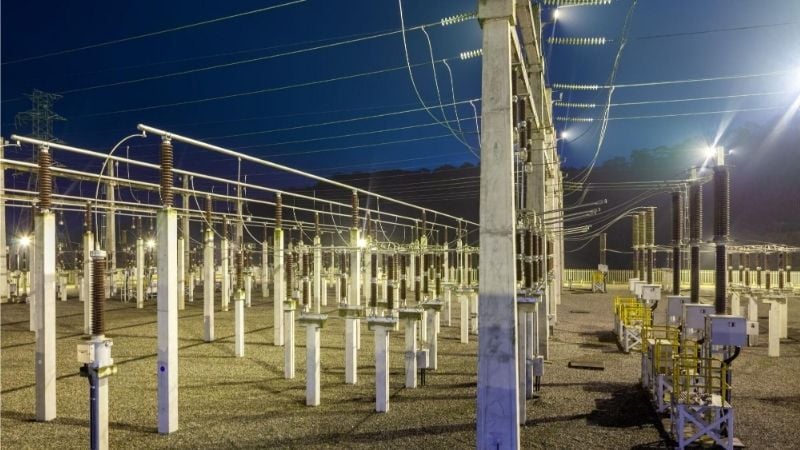
The gas turbine headline is only part of the picture. Siemens also said it intends to expand transformer and gas-insulated switchgear manufacturing capacity by about 50% by 2030. Its Grid Technologies division had a 51 billion euro order backlog as of June 30, and executives said transformers accounted for the largest portion of the division’s growth.
That detail matters because power shortages are no longer just about fuel supply or generation mix. In many regions, the constraint is physical delivery infrastructure. Transformers, switchgear, and related substation equipment have become critical chokepoints for utilities trying to connect new generation, serve industrial load growth, and reinforce aging networks. A large backlog in grid equipment can therefore be read as a signal that electrification and digital infrastructure growth are colliding with manufacturing limits across the full power chain.
For policymakers and large power users, that means procurement timing is becoming a strategic issue. Long lead times can delay new capacity even after financing and permitting are settled. For data center developers, industrial campuses, and utilities, the implication is straightforward: securing generation without securing grid hardware may no longer be enough.
What This Means for the Energy Transition
The surge in gas equipment demand does not, by itself, settle the debate over long-term decarbonization. But it does show that the transition is unfolding under real-world reliability constraints. Power systems still need firm capacity, and right now the market is placing a premium on technologies and equipment that can be contracted, financed, and delivered with predictable performance.
That creates tension for climate strategy. Gas turbines can help stabilize systems with rising renewable penetration, yet a multiyear manufacturing expansion also implies assets that may operate well into the 2030s and beyond. The investment case being made by customers today appears less about ideological preference and more about practical system adequacy: they need electricity that is available when load arrives, and they need confidence that supporting equipment can be installed at scale.
Siemens’ results also suggest that energy planning is becoming more integrated. It is no longer enough to think in separate boxes labeled generation, transmission, and end-use demand. The company’s simultaneous backlog growth in gas services and grid technologies indicates the market is responding to a single interconnected problem: electricity demand is rising fast, while the industrial base needed to build reliable power systems remains capacity-constrained.
If that pattern holds, manufacturers with proven turbine and grid hardware portfolios may gain unusual strategic influence over the pace of power-sector expansion. It would also mean that near-term energy security decisions, especially in the United States, are likely to be shaped as much by factory throughput and equipment queues as by resource economics alone.
For now, Siemens Energy’s quarter offers one of the clearest industrial snapshots of where the sector stands. Demand for gas turbines is not merely recovering. It is expanding alongside a parallel rush for transformers and switchgear, suggesting that utilities and power buyers are preparing for a prolonged period of tight electricity supply and heavy infrastructure buildout.
This article is based on reporting by Utility Dive. Read the original article.
Originally published on utilitydive.com