Cabot Corporation, a US specialty chemicals company, is committing $125 million to expand its advanced battery materials operations — an investment positioned as a step toward producing those materials at the scale the domestic battery industry will eventually require.
The number is modest beside the multi-billion-dollar cell factories that dominate coverage of the electric vehicle and grid storage buildout. But materials sit at a different point in the value chain. Cells cannot be assembled without the processed inputs that go into them, and those inputs have historically been concentrated in a small number of producing regions. Cabot's expansion is a bet that the bottleneck worth addressing is not the assembly line, but everything upstream of it.
What the Investment Signals
The $125 million figure does more than add capacity on paper. It signals a specialty chemicals manufacturer's willingness to scale a product line that has, until recently, been treated as a niche serving a relatively small customer base. Advanced battery materials are not commodity chemicals. They require tight specification control, consistent particle characteristics, and qualification cycles measured in quarters or years before a cell maker will commit to them in high-volume production.
That qualification burden is precisely why materials expansions tend to lag behind cell manufacturing announcements. A new electrode or electrolyte plant can be planned and built in a defined window, but the supplier feeding it must prove its material performs identically across millions of units. Moving from pilot volumes to commercial scale is therefore not simply a matter of pouring more concrete — it is a matter of proving reproducibility at a volume the company has never sustained before.
Cabot's decision to fund that transition reflects confidence that domestic demand will justify the risk. It also reflects a broader shift in how energy supply chains are being planned.

Why Battery Materials Became a Strategic Concern
Battery materials have moved from a procurement line item to a policy subject. Governments and manufacturers alike have spent the past several years cataloguing where critical inputs originate and how quickly those flows could be disrupted. The result has been a wave of interest in domestic and allied production, not because it is cheaper — it usually is not — but because it is more predictable.
Several factors converge to make upstream materials the pressure point:
- Concentration risk. Processing capacity for many battery-grade inputs sits in a limited set of geographies, leaving buyers exposed to export rules, tariffs, or logistics interruptions.
- Qualification time. Switching suppliers is slow and expensive, so early capacity commitments carry outsized strategic value.
- Capital intensity. Building materials plants requires significant upfront spending before any revenue arrives, which discourages smaller players.
- Policy support. Incentives aimed at domestic manufacturing have made the economics of local production more defensible than they were a decade ago.
An established chemicals company with existing process expertise, customer relationships, and balance-sheet capacity is a natural candidate to bridge that gap. Cabot's $125 million commitment is best read in that context: less a single facility decision than a vote on where the industry's next constraint will appear.
The Specialty Chemicals Angle
Specialty chemicals firms occupy an unusual position in the battery supply chain. They typically do not manufacture cells, and they rarely sell directly to consumers. Instead they supply the intermediate materials that cell makers blend, coat, or otherwise incorporate into finished products. That makes them invisible to most observers and indispensable to the manufacturers that depend on them.

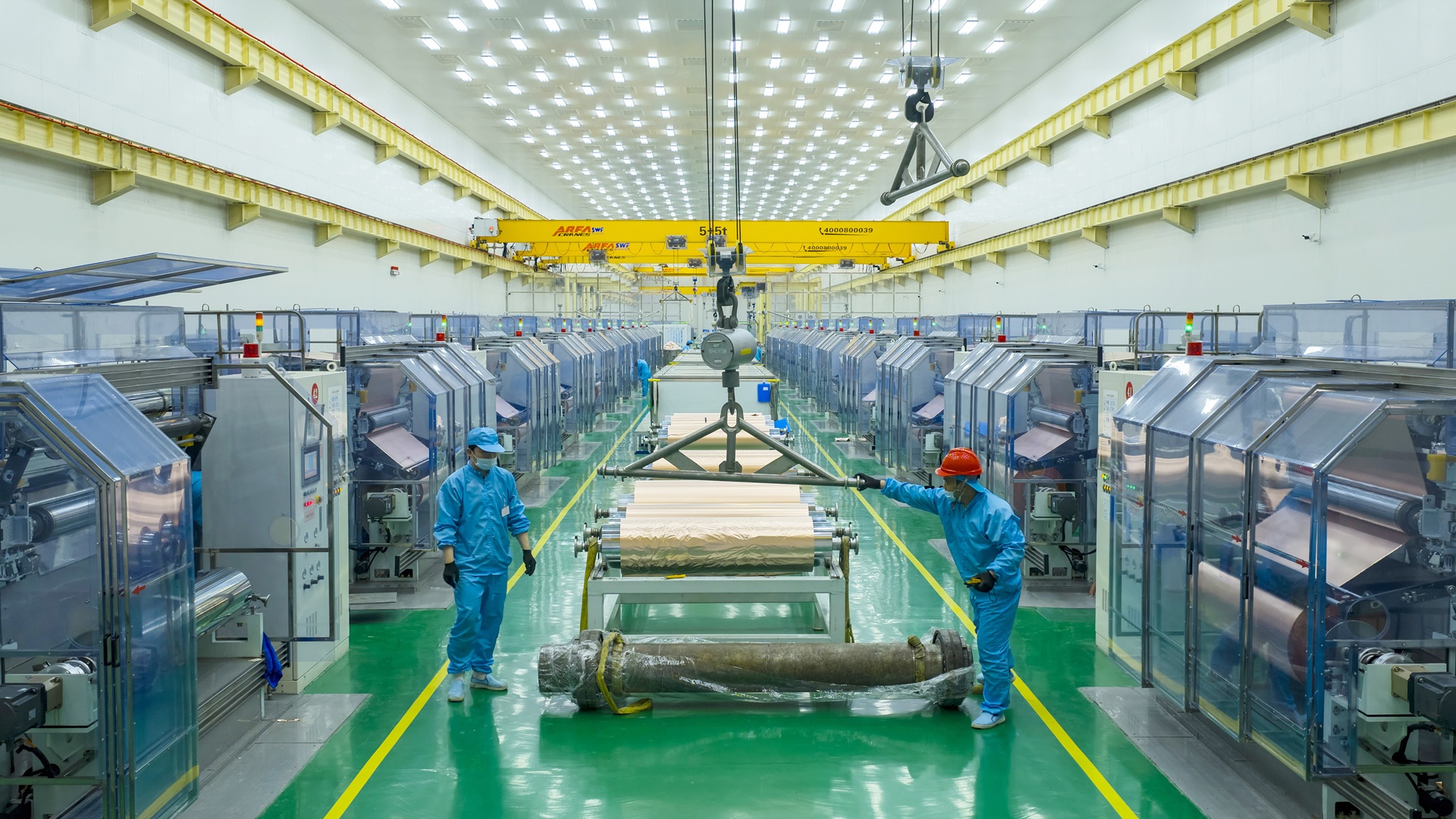
It also makes them sensitive to volume commitments. A specialty chemicals line operating at pilot scale can absorb the cost of imperfect yields. A line running at commercial scale cannot. The gap between the two is where many materials ambitions have stalled, and it is the gap that a $125 million expansion is designed to close.
The expansion also carries an implicit customer signal. Suppliers do not scale into a vacuum. Funding production growth usually follows conversations with buyers about expected volumes, specifications, and timelines. Even without published contract details, the size of the commitment suggests Cabot sees a pipeline of demand durable enough to justify the depreciation on new assets.

What "US-Scale" Actually Means
The phrase "US-scale production" is doing considerable work here. Domestic battery manufacturing ambitions have grown faster than the supply base that feeds them, which means the definition of scale keeps moving. What counts as a commercial volume today may look like a rounding error once additional cell capacity comes online.
For materials producers, that creates a planning problem. Underbuild and lose allocation to competitors; overbuild and carry idle capacity through a demand soft patch. Cabot's investment is a judgment call about where that line sits — and, implicitly, about how quickly domestic cell production will absorb what the company is preparing to make.
There is also a quality dimension. Advanced battery materials are specified, not interchangeable. A domestic supplier that can meet a customer's specification consistently is worth more than one that merely offers lower prices. That is the competitive ground Cabot appears to be staking out.
Questions the Investment Leaves Open
Announcements of this kind typically leave the operational specifics for later. Among the items that will matter as the expansion proceeds:
- How much additional output the $125 million actually unlocks, and on what timeline.
- Whether the added capacity serves electric vehicles, grid storage, consumer electronics, or a mix.
- How much of the new production is already spoken for by customer agreements.
- Whether further investment phases are contemplated if demand outpaces the initial build.
Each of those answers shapes whether the expansion is a measured step or the first move in a longer campaign. A single capital commitment rarely settles that question on its own.

The Larger Pattern
Cabot's move fits a recognizable pattern in energy manufacturing: capital flowing not to the most visible part of the chain, but to the parts that are hardest to substitute. Cells attract attention because they are tangible and expensive. Materials attract investment because they are slow to qualify and difficult to source elsewhere on short notice.
If the domestic battery buildout continues on its current trajectory, the constraint that matters most over the next several years may not be factory floor space or labor. It may be the unglamorous chemical inputs that make the whole system function — and the companies willing to spend nine figures preparing to supply them at volume.
This article is based on reporting by Interesting Engineering. Read the original article.
Originally published on interestingengineering.com