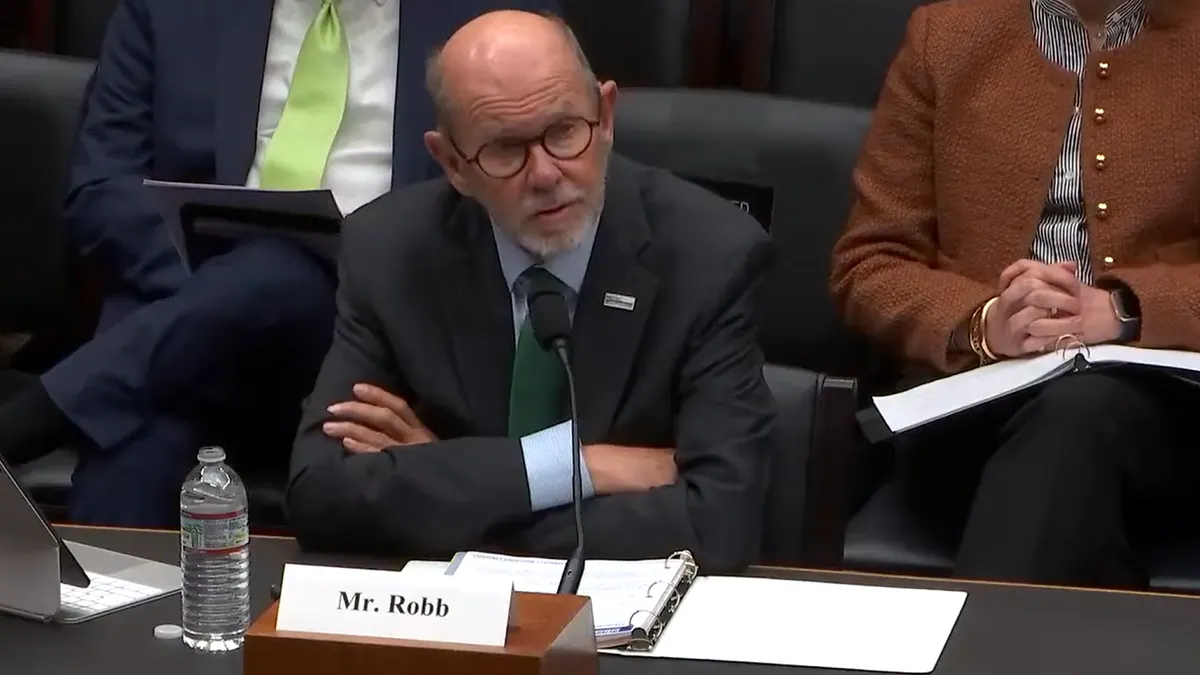
The United States is poised to lead the artificial intelligence revolution on nearly every dimension — computing capacity, capital, talent and application — with one glaring exception. That exception is electric power, and Jim Robb, president and CEO of the North American Electric Reliability Corp., argues the shortfall should worry every American.
In an opinion piece published Sept. 15, Robb contends that the country has not shown it can build new electric infrastructure fast enough to match projected demand growth. The pressures come from data centers built to train and run AI models, electrification policies, demographic shifts and industrial expansion — all arriving at once on a system that was already under strain. Robb describes the situation as focusing attention on a “five-alarm fire” that was already burning, driven by chronic underinvestment in infrastructure and a disorderly transformation of the electric grid.
His central claim is that while the physical constraints are genuine, they are not the whole story. A meaningful share of the obstacles standing in the way are self-imposed — baked into a mindset that took shape over roughly three decades. Robb's prescription is a deliberate, urgent shift in several traditional ways of thinking, beginning with how the country approaches siting and permitting.
Electricity is a delivery mechanism, not an energy source
To understand why the stakes are so high, Robb draws a distinction that is easy to lose in policy debates: electricity is not itself an energy source. It is a delivery mechanism. Energy originates in fuel — fossil fuels, wind, sunlight, water or nuclear particles — and electricity's great virtue is its fungibility across all of them.
From the perspective of the end user, a kilowatt hour is a kilowatt hour, no matter where or how it was produced. That neutrality is precisely what makes an adequate grid so valuable: it allows the economy to route whatever generation is available to the places that need power, without requiring every consumer to care about the underlying fuel.
Today, electricity accounts for a bit less than 20% of end-use energy consumption in the United States. Robb's argument is that this share is bound to rise, and that the rise is not speculative — it is already underway.
The demand drivers are stacking up
Robb identifies a cluster of forces converging on the grid at the same moment:
- Data center growth: AI workloads require enormous, reliable and continuous power, and the buildout is arriving faster than new supply can be interconnected.
- Electrification policies: Shifting transportation, heating and certain industrial processes onto the grid converts fuel demand into electric demand.
- Demographic change: Population and settlement patterns continue to reshape where power is needed.
- Industrial growth: Expanding domestic manufacturing adds large, constant loads that did not exist in the same form a generation ago.
Each of these trends is manageable on its own. Together, they compress the timeline for adding generation, transmission and the supporting fuel infrastructure into something the current development process was never designed to handle. Robb argues that electrification must be paired with policies that actively promote a robust, affordable electric grid — and the fuel infrastructure needed to feed it.
Real limits — and manufactured ones
Robb does not dismiss the practical difficulties. Manufacturing capacity for power generation turbines, for example, is finite, and it can only be scaled up so quickly. Supply chains, skilled labor and specialized equipment all impose genuine ceilings on how fast the system can grow.
But he separates those hard constraints from a second category of obstacle: limitations that are embedded in the way the industry, regulators and the public have learned to think over the past 30 years. Those limits are not physical. They are habits, assumptions and processes — and they are therefore changeable.
That distinction matters because it reframes the problem. If every barrier were a turbine factory or a transformer shortage, the only answer would be patience and capital. If a substantial portion of the barriers are self-imposed, then the answer also includes rethinking rules, expectations and defaults.
Mindset one: siting and permitting should enable responsible development
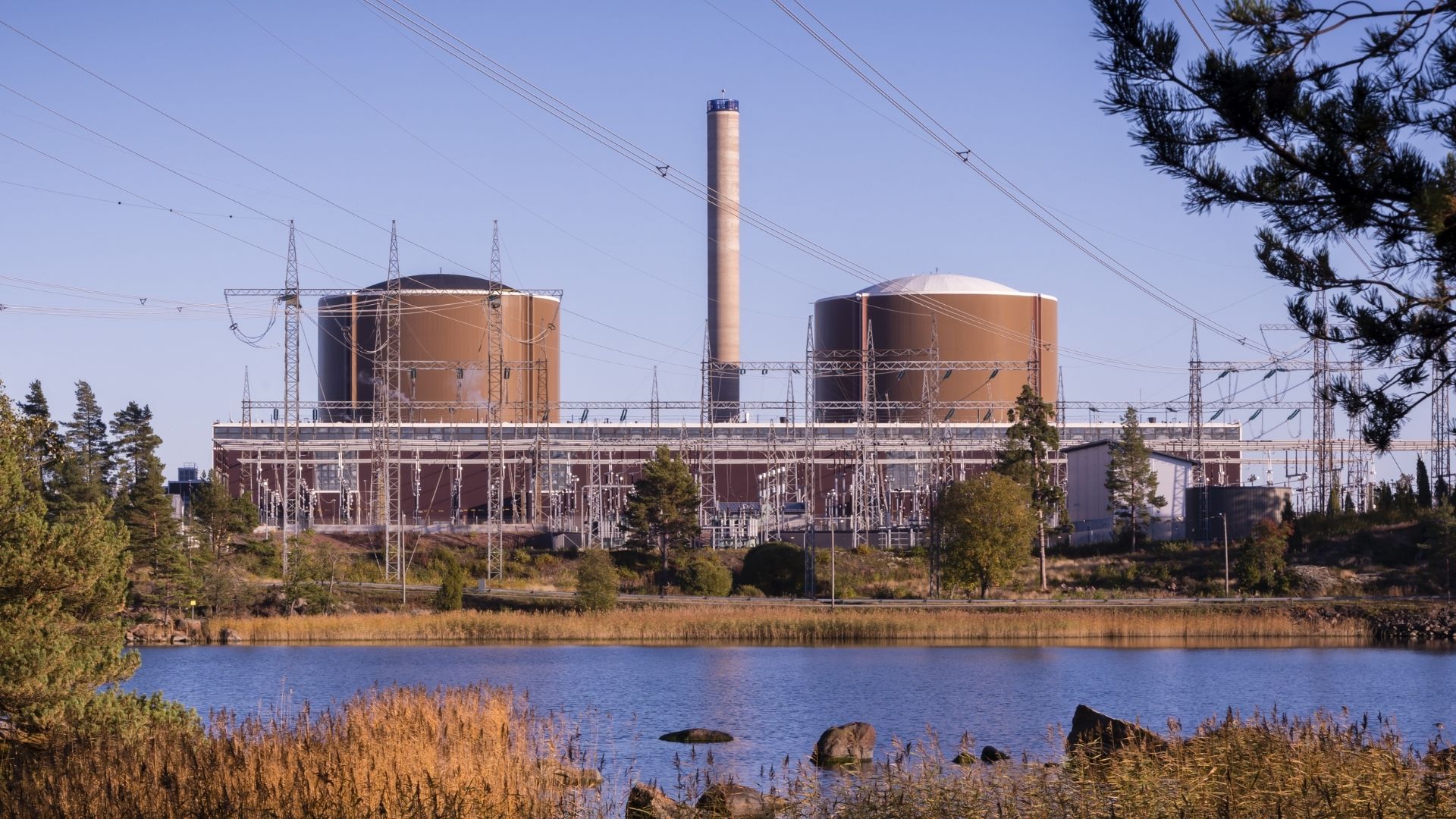
The first shift Robb names is perhaps the most concrete. Siting and permitting, in his framing, should enable responsible development rather than function primarily as a filter that slows it down.
The United States has historically been skilled at litigating, reviewing and deferring decisions about where large infrastructure goes — transmission lines, generation facilities, pipelines and the corridors that connect them. Robb's point is not that review is unnecessary. It is that a process designed to say no slowly cannot deliver the volume of infrastructure the next decade demands.

For readers watching the AI buildout, the implication is direct. A data center campus can be financed, designed and constructed in a fraction of the time it takes to permit and build the transmission needed to serve it. The mismatch between those two clocks is where projects stall and where projected demand outruns projected supply.
Investment on a generational horizon
Underlying Robb's argument is a second, related conviction: spending on the electric grid should be understood as an investment in the longer-term needs of society, not merely as a cost to be minimized in the current rate case or budget cycle.
That framing has consequences for how utilities, regulators and policymakers evaluate projects. Infrastructure built for a 40- or 50-year service life is judged harshly when measured only against near-term expense. Robb's position is that the country has effectively been doing exactly that, and that the resulting underinvestment is what created the conditions now being described as an emergency.
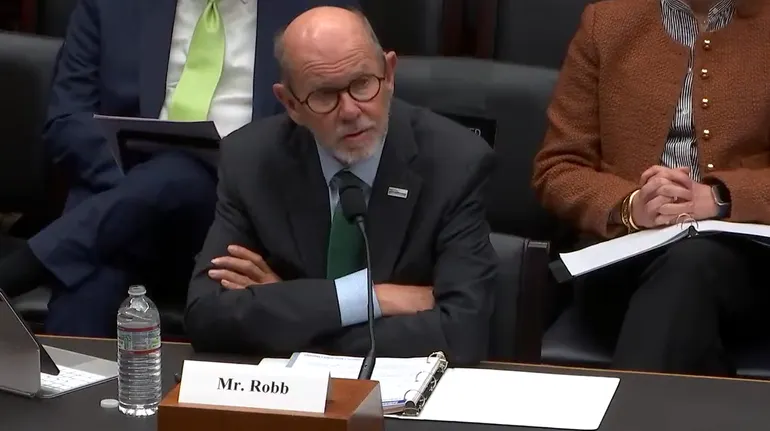
Robb brings a particular vantage point to the discussion. As head of NERC, he leads the organization responsible for developing and enforcing reliability standards across North America's bulk power system, and he has testified before Congress on grid matters. He also chairs the Group of Experts on Cleaner Electricity Systems at the United Nations Economic Commission for Europe, giving him visibility into how other economies are grappling with the same transition.

Why the mindset question is the hard one
Technology does not wait for permitting reform. AI development cycles are measured in months; grid construction cycles are measured in years, sometimes a decade or more. If the United States cannot close that gap, Robb suggests, it risks leading the AI revolution in every dimension except the one that ultimately makes it possible to run.
The four mindset shifts he calls for are, in essence, an argument about sequencing and urgency: accept that the physical constraints are real, then stop treating the self-imposed ones as immutable. Siting and permitting that enable responsible development, investment evaluated on generational terms and a willingness to revisit assumptions formed over 30 years are, in Robb's view, the difference between a grid that keeps up and one that becomes the bottleneck.
For an industry that has spent years warning about tightening margins between supply and demand, the message is pointed. The five-alarm fire is already burning. The question Robb poses is whether the response will be limited by steel and turbines — or by habits the country could choose to change.
This article is based on reporting by Utility Dive. Read the original article.
Originally published on utilitydive.com