Kia EV9 Discounts Push a Three-Row Electric SUV Into Model 3 Territory
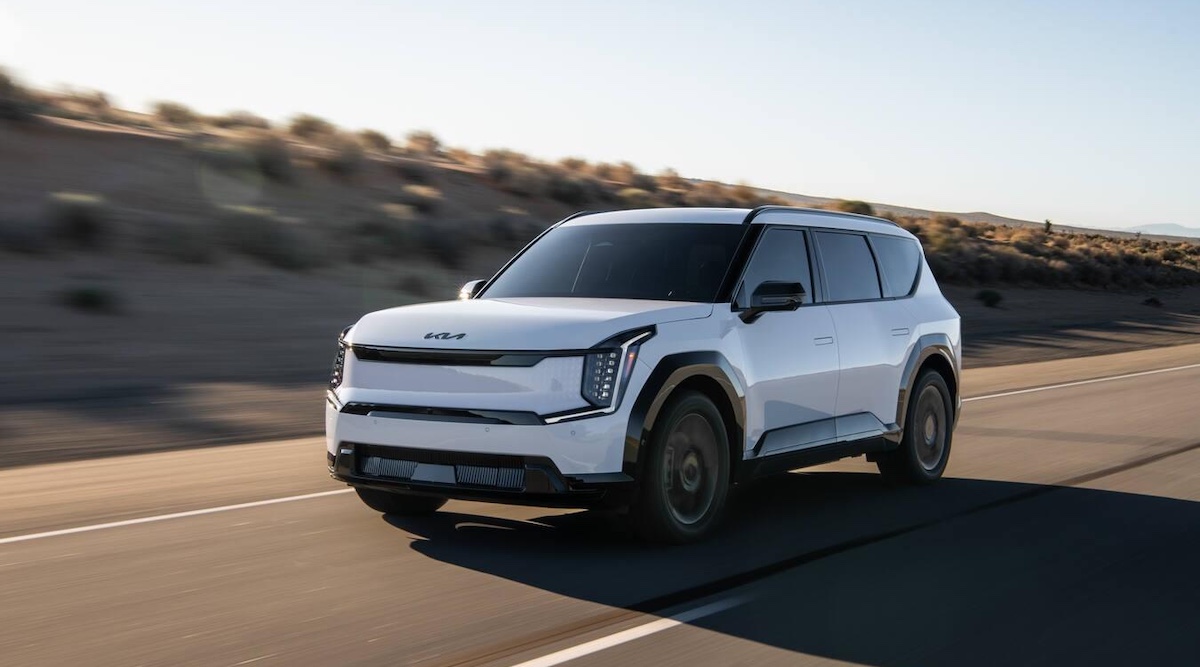
The Kia EV9 has long held a distinctive place in the electric vehicle market. It is one of the few three-row EVs a buyer can walk into a showroom and drive home, it is genuinely large, and its interior and technology have been widely described as high quality despite the vehicle remaining fairly affordable for its class. What it has not always been is cheap enough — at least not cheap enough to satisfy everyone watching the sticker. That calculation is now being rewritten by dealerships themselves, some of which have turned to unusually aggressive discounting in order to move more inventory off the lot.
The Numbers Behind the New Pricing
Reporting from Carscoops highlights a Texas dealership offering a $16,041 discount on the EV9 Light RWD. The reduction pulls the vehicle from a starting MSRP of $54,900 down to $41,414 — a figure that lands squarely in the price range of a Tesla Model 3, a Tesla Model Y, or a Kia Niro EV. Those are compact cars and small crossovers. The EV9 is neither. That mismatch between price and physical size is what makes the current offers notable rather than merely incremental.
Illinois Offers Tell a Similar Story
The Texas deal is not an outlier. Liberty Auto Plaza in Illinois has applied a $15,000 discount to an EV9 Light Short Range, cutting its price from $57,480 to $42,480. The same dealership is discounting the Light Long Range trim by $15,000 as well, reducing it from $59,785 to $44,785. The Long Range variant delivers a more practical 304 miles between charges, making it the stronger option for households that regularly cover long distances or live in regions where charging infrastructure is thinner.
- EV9 Light RWD (Texas): $54,900 to $41,414 after a $16,041 discount
- EV9 Light Short Range (Illinois): $57,480 to $42,480 after a $15,000 discount
- EV9 Light Long Range (Illinois): $59,785 to $44,785 after a $15,000 discount

What the Money Actually Buys
The EV9 Light RWD is rated at 230 miles of range. That number invites skepticism from shoppers who have been trained to treat 300 miles as the entry ticket, but it deserves context. The overwhelming majority of driving is local — commuting, errands, school runs, weekend trips around town — and a 230-mile rating covers that usage with room to spare for most households. The figure only becomes a real constraint for frequent long-distance drivers or for people without reliable home charging, and those buyers can step up to the Long Range model that reaches 304 miles.
Space and Seating Remain the Real Differentiator
Where the EV9 separates itself from the electric crossovers it now competes with on price is interior volume. The vehicle can seat up to seven adults — a configuration that remains uncommon among battery-electric offerings. Add in the praised cabin materials, the technology suite, and the overall build quality, and the value proposition at these discounted prices becomes difficult to dismiss, even for shoppers who had never seriously considered a large SUV before.
There is a counterargument worth acknowledging. Large vehicles use more energy than smaller ones, take up more room on the road and in parking lots, and are not everyone's preference behind the wheel. For buyers who do not need seven seats, a smaller EV will usually be the more efficient and more maneuverable choice. But for households that genuinely need the space, the EV9 is now priced against vehicles that cannot match it.
The Operational Cost Advantage
Sticker price is only part of the ownership picture. Compare the EV9 with a similarly spacious seven-seat SUV powered by gasoline and the gap widens considerably. Electricity is generally cheaper per mile than gasoline, and electric drivetrains carry far fewer moving parts, which typically translates into lower maintenance spending over the life of the vehicle — no oil changes, no transmission service, and less wear on braking components thanks to regenerative braking. Those savings accumulate month after month, and they compound the effect of a discount that has already removed five figures from the purchase price.
Buyers who plan to keep a vehicle for many years tend to feel that difference most acutely. The purchase discount is a one-time benefit; the running-cost advantage repeats every time the car is charged instead of refueled.
Sales Momentum Is Already Building
Buyers appear to be reaching that conclusion on their own. Sales of the electric model rose 12% in the first eight months of 2026 compared with the same January-to-August period in 2025. That growth is happening as the broader electric vehicle conversation has grown more complicated, with policy uncertainty and shifting incentives in various markets. A double-digit increase under those conditions suggests the product itself is doing much of the persuading.
Why the Discounts Are Showing Up Now
The reporting frames the price cuts as a deliberate effort by dealerships to move more vehicles off the lot rather than as a permanent repositioning of the model's value. That distinction matters for anyone watching the market closely. Manufacturer suggested retail prices and actual transaction prices have drifted apart in the EV segment, and shoppers who only consult official pricing pages can miss substantial savings sitting on dealer lots.
The current situation is a reminder that the figure on the window sticker is a starting point for negotiation, not a final answer. Discounts of this size generally appear where inventory is plentiful and a store wants to free up floor space and capital, which means availability can vary widely from one region to the next and can disappear quickly once stock thins out.

What to Weigh Before Buying
The discounts are substantial, but the decision still comes down to individual circumstances. A few questions are worth answering before heading to a dealership:
- Do you have reliable charging at home or work? Access to daily charging is what makes a 230-mile rating comfortable rather than stressful.
- Do you actually need seven seats? The EV9's size is its advantage and its cost in equal measure — larger vehicles consume more energy and occupy more space.
- How far do you drive regularly? If long highway trips are routine, the 304-mile Light Long Range is likely worth the extra few thousand dollars.
- Are similar discounts available near you? The examples reported in Texas and Illinois may not be matched by every dealership, so comparing multiple stores pays off.
- Have you calculated total cost of ownership? Purchase price, electricity, maintenance, insurance, and resale value all shape the real cost of the vehicle.
The Bottom Line
The Kia EV9 was already a compelling package: large, well-equipped, and one of the rare electric vehicles that can carry a full family in comfort. The recent wave of discounting removes the main objection shoppers had raised about it. At roughly $41,000 to $45,000 depending on trim and location, a seven-seat electric SUV now costs about the same as a mid-size electric sedan or a compact electric crossover. For anyone who has been circling the EV9 for months, the current pricing makes a stronger case than ever before — and the year-to-date sales figures suggest plenty of buyers have already noticed.
This article is based on reporting by CleanTechnica. Read the original article.
Originally published on cleantechnica.com