Data-center demand is pulling new gas generation into the pipeline
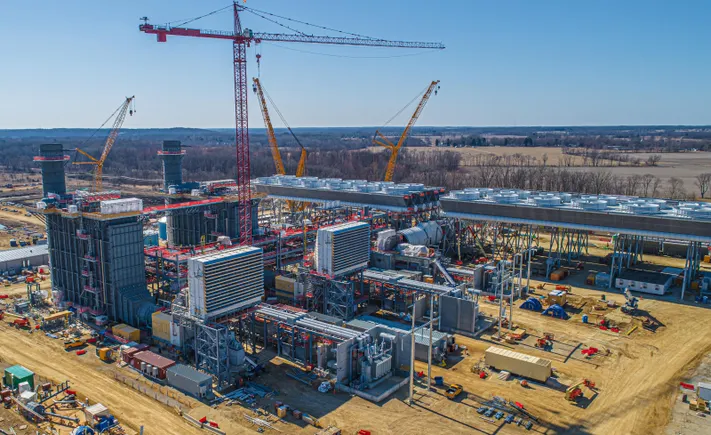
A joint venture between PPL Corp. and Blackstone Infrastructure has secured more than 5 gigawatts of combined-cycle gas turbines for projects tied to data-center growth in Pennsylvania, an early sign of how rapidly electricity demand from digital infrastructure is reshaping power investment decisions. The venture, Invitium Energy, was created to build, own, and operate power plants for data centers under long-term energy supply services agreements, and its latest update shows how seriously utilities and investors are preparing for a new wave of load growth.
According to PPL president and chief executive Vincent Sorgi, the company expects Invitium to announce at least one deal this year to supply a data center with electricity from new generating resources. The joint venture has also secured sites in Pennsylvania that could support up to 14 GW of new generation, while PJM Interconnection has accepted about 5 GW of Invitium projects into its interconnection queue.
Those numbers point to something larger than a single procurement story. They suggest the market is moving from generalized talk about AI-driven electricity demand toward concrete capacity reservation, project siting, and bilateral contracting. For a region trying to balance reliability, industrial development, and long lead times for new infrastructure, that is a meaningful shift.
The scale reflects confidence that data-center load is durable
The most striking detail is not just the turbine reservation itself, but what it implies about planning horizons. PPL said the reserved turbines represent up to $15 billion in potential investment through 2032. That is long-cycle capital being lined up on the assumption that large data-center customers will continue to seek firm power at a scale that justifies dedicated generation development.
That assumption has been building for months across the U.S. power sector, especially in regions where hyperscale computing, cloud expansion, and AI infrastructure are colliding with already-constrained grids. But what makes the Invitium update notable is that it offers specific project evidence. More than 5 GW of gas turbines reserved, around 5 GW accepted in the PJM queue, and development sites capable of much more than that indicate a pipeline moving beyond concept stage.
PPL also reported that more than 6.5 GW of data-center load is under construction in its electric service territory, up from 5 GW in the prior period. That increase underscores why utilities are now treating data-center demand less as a forecasting curiosity and more as a system-planning fact.
Bilateral power deals may matter more than PJM’s backstop process
The announcement also highlights a structural point about how new generation may actually get built. While PJM aims to hold a backstop reliability auction later in September, Sorgi said he expects bilateral contracting to be the main pathway for adding generation. In other words, the decisive commercial arrangements may come directly between developers and large customers rather than through conventional market mechanisms alone.
That matters because data-center operators want speed, certainty, and tailored supply structures. Waiting for broad market incentives to produce enough new generation can be too slow, especially when project developers are trying to secure land, power commitments, and construction timelines simultaneously. Bilateral agreements can tighten that loop by giving developers clearer revenue visibility and giving customers more direct influence over the resources built to serve them.
For Pennsylvania, this may become a defining pattern if large computing projects continue clustering in the state. It could also influence how other power markets respond if grid operators prove too slow to align new generation with emerging concentrations of digital load.
Gas is winning the race because it is dispatchable and scalable
Invitium’s turbine reservations show that, whatever the longer-term transition debate may be, combined-cycle gas remains a leading option when customers need large volumes of dependable power. Data centers require steady electricity supply and often place a premium on reliability that intermittent resources alone cannot provide without substantial balancing systems. In that environment, gas generation retains a practical advantage.
The venture is not ignoring storage. Sorgi said batteries could offer earlier income opportunities because they are faster to bring online than large gas plants. But he also noted a commercial limitation: hyperscalers may choose to incorporate batteries directly into their own projects rather than rely on third-party generators to provide them. That reduces the certainty of storage as a major near-term business line for Invitium.
The contrast is telling. Batteries may be quicker to market, but combined-cycle plants appear to be the backbone resource around which these large power supply strategies are being organized. That speaks both to current technology economics and to the operational profile of the load being served.
The payoff is years away, but positioning is happening now
PPL holds a 51% stake in Invitium, yet the company said meaningful earnings from the joint venture are not expected until the turbines come online, potentially as early as 2031. That delayed payoff underlines the long development cycle for major power assets. Turbine reservations, queue acceptance, and site control are crucial, but they are only early milestones in a process that still includes permitting, engineering, financing, contracting, and construction.
Even so, the timing does not make the move any less significant. In infrastructure markets, the companies that secure scarce equipment and viable sites early often gain an advantage that is hard to replicate later. Gas turbines suitable for large-scale projects are not an unlimited resource, and the queue for interconnection is itself a competitive bottleneck. By locking in both, Invitium is trying to position itself ahead of what it clearly expects to be an increasingly crowded field.
That also helps explain why PPL is willing to discuss such large future numbers now. The message to investors and customers is that the venture is not waiting to see whether data-center demand becomes real. It is behaving as though the demand has already become structural and that the main task is building enough supply to meet it.
A signal for the broader power sector
The wider significance of the announcement is that it links the AI and data-center buildout directly to new fossil generation planning in a major U.S. power market. For all the attention paid to semiconductor factories, server clusters, and digital infrastructure, those projects only move at full speed when power supply is credible. Invitium’s update shows how that credibility is now being assembled: reserve hardware, secure sites, enter queues, and negotiate long-term customer deals.
Whether all 14 GW of potential development ultimately gets built is still an open question. But reserving more than 5 GW of turbines is already a substantial commitment, and it sends a clear message about where developers believe load growth is heading. The debate is no longer just whether data centers will transform electricity planning. In Pennsylvania, at least, that transformation is already influencing capital allocation, generation strategy, and the structure of new customer power deals.
If similar moves spread across other regions, the result could be a broad reordering of how new power plants are justified and financed in the U.S. grid. Large industrial customers have always shaped parts of the electricity system. The difference now is the scale, speed, and concentration of digital demand, which is pushing utilities and infrastructure investors to organize new generation around computing growth with unusual urgency.
This article is based on reporting by Utility Dive. Read the original article.
Originally published on utilitydive.com