Floating Solar Scales Up in the Philippines
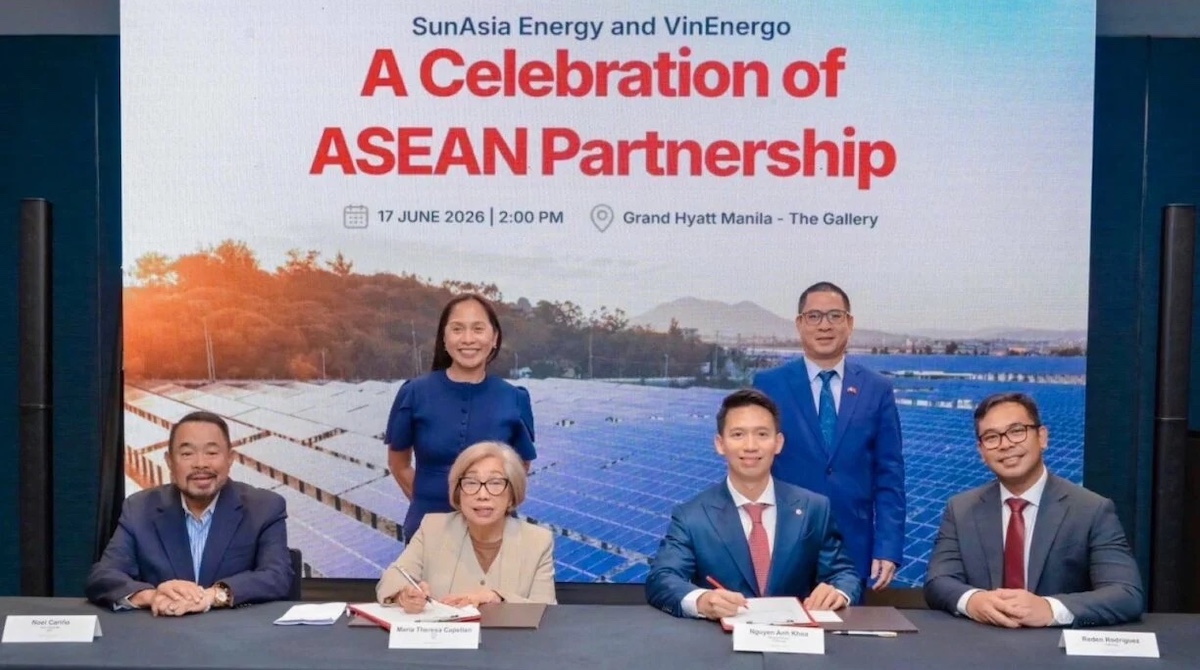
A new floating solar portfolio proposed for the Philippines would add 422 megawatts of generation capacity across three projects, marking a significant step up from the country’s earlier, much smaller deployments. According to the candidate source material, Vietnamese developer VinEnergo is partnering with solar engineering, procurement and construction company SunAsia Energy to develop the projects, which are planned for Macabebe, Sagay, and Silay.
The scale matters. Floating solar has often been discussed as a promising niche within renewable energy, but this pipeline suggests the model is moving into more utility-scale territory in the Philippines. The three planned projects are listed as 181 megawatts in Macabebe, 126 megawatts in Sagay, and 115 megawatts in Silay. Together, they total 422 megawatts peak, with nearly 700,000 solar modules expected across the portfolio.
The source text also says the development will require 62 kilometers of new transmission lines. That detail is important because large solar additions do not only depend on panel deployment. Grid connection, transmission capacity, and local integration often determine how quickly new generation can move from announcement to real output on the network.
Why Floating Solar Is Drawing Attention
Floating solar places photovoltaic arrays over water instead of occupying conventional land parcels. In markets where land competition is intense, that can make the model especially attractive. It can reduce pressure on agricultural land, industrial parcels, or densely populated areas where utility-scale solar projects may face siting constraints.
In this case, the source material says the solar modules will be mounted on pile-supported structures above water, allowing aquaculture activities to continue below the arrays. That dual-use approach is one reason floating solar has become an increasingly watched segment of the clean energy market. Instead of forcing an either-or choice between power generation and local economic activity, the project design is presented as a way to combine them.
That combination may prove particularly relevant in coastal or water-linked economies, where fisheries and aquaculture already have a large footprint. If the engineering works as intended, such projects can fit into an existing productive landscape rather than replacing it outright. For policymakers and developers, that can improve the political and economic case for deployment.
The candidate text frames the partnership as part of a broader effort to strengthen energy security, support economic growth, and protect the planet. Those are familiar goals in renewable energy announcements, but they are not trivial in the Philippine context. The country faces rising power demand, exposure to imported fuels, and the need for more resilient electricity infrastructure. A project of this size, if completed on schedule, would be notable not just as a solar buildout but as a test of whether floating generation can contribute meaningfully to national energy planning.

A Jump From Pilot Scale to Portfolio Scale
The source text contrasts the new announcement with an earlier floating solar project in the Philippines that had a capacity of 4.99 megawatts. Moving from a roughly 5-megawatt reference point to a 422-megawatt portfolio is a sharp change in ambition. Even allowing for the difference between a single installation and a multi-site pipeline, the gap shows how quickly the sector’s expectations are shifting.
That shift also reflects a broader industry pattern. Floating solar is no longer being treated only as an experimental option for reservoirs or specialty sites. Developers increasingly view it as a practical extension of mainstream solar deployment, especially in regions where land availability, water infrastructure, and high electricity demand intersect.
For VinEnergo, the project is described as its first entry into the Philippine market. That makes the portfolio a market-entry move as well as an infrastructure announcement. For SunAsia Energy, the partnership could strengthen its role in delivering specialized renewable projects in the country. Cross-border collaboration of this kind is common in utility-scale clean energy, where development, financing, engineering, and local execution often depend on different firms bringing complementary strengths.
The transmission component underlines that this is not only a module procurement story. Building 62 kilometers of new lines implies a wider infrastructure effort that may influence cost, timing, permitting, and local impact. In many renewable projects worldwide, interconnection timelines have become one of the main constraints. The Philippine portfolio’s eventual significance will therefore depend not only on panel installation but also on how effectively supporting infrastructure is built around it.
What the Portfolio Could Mean
If delivered as outlined, the three projects would help test whether floating solar can become a repeatable model for the Philippines rather than an occasional exception. The technology’s appeal lies in its ability to open up new surfaces for renewable generation while limiting direct competition with land-based uses. In a country made up of thousands of islands, with uneven infrastructure and growing electricity needs, that proposition is strategically interesting.
There are still practical questions that the supplied source text does not answer, including project timelines, financing structures, environmental review details, and how the output will be integrated into local and national grids. Those missing details matter for assessing execution risk. Still, the announcement is substantial on scale alone, and it points to a more mature phase of floating solar development in Southeast Asia.
The strongest signal from this portfolio is not simply that another solar project has been announced. It is that developers are trying to industrialize a format that blends utility-scale power generation with continued water-based economic use. If that formula works at 422 megawatts, it could shape how future projects are designed in other space-constrained or water-rich markets.
For now, the Philippine plan stands out as a marker of where renewable energy development is heading: larger portfolios, more hybrid land-and-water strategies, and infrastructure designs aimed at fitting generation into already active landscapes. Floating solar has often been easy to describe as visually novel. What matters more is whether it is becoming operationally normal. This portfolio suggests developers believe that moment is getting closer.
This article is based on reporting by CleanTechnica. Read the original article.

Originally published on cleantechnica.com