Sunrun is slowing down while trying to change its model
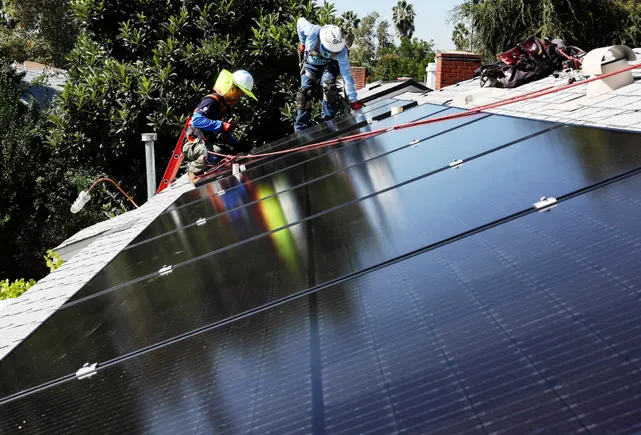
Sunrun, the largest provider of third-party-owned residential solar and storage systems in the United States, is navigating a difficult transition. The company said subscriber and capacity additions fell sharply in the second quarter, even as battery attachment rates improved and executives emphasized a strategy centered on direct sales, asset quality, and extracting more value from an already large installed base.
The quarter reflects a broader tension in residential solar. Demand for home energy systems remains linked to long-term pressures on electricity costs, grid reliability, and electrification. But the near-term business environment has become much harder. Sunrun’s latest results show a company trying to protect margins and reposition its operations rather than simply chasing volume.
The numbers point to a tougher market
The source text gives a clear snapshot of the strain. In the second quarter of 2026, Sunrun added 19,793 subscribers, down 31% from the same period a year earlier. It installed 174 megawatts of solar capacity and 332 megawatt-hours of battery capacity, down 23% and 15%, respectively, from the year-ago quarter.
At the same time, the company increased battery attachments on new systems to 74%, up from 70% in the second quarter of 2025. That is an important operational marker. It means nearly three out of every four new systems now include storage, strengthening Sunrun’s position in a market increasingly defined not only by solar generation, but by flexible household energy assets that can interact with the grid.
Even so, stronger battery penetration was not enough to offset the broader slowdown. Sunrun cut its 2026 guidance for aggregate subscriber value to a range of $4.6 billion to $4.9 billion, down from a previous forecast of $4.8 billion to $5.2 billion. The company also reduced its full-year cash generation outlook, according to the source, underlining that management sees the pressure as more than a one-quarter fluctuation.
Why the market reacted
Investors responded quickly. Sunrun shares fell more than 10% after the company’s second-quarter earnings announcement, though the stock later recovered some of those losses after the Trump administration released final tariff guidance on imported solar energy components. Industry participants quoted in the source said that guidance could create long-term value for the sector.
That combination tells an important story about the market’s current priorities. On one hand, investors are watching customer acquisition and capacity growth very closely, and Sunrun’s declines were severe enough to trigger an immediate selloff. On the other hand, policy and trade structure still have the power to reshape sentiment, especially in a sector where equipment costs and supply-chain rules can materially affect long-term economics.
For Sunrun, though, external policy relief does not solve the operating challenge on its own. The company is dealing with slowing growth in the core rooftop business while trying to demonstrate that batteries and software-enabled grid participation can open new revenue channels.
The installed base is becoming the strategy
Chief executive Mary Powell’s remarks, as cited in the source, frame that shift directly. She said Sunrun is “scaling deliberately” with a focus on customer experience and asset quality, while trying to unlock new ways to monetize the network it has already built. That includes distributed power plant programs as well as emerging data center and grid-edge applications.
This is more than earnings-call language. Sunrun says it has installed more than 4.6 gigawatt-hours of networked energy storage capacity. That installed base is not just a record of past sales; it is potentially a platform. Batteries connected across thousands of homes can be aggregated into virtual power plants that help utilities and grid operators manage peaks, avoid stress events, and compensate households or system owners for flexible capacity.
The source points to active pathways for that participation, including California’s Demand Side Grid Support program and the ConnectedSolutions program in New England. Those examples matter because they show Sunrun’s strategy is grounded in existing market mechanisms rather than a purely speculative future business.
If direct rooftop solar growth is under pressure, grid services may become more important to the investment case. The logic is straightforward: if the company can earn more from each installed customer over time, weaker near-term subscriber growth becomes somewhat easier to absorb.

A rocky transition, not a clean pivot
Still, the source explicitly describes a “rocky” transition to direct sales, and the operating data supports that characterization. Sunrun is trying to change how it acquires and monetizes customers during a period when the residential solar market is already facing headwinds. That raises execution risk on top of demand risk.
The company’s language around deliberate scaling suggests management is willing to trade some growth for system quality and better long-term economics. That may be the right strategic call if acquisition costs are high or if lower-quality growth would weaken future cash generation. But it also places more pressure on the company to prove that reduced volume today leads to a stronger, more profitable customer base tomorrow.
The battery numbers offer one encouraging signal. Higher attachment rates can improve customer value, increase resilience benefits to homeowners, and deepen Sunrun’s role in grid programs. Yet they do not eliminate the central challenge revealed this quarter: the business is adding fewer customers and less capacity while cutting expectations for the year.
What this says about residential solar now
Sunrun’s quarter is a useful read-through for the wider U.S. residential energy market. The rooftop solar business is no longer just about signing up as many households as possible for panel installations. It is increasingly about pairing solar with storage, managing distributed assets, and finding recurring value in grid participation.
That evolution could ultimately strengthen the sector, especially if utilities and regional programs pay more consistently for distributed flexibility. But the transition is messy. Sunrun’s results show that even a category leader with a large installed base and rising battery attachment rates can face meaningful contraction in new additions.
For now, Sunrun appears to be betting that operational discipline and installed-base monetization can carry it through a weak period for residential solar growth. Whether that works will depend on two things happening at once: stabilization in the core business and real revenue expansion from batteries and virtual power plant-style services. The company has made clear where it wants to go. The harder question, after this quarter, is how long the market will give it to get there.
This article is based on reporting by Utility Dive. Read the original article.

Originally published on utilitydive.com