New York puts large data centers on pause
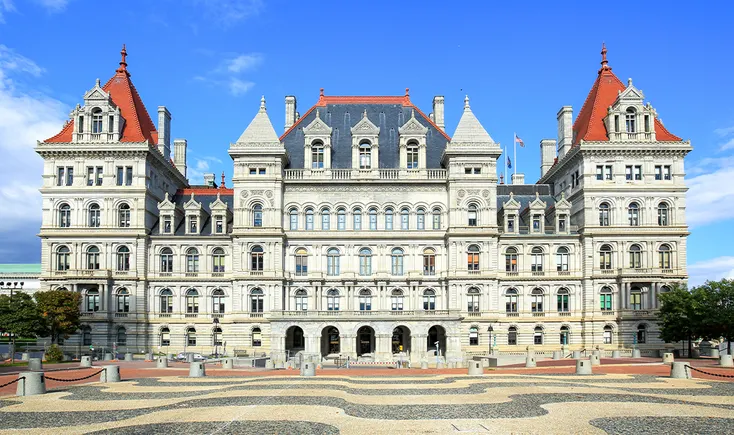
New York has taken an unusually direct step into the data center boom: Gov. Kathy Hochul on July 14 signed an executive order that pauses state environmental permits for new hyperscale data centers for up to one year. The order applies to facilities that could consume 50 megawatts or more of electricity, a threshold that captures the largest projects now being proposed as AI and cloud infrastructure demand accelerates.
The immediate effect is procedural, not permanent. State officials are using the pause to build a regulatory framework for a class of projects that can reshape local power demand, land use, and environmental review all at once. But the broader significance is harder to miss. New York is not merely slowing a few permit applications. It is signaling that the next phase of data center growth will be judged against grid capacity, emissions goals, and public-policy constraints, not just market demand.
Why the state intervened now
The timing reflects the speed of the buildout. According to the New York Independent System Operator, the state’s large-load interconnection queue grew from six projects totaling roughly 1,045 megawatts in 2022 to 48 proposals totaling about 12 gigawatts as of Dec. 31. That is a dramatic change in only a few years, and it helps explain why policymakers are treating hyperscale facilities as a distinct planning problem.
Data centers are not new to New York, but the current wave is different in both size and concentration. Facilities tied to AI training, inference, and large-scale cloud services can require enormous and continuous power, along with transmission, water, and siting decisions that ripple well beyond a single parcel of land. A queue measured in gigawatts turns what might once have been a local development question into a statewide infrastructure issue.
That shift appears to be driving the state’s approach. Rather than approving projects under older rules and revisiting the consequences later, the executive order creates time for the state to decide what standards should govern a fast-growing sector whose demand profile may not fit neatly into existing permitting systems.

The executive order is only part of the story
The pause also sits alongside a broader legislative effort. New York’s proposed Responsible Data Center Development Act, A11560, passed the state legislature on June 4, but the governor has not signed it. Legal analyses cited by Utility Dive say Hochul’s executive order addresses many of the same concerns as that bill, but in narrower form.
That difference in scope matters. The executive order uses a 50-megawatt threshold and focuses on pausing state environmental permits for future projects while policymakers study the issue. The bill, by contrast, would reach smaller facilities through lower and variable peak-demand thresholds of 1, 5, and 20 megawatts. Candidate metadata further indicates the legislation would require large data centers to procure increasing shares of renewable electricity, reaching at least one-third by 2030.
In practical terms, that means New York is considering two layers of intervention. One is an immediate brake on the biggest pending projects. The other is a potentially more durable set of obligations that could change how both new and existing facilities source power and plan expansion.
Existing projects may not be fully insulated
One reason the order is drawing attention from developers and investors is that it may not be confined to greenfield proposals that have not yet entered the pipeline. Analyses cited in the source text suggest that projects already awaiting approval from the state Department of Environmental Conservation as of July 14 could be affected by the pause. Projects moving only through local permitting channels without DEC approval may avoid that bottleneck.
That is an important distinction for companies that assumed being “in process” was enough protection against policy change. The new order appears to introduce uncertainty for some applications already underway, especially if their path depends on state-level environmental review. For a sector that values speed to power and speed to market, a one-year delay can materially affect construction schedules, financing assumptions, and customer commitments.
The broader message is that permitting strategy now matters as much as site selection. Developers will need to understand not only local zoning and land-use politics, but also how state environmental jurisdiction interacts with project scale and energy demand.
A warning for the wider market
New York is the first state to impose a moratorium of this kind on new hyperscale data centers, according to the source text, and that alone makes the move significant. The state is effectively testing a new policy playbook for managing AI-era infrastructure: pause, assess grid and environmental impacts, and then decide what obligations high-load facilities should meet before more capacity is approved.
Whether other states follow will depend on local conditions, but the pressures are broadly familiar. Rapidly rising interconnection requests, public concern over power sourcing, and the difficulty of reconciling industrial-scale data demand with climate targets are not unique to New York. What is distinctive here is the willingness to act before the pipeline turns into built capacity.
For operators, the implication is clear. The next contest in data center development will not be won by land banking or hardware supply alone. It will be shaped by access to electricity that regulators and communities see as credible, financeable, and compatible with environmental policy.
More than a temporary halt
It would be easy to read the executive order as a short administrative timeout. That would understate what is happening. New York is using a narrow permitting pause to open a much larger policy debate about who gets to consume large blocks of electricity, under what conditions, and with what obligations to the grid and the state’s energy transition.
Even if the pause expires in a year, the precedent may endure. Developers now have to plan for a world in which data centers are treated less like conventional commercial real estate and more like major energy assets subject to explicit scrutiny. In New York, the era of routine approvals for the largest facilities may already be over.
This article is based on reporting by Utility Dive. Read the original article.
Originally published on utilitydive.com