BYD pairs a flagship SUV launch with a deeper push into vehicle electronics
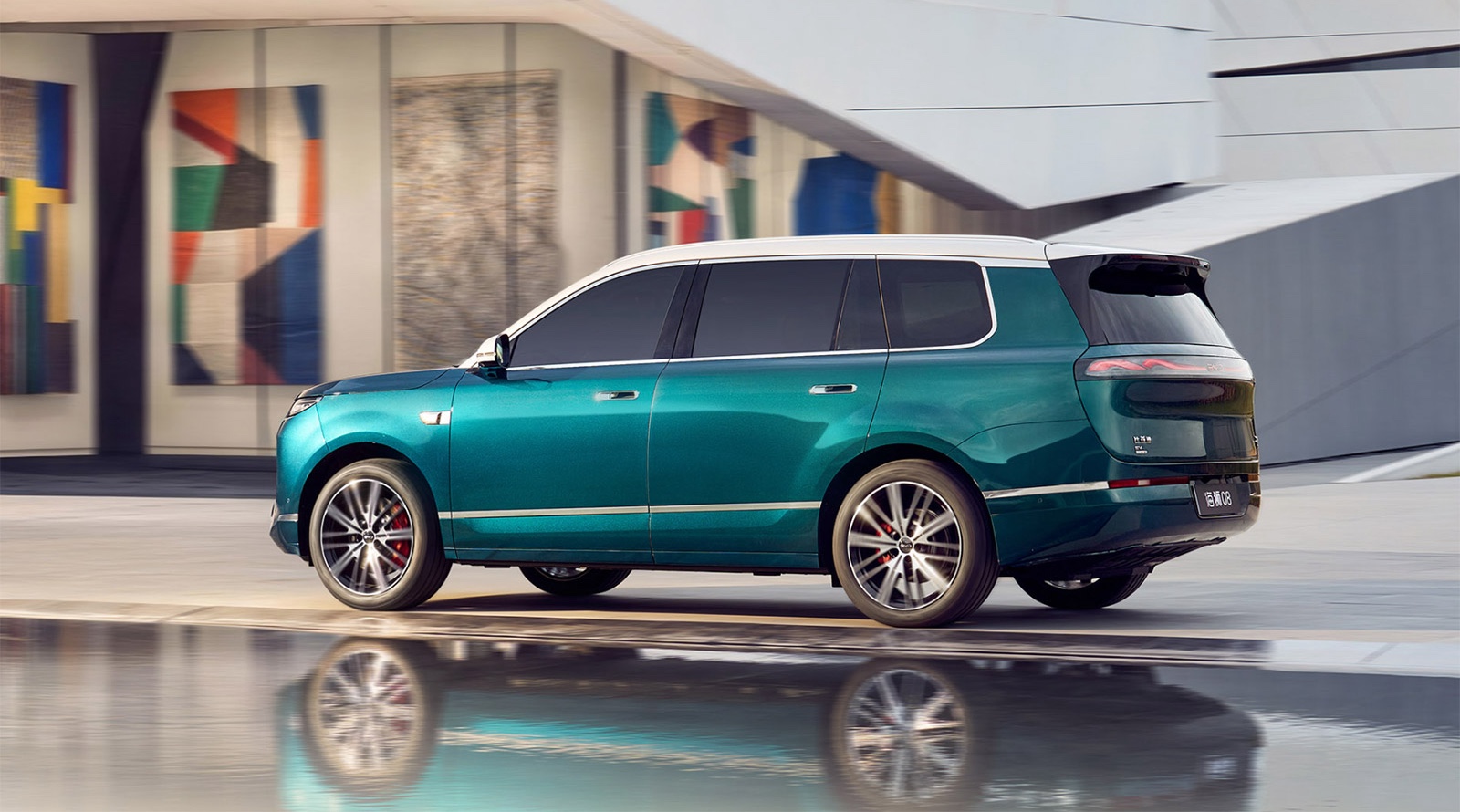
BYD has introduced the Sealion 08, a new large sport utility vehicle positioned as the flagship of its Ocean series, and at the same time highlighted the start of mass production for a 4D radar chip. Taken together, the moves show a company trying to do more than add another model to a crowded market. BYD is also reinforcing the parts of the stack that increasingly matter in electric vehicles: charging speed, battery performance, software-linked driver assistance, and in-house hardware for sensing.
The timing matters. CleanTechnica described BYD as trying to finish 2026 on stronger footing after a period of sales pressure that left the automaker facing a difficult year-over-year comparison. August battery-electric passenger vehicle sales improved, according to the report, but the broader question remains whether that rebound will be enough to restore overall growth for the year. The Sealion 08 appears designed as part of that answer.
A new flagship with both BEV and plug-in hybrid versions
The Sealion 08 arrives as a large SUV offered in both battery-electric and plug-in hybrid forms. BYD is bringing the model to market with eight variants across the two powertrain families, and buyers can choose either five-seat or six-seat layouts. That breadth suggests BYD is aiming for volume by covering multiple price points and use cases rather than relying on a narrow premium configuration strategy.
Pricing starts at 229,900 yuan for the entry version and rises to 279,900 yuan for higher trims, according to the source report. For a vehicle positioned as a flagship SUV, that places the model in an aggressive bracket. The article frames that pricing as especially striking given the vehicle size and the headline specifications attached to it.
The plug-in hybrid versions use BYD's DM-i system and are listed with electric-only range figures of 400 kilometers for rear-wheel-drive variants and 350 kilometers for all-wheel-drive versions. Those are notable numbers for vehicles that are not fully electric, especially because electric-only capability on plug-in hybrids often remains modest. Here, BYD appears to be leaning into a strategy where a plug-in hybrid can handle a larger share of routine driving without burning fuel.
The fully electric Sealion 08 versions are listed at 900 kilometers and 800 kilometers of range depending on specification. Even allowing for the usual caveats around test-cycle assumptions and real-world variation, those figures are central to the message BYD wants the model to send: long-range electric driving no longer needs to be reserved for higher-priced halo vehicles.

Charging speed remains part of the sales pitch
BYD is also emphasizing charge performance. The report says the Sealion 08 uses a second-generation Blade Battery and supports what BYD calls flash charging. In practical terms, the cited figures are 10% to 70% charge in five minutes, or 10% to 97% in nine minutes. Whether those results hold across a wide range of operating conditions is a separate question, but as presented, the claimed speeds are meant to move the discussion beyond conventional concerns about downtime.
Fast charging has become one of the most commercially important battlegrounds in the electric vehicle market because it addresses a constraint that ordinary buyers still understand immediately. Longer range helps, but a shorter stop can matter just as much. By packaging large quoted ranges with extremely fast top-up claims, BYD is trying to reduce both sides of range anxiety at once.
The Sealion 08 also includes BYD's God’s Eye B driver-assistance system, described in the source as nearly fully autonomous self-driving. The article does not provide a technical breakdown of that system’s capabilities or operating limits, so the clearest conclusion supported by the text is that BYD sees advanced assistance as a standard part of the premium value proposition for new models rather than an optional differentiator for a small subset of buyers.
Why the 4D radar chip matters
The second announcement, the start of mass production for a 4D radar chip, may prove just as important as the vehicle launch itself. Carmakers increasingly compete not only on finished vehicles but also on how much of the sensing, computing, and powertrain stack they control. Bringing a radar component into mass production suggests BYD is working to extend its vertical integration deeper into advanced driver-assistance hardware.
That matters for several reasons. First, in-house component development can reduce dependence on external suppliers in strategically sensitive areas. Second, it can help align hardware roadmaps with vehicle platform cycles. Third, it may improve cost control if the company can spread development and production across high volumes. For a manufacturer shipping multiple electrified models across segments, those advantages can compound quickly.
The source article does not spell out the radar chip’s performance characteristics, but the label alone points to the competitive direction of the industry. Sensor suites are becoming a more visible part of how automakers market safety, autonomy-adjacent features, and digital sophistication. If BYD can combine scale manufacturing with its own sensing hardware, it strengthens the company’s ability to differentiate beyond battery cost and sticker price.
BYD is making a broader strategic argument
The real significance of the Sealion 08 launch is not just that BYD has another SUV. It is that the company is presenting a package built around several themes at once: accessible flagship pricing, unusually high quoted range, very rapid charging, and tighter control over enabling technologies such as radar. That combination is meant to reinforce BYD’s identity as an industrial platform company, not merely a vehicle assembler.
The competitive context also matters. Large SUVs remain one of the most commercially important product categories, and they are contested by domestic and international brands across electric, hybrid, and conventional drivetrains. BYD’s response is to blur old distinctions. A plug-in hybrid can offer electric range that is unusually substantial. A battery-electric model can promise very high range at pricing that undercuts many premium rivals. A vehicle launch can also double as a semiconductor and driver-assistance story.
Whether the Sealion 08 becomes a major sales driver will depend on factors beyond launch-day specifications, including buyer reception and sustained production execution. But based on the supplied report, the company is clearly trying to end 2026 by showing momentum in both product and technology. For BYD, that may be the larger objective: proving that its next phase of growth will come not from a single breakthrough, but from stacking manufacturing scale with more control over the critical systems inside the car.
This article is based on reporting by CleanTechnica. Read the original article.
Originally published on cleantechnica.com