Lincoln’s downtown microgrid is about to get a non-lithium storage upgrade
A major municipal microgrid in Nebraska is preparing to add a zinc-based battery system to support some of the state capital’s most important buildings and services, marking a notable step in the broader push to diversify grid-scale energy storage beyond lithium-ion chemistry.
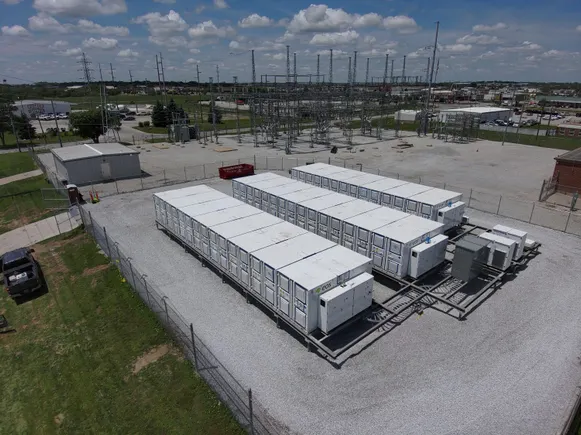
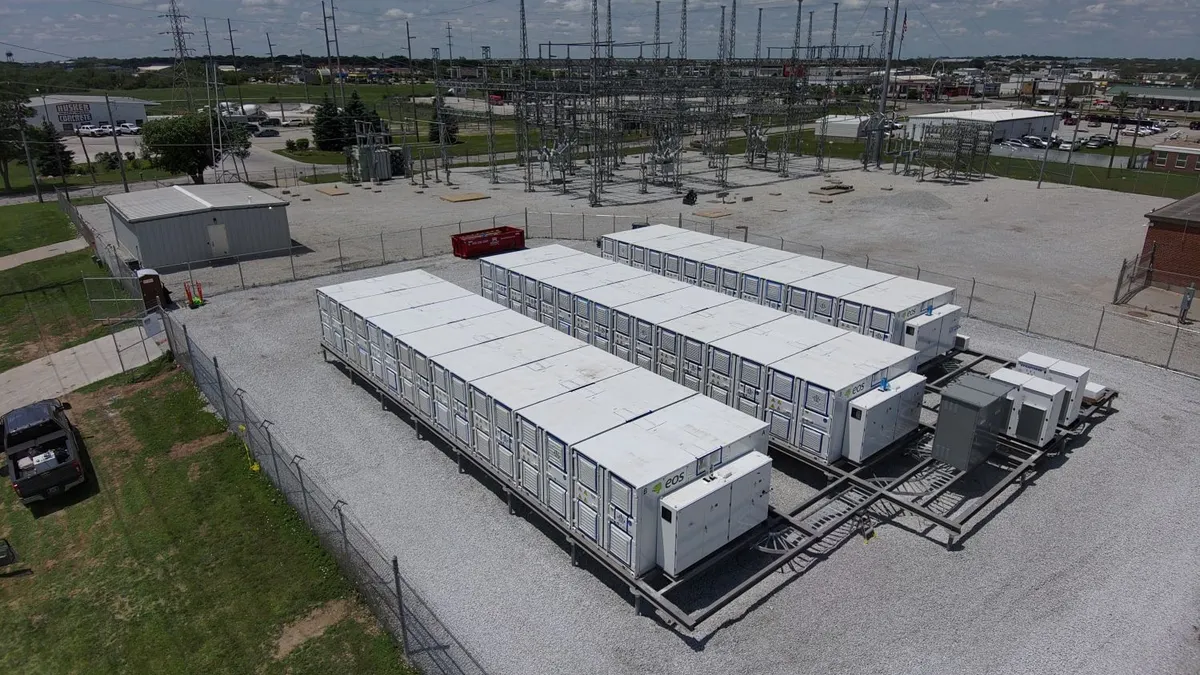
Lincoln Electric System, the public power utility serving Nebraska’s capital city, said a 3-megawatt, 12-megawatt-hour battery is in final commissioning and is expected to begin commercial operations in the coming weeks. Once online, the system will increase the capacity of Lincoln’s 30-megawatt microgrid by about 10 percent, according to the utility.
The project is significant for two reasons. First, it expands a resilience-focused microgrid that serves government offices, public safety facilities, and other critical infrastructure in central Lincoln. Second, it uses a zinc-based battery supplied by Eos Energy Enterprises, placing it within a small but growing group of U.S. utility projects testing alternatives to lithium as demand for storage rises.
What the battery will support
The downtown Lincoln microgrid already combines several energy assets. Utility officials said the system includes a dual-fuel combustion turbine that runs mainly on natural gas, 300 kilowatts of customer-owned solar, and 500 kilowatts of customer-owned thermal energy storage. The new battery will become another flexible resource in that mix.
Its mission is practical rather than experimental. Lincoln Electric System says the battery will charge during periods of lower demand and discharge when electricity load and prices rise. That makes it useful for shaving peaks, improving operational flexibility, and helping the utility extract more value from renewable generation, which is especially relevant because wind provides more than half of the utility’s generation portfolio.
Just as important, the battery sits inside a microgrid designed around continuity of service. As part of that system, it will help back up the Nebraska state Capitol complex, a federal building, city offices, and two public safety facilities. In other words, the installation is not only about economics or emissions. It is also about maintaining service for institutions that must remain functional during disruptions.
The physical location reflects that role. The battery is being installed on part of an existing substation in central Lincoln, integrating storage into infrastructure that already anchors the city’s resilience strategy.

Why a zinc battery matters
Most headlines about energy storage still revolve around lithium-ion systems, which dominate deployment thanks to falling costs, a large manufacturing base, and established supply chains. But utilities and large power users have been exploring other chemistries as they look for alternatives that may better fit certain operating profiles, cost structures, safety preferences, or domestic supply considerations.
Lincoln’s project is part of that shift. Utility Dive described growing interest in zinc and other non-lithium battery chemistries amid rapidly rising demand for storage. The Lincoln installation does not by itself transform the market, but it does show that a public utility is willing to put a non-lithium technology into a real critical-infrastructure application rather than limiting it to a pilot with little operational consequence.
That distinction matters. Grid operators do not adopt new hardware casually, especially when public safety and government continuity are involved. A battery selected for a microgrid serving a state capitol district has to do more than look promising in a presentation. It has to fit into dispatch planning, interconnection realities, and reliability expectations.
The fact that Lincoln Electric System expects commercial operation soon suggests the technology has moved beyond concept evaluation and into an operational test in a meaningful use case.
How the project developed
According to Lincoln Electric System’s director of strategy and innovation, Scott Benson, the utility first began evaluating energy storage in the late 2010s. At that point, officials did not see an urgent need for a battery on what he described as a highly reliable system.
That changed after the downtown Lincoln microgrid came online in 2020. Once the microgrid existed, storage became a more logical fit. The utility saw what Benson described as a potential “marriage” between the microgrid’s resilience mission and the capabilities of battery storage.
Lincoln Electric System issued a request for proposals in late 2021 and ultimately selected Eos Energy Enterprises as the battery supplier. The timeline illustrates a pattern common in utility infrastructure: interest begins years before deployment, and the path from concept to commissioning involves procurement, technical review, siting, and integration with existing assets.
It also shows how microgrids can create new demand for technologies that previously lacked a clear business case. A battery may be harder to justify on a traditionally reliable grid if its benefits are diffuse. Within a microgrid serving high-priority facilities, however, the same battery can play a more obvious role in resilience, dispatch flexibility, and renewable integration.
What this says about the storage market
The Lincoln project arrives as U.S. utilities face two parallel pressures: rising demand for flexible power resources and increased scrutiny of how storage systems are sourced, built, and deployed. In that environment, non-lithium batteries are attracting attention not because they have displaced lithium, but because utilities want more than one path forward.
This Nebraska deployment suggests several takeaways:
- Municipal utilities are willing to test non-lithium storage in operational settings.
- Critical infrastructure resilience is becoming a strong use case for storage investment.
- Microgrids can make alternative battery chemistries easier to justify.
- Utilities are looking for storage systems that do more than arbitrage energy prices.
There are still limits to what can be concluded from one project. The article does not provide long-term performance data, lifecycle economics, or comparative results against lithium-ion systems. It also does not claim that zinc batteries are ready to dominate utility procurement.
But the project does indicate that the storage conversation is broadening. For years, the question was whether utilities would add batteries at all. Increasingly, the question is which battery chemistry fits which job.
In Lincoln, the answer for this job is zinc. If the system performs as expected after commercial operations begin, it will stand as an early example of a public-power utility using non-lithium storage to reinforce a microgrid that protects government, emergency, and civic operations. That is a narrower claim than a market revolution, but it is also a more useful one. It shows where alternative batteries can start to matter: not in abstract technology debates, but in the daily infrastructure that cities rely on when resilience is no longer optional.
This article is based on reporting by Utility Dive. Read the original article.
Originally published on utilitydive.com




