Zoox moves from prototype phase toward scaled robotaxi deployment
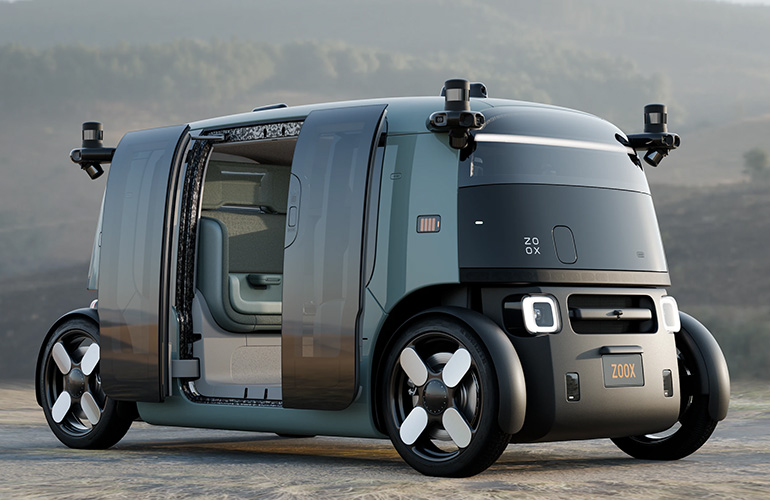
Zoox has unveiled what it describes as the final production design of its purpose-built robotaxi, marking a consequential step in the company’s effort to turn years of autonomous-vehicle development into a larger commercial rollout. The announcement signals more than a design refresh. It is Zoox’s statement that the vehicle architecture, rider experience, and operational approach are now stable enough to support mass manufacturing and expansion into additional U.S. markets.
According to the company details reported in The Robot Report, the newest generation is intended to become the production version of the vehicle as Zoox scales output to 100 vehicles per week. That matters because autonomous mobility companies have often demonstrated technical progress long before they could show a realistic path to producing vehicles in volume. By tying a finalized design to a concrete manufacturing target, Zoox is trying to show it is entering a more operational phase of the business.
The company also says the design reflects lessons from more than half a million riders. That rider volume gives Zoox a meaningful body of real-world feedback, especially in a sector where many autonomous programs remain limited to testing, pilot service, or tightly controlled demos. For Zoox, the implication is that product decisions are now being shaped not only by engineering needs, but by passenger behavior and comfort in live service.
A different robotaxi philosophy from conventional cars
Zoox has long distinguished itself by rejecting the idea that a robotaxi should simply be a standard passenger vehicle with self-driving software added on top. Its vehicle is purpose-built for autonomous operation and is designed without a steering wheel or pedals. Inside, four adult passengers sit facing each other in what the company describes as a carriage-like cabin.
That interior configuration remains one of Zoox’s clearest differentiators from competitors. It reflects an argument that if no human driver is needed, the cabin should be optimized around riders rather than around legacy controls. In practical terms, that changes how space is used, how passengers enter and exit, and how they experience a trip. It also pushes Zoox into a more ambitious engineering and regulatory position than companies adapting existing vehicle platforms.
The latest production design keeps that core concept intact while refining the vehicle in smaller ways that matter for day-to-day service. Inside the cabin, Zoox has shifted to a lighter visual palette, with aloe-green seating and stone-grey trim and flooring. The company says the simplified color scheme is meant to reduce distraction and create a calmer environment for passengers. It also says the materials are intended to withstand urban wear while improving contrast so riders can more easily spot forgotten items such as phones or bags before leaving the vehicle.
Those details may sound minor, but they point to an important maturity step in autonomous ride-hailing. A commercial robotaxi is not judged only on whether it can drive itself. It is also judged on whether riders can comfortably use it repeatedly, whether it stays clean and durable in high-turnover urban service, and whether the cabin feels intuitive rather than experimental.

Subtle exterior changes support real-world operations
Zoox also made modest external revisions to improve visibility and clarify the vehicle’s directional status. Reflectors now change position and color when the robotaxi switches orientation, reinforcing the platform’s unidirectional capabilities. That kind of signaling matters because Zoox’s vehicle departs from familiar car design conventions, and the company needs other road users, riders, and city officials to easily understand what the vehicle is doing.
In autonomous systems, trust is often built through legibility. A vehicle that behaves safely but appears confusing can still generate friction for passengers or the public. Exterior cues, cabin controls, and boarding flow all become part of the safety and acceptance equation. Zoox’s update suggests the company is refining not just autonomy software, but the broader human factors required for city-scale deployment.
Las Vegas remains the commercial proving ground
Zoox opened its public robotaxi service in Las Vegas a year ago and has used that market as its primary commercial proving ground. The company is still working toward revenue-generating rides there, while continuing free or trial service in San Francisco. That combination shows a business still in transition: publicly visible and increasingly mature, but not yet broadly monetized at scale.
The next phase is geographic expansion. Zoox says new services are coming to Austin, Miami, Dallas, and Phoenix. If those launches proceed as planned, the company will be testing whether its operating model can travel across different traffic patterns, street designs, climate conditions, and local regulatory environments. Expansion is where many mobility strategies become significantly harder. Managing a single city is an engineering challenge; managing several cities at once becomes an operational one.
That is why the production-ready framing is important. A finalized vehicle design can simplify maintenance, training, parts management, and fleet consistency across markets. It can also help regulators and municipal partners evaluate a stable platform instead of a moving target.

Why this milestone matters for the robotaxi race
Zoox is competing in a field where technical ambition is high but commercial durability remains uncertain. Its purpose-built vehicle strategy is more radical than approaches that retain standard car layouts, and that gives the company both upside and risk. The upside is a differentiated rider experience and a platform optimized from the ground up for autonomy. The risk is that custom hardware and manufacturing can be more difficult to scale than adapting existing vehicle supply chains.
Still, the latest announcement suggests Zoox believes it has moved past the stage where experimentation alone defines progress. The company is now emphasizing repeatability: repeatable manufacturing, repeatable service expansion, and a repeatable rider experience shaped by substantial field use.
The broader autonomous-vehicle industry has spent years promising transformation. What has often been missing is evidence that a company can join software maturity, vehicle design, and operational scaling into one coherent system. Zoox’s final production robotaxi does not settle the commercial race, but it does indicate that the company is positioning itself for the harder and more consequential test ahead: proving that a distinctive autonomous vehicle can work not just in trials, but as a real transportation service across multiple U.S. cities.
This article is based on reporting by The Robot Report. Read the original article.
Originally published on therobotreport.com