Google’s September recap centers on a new frontier model
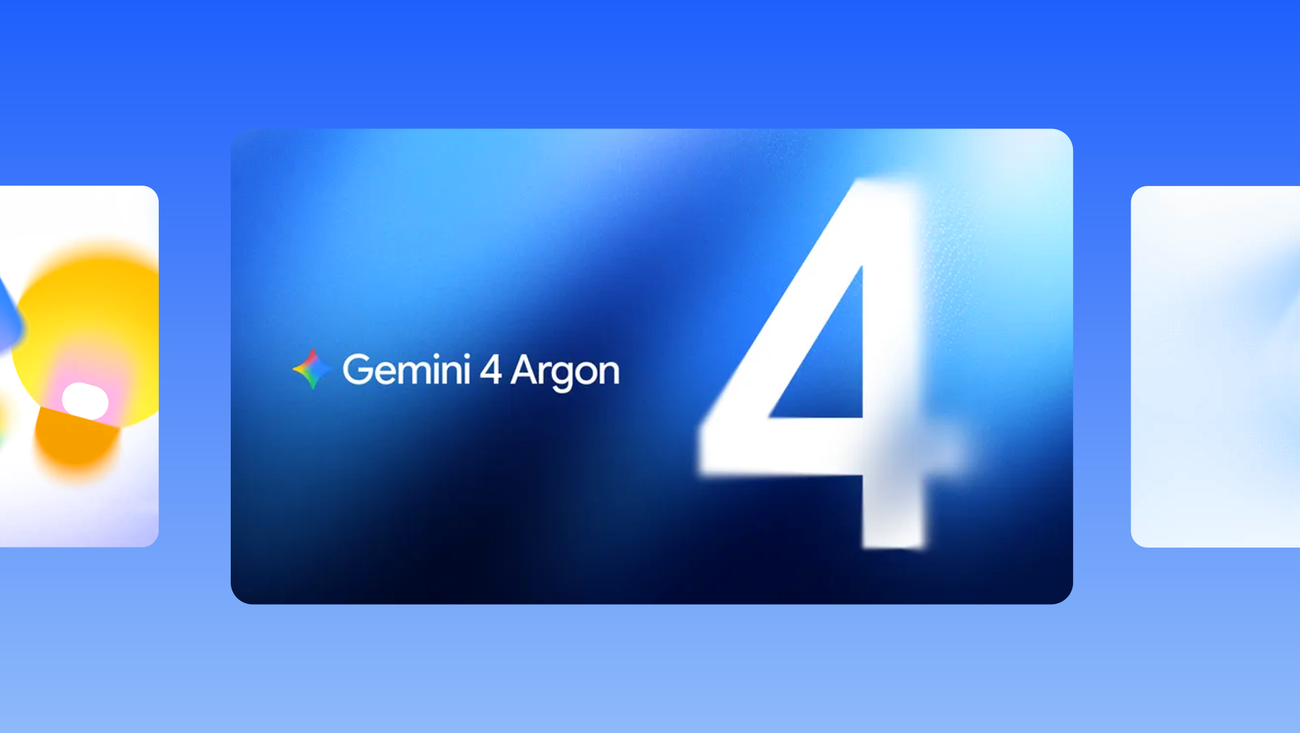
Google has published a roundup of artificial-intelligence announcements made during September, led by Gemini 4 Argon, a new frontier model the company says is designed for complex reasoning tasks, particularly cybersecurity defense.
The recap also covers updates to Gemini’s consumer software, new expressive voice models, app integrations, a Windows release and a collection of research-oriented projects. Taken together, the announcements show Google pursuing two parallel tracks: putting AI features into everyday computing products while using machine learning systems in scientific and environmental work.
Because the post is a company roundup, its claims describe Google’s own releases and stated capabilities. It is a useful account of product direction, but not an independent comparison of performance, safety or real-world impact.
Gemini 4 Argon and a focus on complex tasks
Gemini 4 Argon is described by Google as its newest frontier model. The company says it was built with advanced reasoning for complex problems, with an emphasis on cybersecurity defense. Google also states that the model has a 1-million-token output limit.
That positioning reflects an increasingly common split in the AI market. Some models are aimed at fast, routine interactions, while others are presented as systems for lengthy, difficult work that may require more context and more structured reasoning. In Google’s account, Gemini 4 Argon occupies the latter role.
The September release cycle also included Gemini 3.8 Flash and Gemini 3.8 Flash Cyber, according to the post. The roundup does not provide independent benchmarks or detailed technical evaluations for those models, so the announcement establishes availability and intended use rather than proving comparative performance.
More ways to use Gemini
Google says it introduced Connected Apps in the Gemini app, a move intended to let users connect favorite apps directly to the assistant. The company also announced the Gemini app for Windows, extending the service to a major desktop operating system.
The practical significance of these features depends on which applications can be connected, what information users choose to share and how well the integrations work in real tasks. Those implementation details are not fully set out in the supplied source material. Still, the release direction is clear: Google is trying to make Gemini a more central interface for work and personal computing rather than a stand-alone chat experience.
Google also highlighted new natural and expressive voice capabilities through Gemini 3.8 Live, as well as music-generation tools. Voice and media features continue to broaden the set of ways people can interact with generative systems, but they also make questions of reliability, consent and disclosure more important wherever generated material can be mistaken for human-made content.
AI as a research tool
The roundup places several science-focused projects alongside product releases. Google cited AlphaGenome Atlas, which it says maps human DNA, as well as work tracking global methane from space. It also referenced research involving fruit-fly brains and Project Suncatcher, an effort described as testing machine-learning systems.
These projects show why AI announcements can be difficult to evaluate as one category. A desktop assistant, a voice model and a scientific analysis system may all use related underlying methods, but their risks, evidence standards and measures of success are different. Consumer features are often judged by usefulness and reliability; scientific projects require careful validation against the relevant research questions and data.
Google’s post also frames AI work across healthcare, crisis response and education. The breadth of that framing matters because it signals where the company expects AI to be applied, not merely where it is being marketed today.

An active month, with unanswered questions
The September announcements amount to a broad expansion of Google’s AI portfolio: a headline reasoning model, faster model variants, voice systems, connected-app features, Windows access and science projects. For users, the most immediate changes are likely to be the product integrations and platform availability. For researchers and policymakers, the more consequential questions concern the reliability, governance and appropriate use of increasingly capable systems.
The source material does not answer those questions on its own. It does, however, document a strategic pattern: Google is tying frontier-model development to a wider software ecosystem while presenting AI as a tool for work, creativity and scientific investigation. The impact of that approach will depend on how these systems perform outside announcement posts and how their limits are communicated to the people using them.
This article is based on reporting by Google AI Blog. Read the original article.
Originally published on blog.google