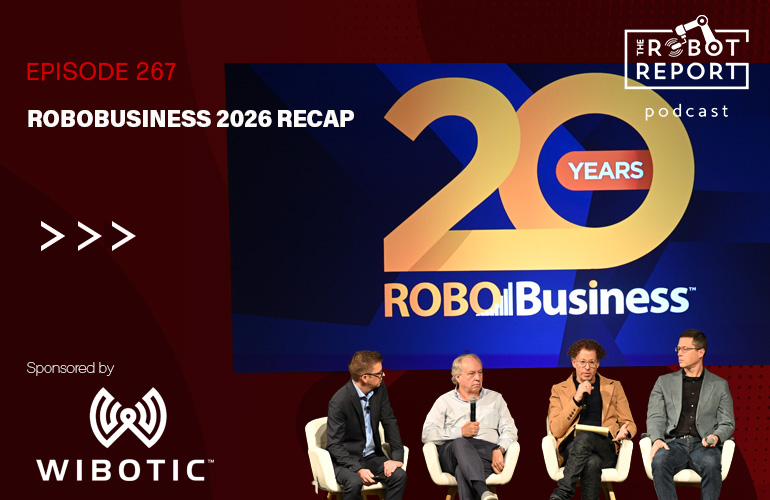
RoboBusiness, one of the established gathering points for the commercial robotics industry, is changing its name. After its 20th-anniversary event in Santa Clara, California, the conference will return in October 2027 as Robotics Summit West.
The 2026 event took place on October 20 and 21 and drew more than 2,000 attendees, according to The Robot Report. The rebrand marks the end of the RoboBusiness name, but the conference’s focus remains rooted in the practical questions facing the robotics sector: how autonomous systems are deployed, operated, financed and scaled.
That emphasis was visible across the event’s keynote panels, technical sessions, networking programs and expo floor. The agenda ranged from production uses of AI in robotics to robot-as-a-service business models, humanoid systems, complicated indoor environments and operational practices for autonomous fleets.
A conference centered on deployment
The most telling theme in the program was the shift from demonstrations to production. A panel titled “Beyond the Demo: AI in Production Robotics” focused on how AI is being used today, placing attention on operational application rather than on speculative capabilities.
That distinction matters for a field in which impressive prototypes can attract attention long before they become dependable tools. Moving robotics into production requires more than an effective machine. It requires systems that can be operated repeatedly, integrated into workflows and supported over time.
Another session, the “RaaS Playbook” panel, considered robot-as-a-service models. Participants included representatives from Locus Robotics, Roboworx and Aescape, alongside The Robot Report’s Mike Oitzman. The presence of a business-model discussion alongside technical programming reflects a basic reality of the sector: adoption depends on whether organizations can obtain, manage and justify robotic systems in real-world operations.
The opening keynote brought together Rodney Brooks, Ken Goldberg and Jonathan Hurst in a panel moderated by The Robot Report’s Steve Crowe. The event also included a “State of Humanoids” keynote, signaling the continuing industry interest in human-form robots alongside more specialized automation systems.
Operations are becoming a shared problem
The day after RoboBusiness, the Robot Operations Group held RoboOpsCon26. The cross-industry group was founded by Florian Pestoni and Joe Wieciek and is aimed at developing and sharing best practices for operating autonomous robots at scale.
Its presence beside the main event points to a growing maturity question for the industry. Building a robot is only one part of commercialization. Organizations deploying fleets also need practices for daily operations, reliability, charging, maintenance and coordination with people and facilities.
WiBotic, a sponsor mentioned in the event recap, illustrates one of those operational concerns. The company provides wireless charging and fleet energy-management technology for autonomous robots, intended to let robots charge during normal workflow and increase uptime. Power management is a less visible part of robotics than a new machine or a breakthrough demonstration, but it can be decisive for sustained operation.
The focus on operational knowledge-sharing suggests that robotics companies and users are confronting similar scaling challenges across industries. A cross-industry forum can help move discussion from isolated pilots toward repeatable practices, even when the robots and work environments differ.
Programming beyond the keynote stage
RoboBusiness 2026 also featured a Women in Robotics lunch, including an interview with Bhavana Chandrashekhar, senior manager of applied science at Amazon Robotics, conducted by Joyce Sidopoulos, co-founder and chief operating officer at MassRobotics. The lunch drew a packed audience, according to the recap.
Such sessions sit alongside technical and commercial programming because the robotics industry’s future will be shaped by the people designing, operating and applying the technology. Conferences can serve as venues for product announcements, but they also function as places where professional networks form and where participants compare lessons from deployment.
Attendees with conference passes were told to expect details on access to audio from recorded sessions. That could extend the event’s discussions beyond the people who were in Santa Clara, especially for practitioners looking for insights into current uses of AI, fleet operations and business models.
What the new name signals
The name Robotics Summit West more directly identifies the event as a broad industry convening point. The change also provides an opportunity to carry the program into its next phase after two decades under the RoboBusiness brand.
Based on the 2026 agenda, the questions likely to remain central are practical ones: where AI is already working in robotics, how machines navigate difficult settings, how operators maintain fleets and how companies structure offerings that customers can use. Those questions are less dramatic than a single prototype reveal, but they are where the sector’s long-term impact will be decided.
- RoboBusiness 2026 was held in Santa Clara on October 20 and 21.
- The event drew more than 2,000 attendees and marked its 20th anniversary.
- Its 2027 return is planned for October under the name Robotics Summit West.
- Sessions addressed AI in production robotics, robot-as-a-service, humanoids and robot operations.
The rebrand does not by itself change the state of robotics. But it captures a notable transition: the industry conversation is increasingly organized around the work required after a robot leaves the demonstration stage. Robotics Summit West will inherit that challenge when it convenes in 2027.
This article is based on reporting by The Robot Report. Read the original article.
Originally published on therobotreport.com