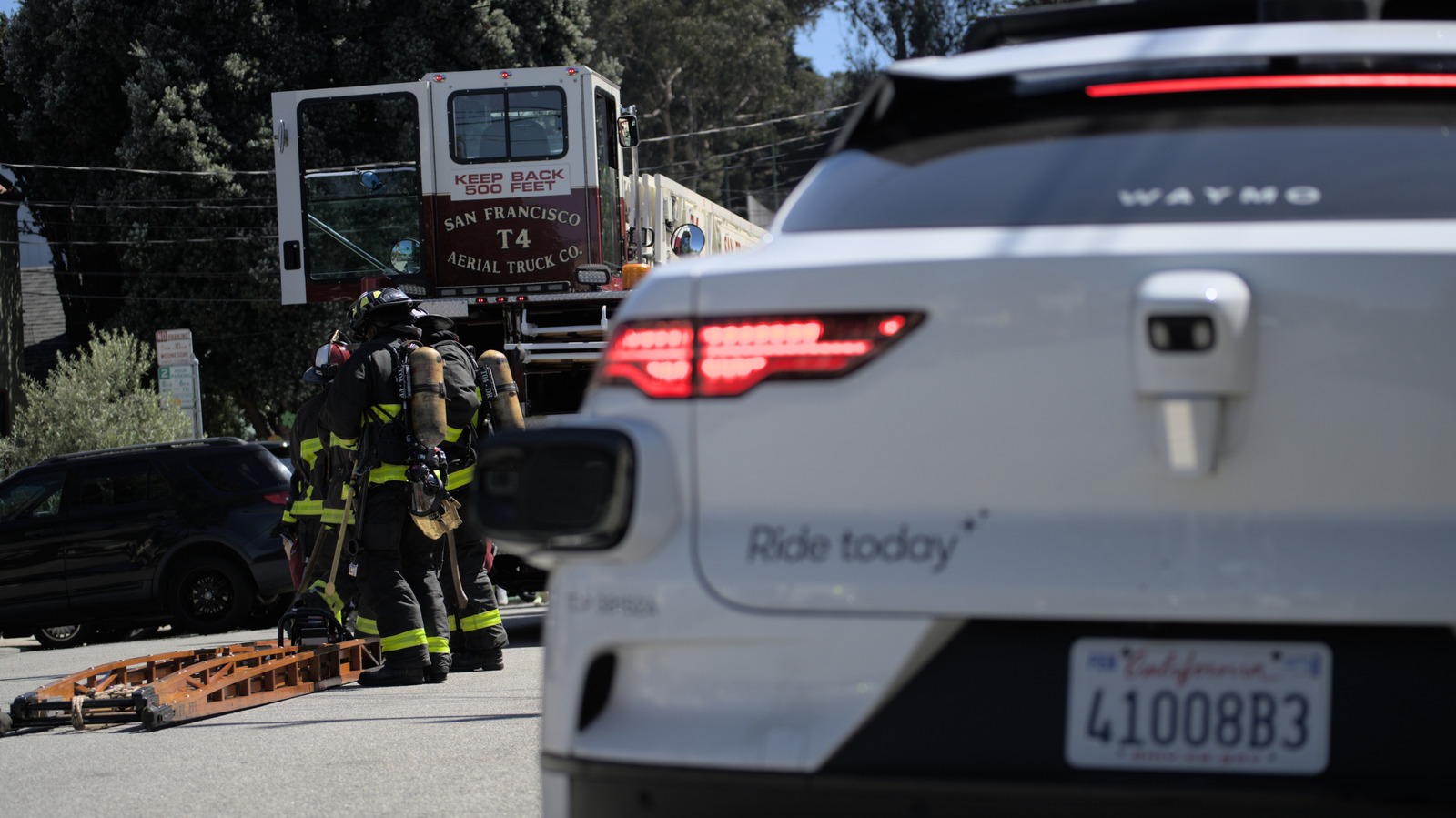
First responders say progress is slipping
Autonomous driving companies have spent years arguing that software-driven vehicles can make streets safer. But in San Francisco and Austin, first responders are warning that one of the country’s most visible robotaxi operators is still struggling with a more basic challenge: how to behave when humans are dealing with an emergency.
According to the supplied source text, officials in San Francisco and Austin told federal regulators that Waymo vehicles have shown signs of “backsliding” after earlier improvements. Their concern is not abstract. Emergency crews say delays and confusion around robotaxis can cost precious time in situations where seconds matter.
The failure mode is not just technical
The problem described by local officials goes beyond simple sensor recognition. The source text points to what one participant called Waymo’s weakness around “the human element” of emergency response. In practice, that means vehicles freezing, blocking routes, or requiring responders to go through support channels while trying to reach injured people or secure a chaotic scene.
That distinction matters. A self-driving system may perform well under ordinary traffic conditions, yet still fail at the messy edge cases that define real urban life. Emergency scenes are full of contradictory signals: unusual vehicle positioning, flashing lights, redirected traffic, shouting, temporary road closures, and responders making judgment calls on the fly. A robotaxi that hesitates or stops in the wrong place can become an obstacle instead of an aid.
Examples are piling up
The supplied reporting cites a recent San Francisco incident in which a Waymo vehicle blocked an ambulance responding to a mass shooting. In that case, responders still reached a victim relatively quickly, but officials said similar situations have sometimes required up to three minutes just to connect with the company. In one separate incident, a San Francisco operator reportedly waited 53 minutes on Waymo’s emergency hotline to reach a representative.
Those delays help explain why first responders are escalating the issue. For a technology company, a delayed support response is bad customer service. For emergency crews, it can interfere with life-and-death work and redirect attention away from victims and scene control.
Infrastructure stress adds another layer
The source text also describes a December power outage in San Francisco that stranded more than a thousand Waymo vehicles across the city for roughly three hours. Many of the vehicles eventually moved again after a few minutes, but dozens remained stuck. The event reportedly triggered extra calls to emergency services, not only for true emergencies but also for reports about disabled robotaxis.
That is an important systems-level warning. A large autonomous fleet does not only create one-vehicle-at-a-time risks. It can also create networked failures, where disruptions such as a power issue suddenly produce citywide friction. If enough vehicles stop in inconvenient places at once, public agencies may be forced to respond to a private mobility platform’s operational breakdown.
Why regulators are paying attention
The meeting described in the source material involved federal regulators at the National Highway Traffic Safety Administration, a sign that these incidents are no longer being treated as local irritations alone. That shift is significant because it frames the issue less as a customer-experience problem and more as a transportation-safety challenge with national implications.
Waymo and other autonomous vehicle developers have often argued that real-world deployment is the only path to learning. That remains true. But the same argument cuts the other way: if deployment reveals recurring failures around emergency response, regulators have reason to demand more robust procedures, faster communication channels, and clearer accountability.
The next test for robotaxi credibility
Self-driving vehicles do not need to be perfect to earn a place on public roads. Human drivers certainly are not. But they do need to prove they can coexist with the people who keep cities functioning under stress: paramedics, firefighters, police, dispatchers, and traffic managers. The incidents in the supplied source text suggest that this is still an open problem.
For Waymo, the issue is now as much institutional as technical. Can the company respond fast enough when its vehicles interfere with emergencies? Can it prevent fleet-level disruptions from becoming a burden on public systems? And can it convince city officials that earlier gains are not being reversed?
Those questions will shape the next phase of autonomous vehicle deployment. If the answer is no, the industry’s argument that robotaxis improve safety will be much harder to sustain in the places where that claim matters most.
This article is based on reporting by Jalopnik. Read the original article.

Originally published on jalopnik.com