Ford Signals a New Direction
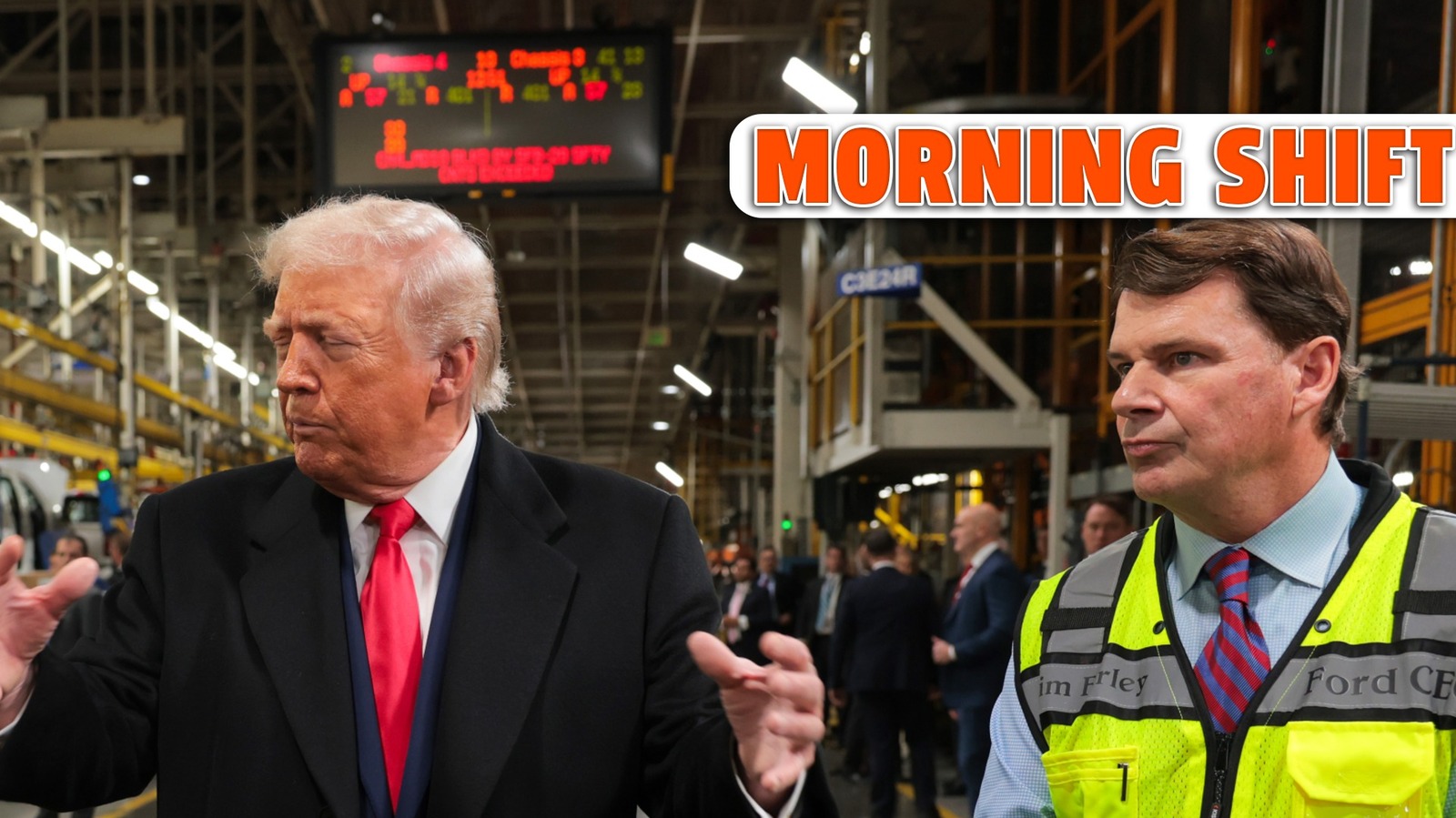
Ford is in early discussions with the U.S. government on defense-related projects, according to reporting summarized by Jalopnik from the company’s earnings call and related coverage. CEO Jim Farley confirmed the talks, framing them as part of a broader effort that could connect Ford more directly to Washington’s defense and industrial priorities.
The immediate headline is simple: one of America’s biggest automakers is considering a more formal role in defense work. The larger story is that the boundary between the civilian auto industry and the national-security industrial base may be getting thinner. Military planners have reportedly been exploring whether commercial manufacturers could help build weapons, components, or other equipment now concentrated among a relatively small group of dedicated defense contractors.
Why the Pentagon Is Looking Beyond Traditional Contractors
The logic is rooted in scale, supply chains, and urgency. Traditional defense primes remain central to major weapons programs, but they are not always structured for the kind of rapid industrial expansion governments sometimes want in periods of geopolitical stress. Automakers, by contrast, are experts in high-volume manufacturing, supplier coordination, and factory-scale production discipline.
That matters if the Pentagon is thinking about surge capacity, component sourcing, or resilience in critical manufacturing. Jalopnik’s source text notes that military officials have long looked to commercial manufacturers for help building equipment currently produced by a narrower defense base. It also notes reporting that automakers such as Ford and GM were asked whether they could shift rapidly into defense work if needed.
Whether this is primarily about stockpile replenishment, supply diversification, or a longer reorganization of U.S. industrial capacity, the direction is notable. Washington appears increasingly interested in the idea that national preparedness depends not only on weapons design, but on who can build at scale when conditions change quickly.

Ford’s Supply Chain Argument
Farley’s comments suggest Ford sees its strongest near-term contribution less in finished military hardware than in industrial capability. On the earnings call, he said investors should expect Ford to play an “outsized role” in onshoring critical minerals and components such as manufacturing-grade semiconductors. That is a revealing emphasis.
It suggests Ford may be positioning itself as both a producer and a strategic manufacturing partner. In recent years, automakers have learned the hard way that semiconductors, battery materials, and globally dispersed suppliers can become bottlenecks with national consequences. A company that can help localize or stabilize those inputs becomes valuable not just commercially, but politically and strategically.
That aligns with broader U.S. policy trends. Industrial policy has moved back to the center of economic strategy, especially in areas tied to technology, energy, and defense. If Ford is coordinating closely with government and new domestic suppliers around minerals and chips, it is participating in a larger realignment in which manufacturing strength is treated as a security asset.
What Defense Work Could Mean for Automakers
The source text does not specify what projects Ford is discussing, and Farley said he could not offer details. That leaves the scope deliberately open. Defense-related work could range from logistics vehicles and mobility systems to components, electronics, supply-chain services, or emergency production support. The uncertainty is important because it means this is still exploratory, not an announced contract pipeline.
Even so, the significance is real. Once a major automaker begins sustained talks with the government about defense work, the strategic posture of the company changes. Investors, suppliers, labor groups, and state governments all start to see the firm not only as a consumer vehicle manufacturer, but as a possible participant in national readiness planning.
That shift could also have competitive effects. If Ford moves further in this direction and demonstrates value, other automakers may feel pressure to present similar capabilities. The result would be a broader blending of civilian manufacturing policy and defense preparedness, with the auto sector serving as a key bridge between the two.

The Risks and Tradeoffs
There are obvious complications. Defense manufacturing brings regulatory burdens, political scrutiny, and reputational questions that do not map neatly onto ordinary carmaking. It can expose a company to strategic dependencies, procurement uncertainty, and a very different customer relationship than the retail or fleet markets Ford already knows well.
There is also the question of focus. Automakers are already managing an exceptionally difficult transition involving electrification, software, supply-chain localization, and shifting global trade patterns. Adding defense work may diversify opportunity, but it also adds complexity at a moment when operational discipline is already under pressure.
Still, Ford’s interest is understandable. Defense-linked industrial work can offer long-horizon demand, political relevance, and a new rationale for investment in domestic production capacity. In a world where supply chains are being judged not just on efficiency but on resilience, that is a strong incentive.
A Broader Industrial Story
The most important takeaway may be that Ford’s talks are not an isolated curiosity. They fit a wider pattern in which governments are looking again at the productive backbone of the economy, not just the digital layer on top of it. Semiconductor fabs, battery plants, critical-mineral processing, and now possibly defense-adjacent automotive production are all part of the same reconsideration.
For decades, the dominant assumption was that lean global sourcing would be enough. The new assumption is harder-edged: strategic industries need slack, redundancy, and domestic depth. If Ford ends up playing a meaningful role in defense projects, it will be because the United States increasingly sees industrial capability itself as a deterrent asset.
- Ford says it is in early talks with the U.S. government on defense-related projects.
- The company highlighted onshoring of critical minerals and manufacturing-grade semiconductors.
- The Pentagon is reportedly exploring whether automakers could shift rapidly into defense work if needed.
- The talks reflect a wider convergence of industrial policy, supply-chain security, and national defense.
This article is based on reporting by Jalopnik. Read the original article.

Originally published on jalopnik.com