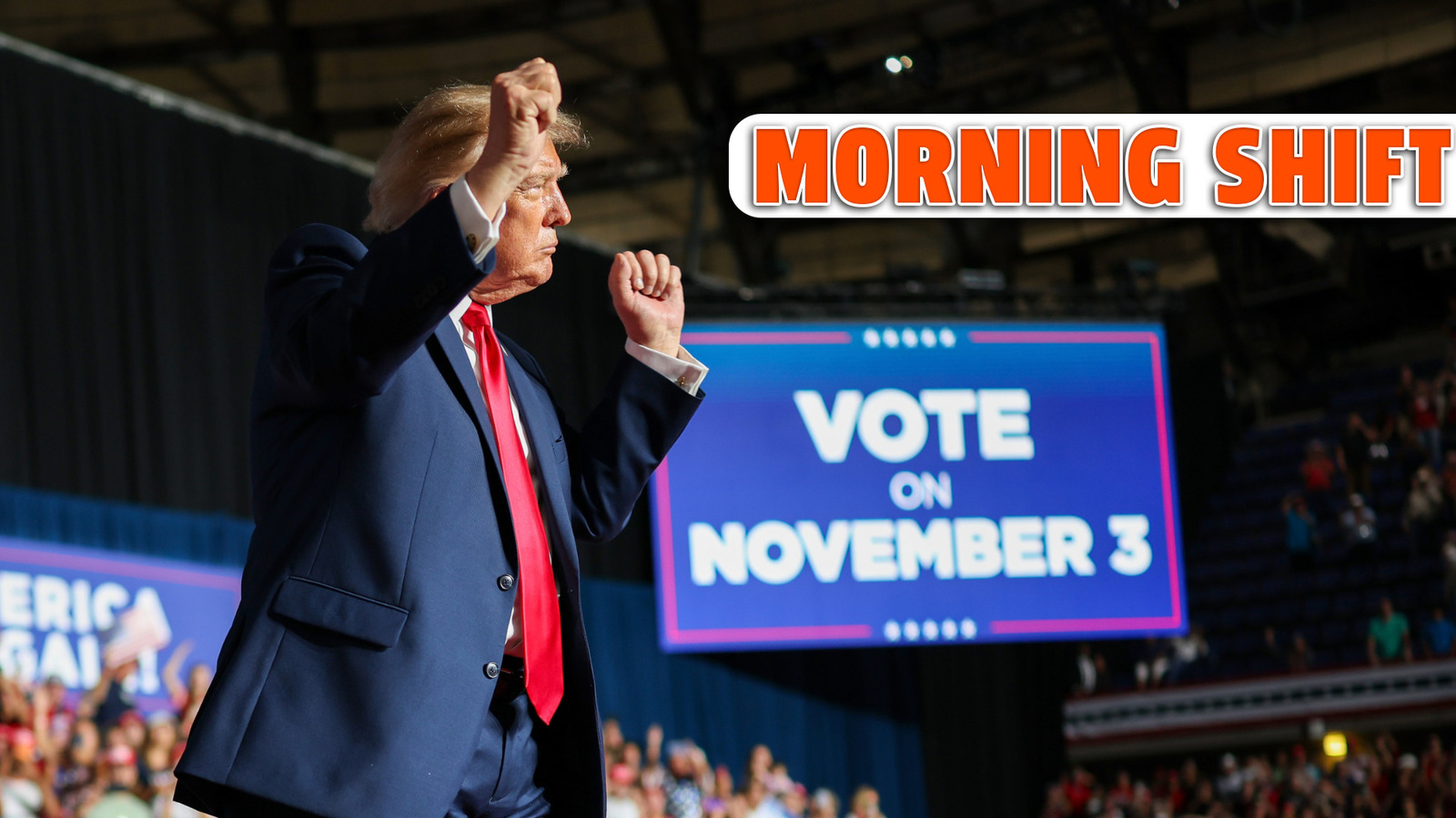
Ford links industrial policy to supplier strength
Ford Motor Co. Executive Chair Bill Ford has added a notable corporate voice to the debate over U.S. industrial renewal, saying the Trump administration’s push to revive domestic manufacturing should help strengthen the supplier base. His remarks, delivered at an Economic Club of Grand Rapids event on April 27, connect a long-running concern inside the auto industry to the broader political effort to reverse industrial decline.
The comment matters because it comes from a leader whose company sits at the center of one of the country’s deepest manufacturing networks. Automaking is not only about final assembly plants. It depends on layers of suppliers that provide parts, materials, tooling, systems integration, and regional employment. When executives talk about rebuilding manufacturing capacity, they are also talking about whether that supplier ecosystem remains deep enough, competitive enough, and resilient enough to support future production.
A 20-year concern moves back to center stage
According to the source material, Bill Ford framed the current moment as part of a 20-year push to reverse industrial decline. That historical reference is significant. It suggests this is not being treated inside the industry as a short election-cycle talking point, but as a structural issue that predates the current administration and has accumulated urgency over time.
For automakers, industrial decline is not an abstract economic trend. It can show up in supplier fragility, capacity bottlenecks, skill shortages, and dependence on distant production chains. A stronger domestic supplier base can improve responsiveness, reduce logistical complexity, and support the kind of manufacturing flexibility companies increasingly need when the market is being reshaped by electrification, software, and shifting trade conditions.
Bill Ford’s endorsement therefore reads less as a blanket political alignment than as a targeted statement about industrial capability. The source text notes that he praised the administration’s focus on manufacturing while acknowledging that its methods are controversial. That caveat is important. It indicates support for the direction of travel without fully endorsing every instrument used to get there.

Why supplier depth matters more now
The supplier base has become an even more strategic issue as automakers navigate a more volatile operating environment. Modern vehicle production depends on intricate interdependencies across powertrain components, electronics, materials, seating, structural systems, and final assembly logistics. When that network weakens, disruptions can cascade quickly.
That is one reason manufacturing renewal has become harder to separate from national economic strategy. In the auto sector, supplier strength shapes not only cost and production efficiency but also the ability to adopt new technologies at scale. Whether the industry is building internal-combustion vehicles, hybrids, or EVs, the quality and capacity of the supplier network influences how smoothly product transitions can happen.
Bill Ford’s remarks imply that policies aimed at rebuilding U.S. manufacturing could reinforce that foundation. Even without more detailed policy specifics in the supplied source text, the core industrial logic is clear: a healthier supplier ecosystem gives automakers more options and reduces vulnerability to erosion in domestic production capability.
The politics and the business case are not identical
The source text’s reference to controversial methods is where the story becomes more nuanced. Corporate leaders can agree that domestic manufacturing capacity matters while disagreeing over tariffs, subsidies, trade friction, or the speed and style of intervention. In practice, companies often evaluate these policies through a narrower lens than politicians do. They ask whether the measures will improve competitiveness, create stability, and produce investable conditions across several years rather than several news cycles.
That distinction likely explains the shape of Bill Ford’s comments. Praising a renewed focus on manufacturing does not erase the fact that policy tools can produce uneven side effects. Depending on how they are implemented, they may support some parts of the industrial base while straining others. For a company as large as Ford, that makes the supplier question especially central. The benefits of reshoring or industrial support are only meaningful if they translate into a stronger, more durable production network rather than a patchwork of short-term distortions.

A broader industry signal
Even in brief form, the remarks serve as a useful signal about where senior industry thinking may be converging. The auto sector has spent years balancing efficiency against resilience. Globalization rewarded sprawling supply chains optimized for cost. Repeated shocks, however, have made resilience more valuable. Against that backdrop, an executive chair emphasizing supplier strength fits a wider industrial reset.
That reset is not only about patriotism or politics. It is also about execution. A thinner domestic supplier base can constrain product launches, raise risk, and reduce the ability to respond to policy or demand changes. A stronger one can support continuity, shorten feedback loops between automakers and suppliers, and improve the industry’s ability to scale new manufacturing programs.
Bill Ford’s statement does not settle the larger debate over how the U.S. should pursue industrial renewal. But it does show that at least some automotive leadership sees manufacturing policy as directly connected to the practical health of the supplier network. That is a business argument, not just a political one.
What to watch next
The key question is whether the manufacturing push produces lasting capacity rather than temporary enthusiasm. If the administration’s approach strengthens suppliers in a durable way, it could influence investment decisions far beyond one company. If it proves too contentious or unevenly applied, the industry may continue to agree on the goal while splitting over the means.
For now, Bill Ford’s comments highlight a clear priority: rebuilding manufacturing is not merely about headline factory counts. In the automotive sector, it is about restoring the connective tissue underneath production. The supplier base is where industrial strategy becomes operational reality, and that is why remarks from one of Detroit’s most prominent executives carry weight well beyond a single event stage.
This article is based on reporting by Automotive News. Read the original article.

Originally published on autonews.com