An EV warranty can fail long before the vehicle does
Electric-vehicle adoption has often been framed around charging infrastructure, battery range, and sticker price. A case emerging in Alaska shows another issue deserves more attention: what happens when a customer needs warranty service in a place where the support network is thin and transport itself is the problem.
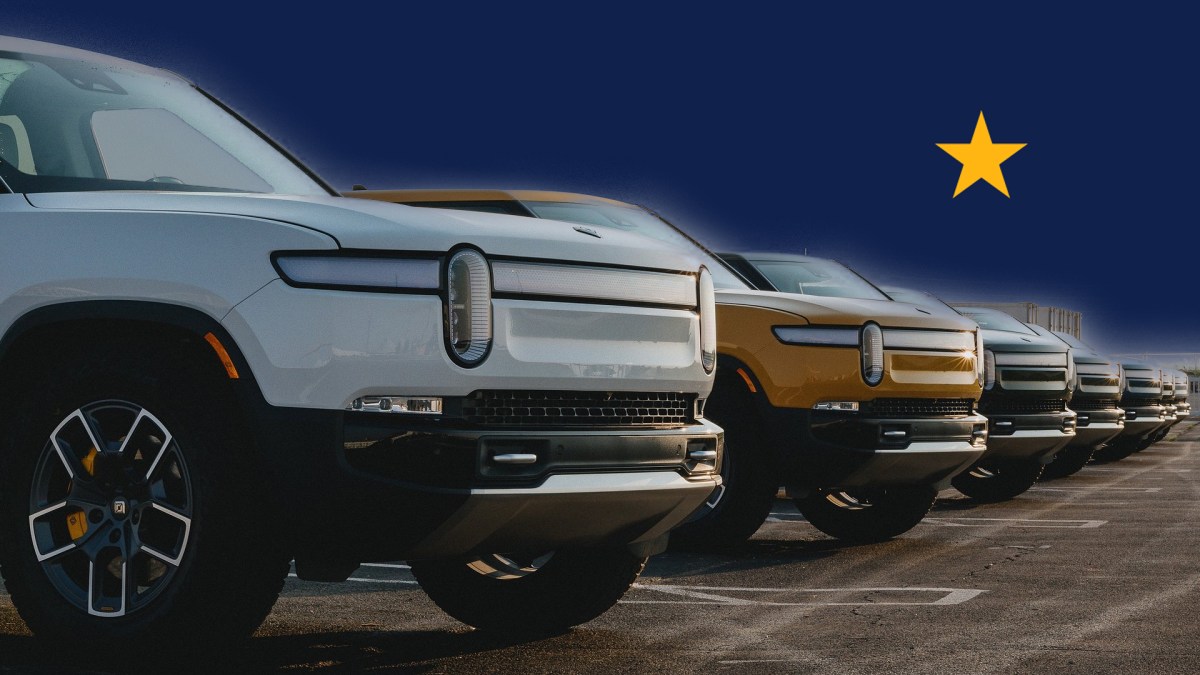
According to reporting from The Drive, at least some Rivian owners in Alaska face severe difficulty obtaining warranty repairs because the nearest Rivian service center is in Seattle. That distance was already inconvenient. It has become much worse because commercial barges are refusing to transport EVs out of Alaska after a boat fire last summer, while passenger ferries are taking them only in very limited numbers.
The result is that “free” warranty work may require months of waiting and thousands of dollars in transport costs before the actual repair even begins. For owners in remote or road-limited parts of the state, the difficulty is not theoretical. It is the difference between a warranty existing on paper and being usable in practice.
Why Alaska turns a customer-service problem into a systems problem
Alaska is a hard test case for any automaker, but it is especially revealing for EVs. Some communities are inaccessible by road. Juneau, for example, requires ferry access. Overland routes through Canada can be expensive and, in some cases, impractical. Once an EV is inoperable or believed to have a potentially compromised battery, transport becomes even more complicated because lithium-ion batteries are regulated as dangerous goods.
The article notes that under Transport Canada and US Department of Transportation reciprocity, a vehicle with a potentially defective battery can require hazmat-style precautions. That classification is not a minor administrative detail. It can transform a simple shipping request into a specialized logistics job costing well over $5,000.
This is where the EV service model runs into a hard geographic limit. Traditional automakers with widespread dealer networks can absorb some of that friction through local service bays, third-party shops, and parts distribution. Newer EV makers with sparse service footprints have less redundancy. In a state like Alaska, the gap becomes visible fast.
Why Rivian is an especially instructive case
Rivian markets vehicles built around adventure, durability, and off-road capability. That makes the Alaska case more than an isolated complaint. It tests whether the support system matches the product promise. A truck that is positioned as expedition-ready looks very different if owners cannot get warranty work without exporting the vehicle to another state under restrictive shipping rules.
The reporting suggests some Alaska service has previously been handled by mobile technicians or authorized third parties, but that sending vehicles to Seattle remains arduous. Rivian’s warranty language also promises complimentary emergency towing for warranty-related issues to the nearest authorized service location or a mutually agreed-upon location, with limitations that appear especially relevant when the nearest center is far away and shipping options are constrained.
To the company’s credit, the owner cited in the report said the Seattle service team seemed committed to helping. That matters, but goodwill cannot substitute for physical infrastructure. If the route to service is blocked, the professionalism of the receiving team does not solve the transport bottleneck.
A warning for the wider EV sector
The Alaska situation is not only about Rivian. It highlights a structural challenge for the broader electric-vehicle market. As EV adoption expands beyond large metro areas, automakers will increasingly be judged not by how many vehicles they can sell, but by how well they can support them in edge cases.
Those edge cases include:
- Owners far from company-operated service centers
- Regions dependent on ferry or marine transport
- Vehicles that cannot be driven because of battery-related faults
- Jurisdictions where dangerous-goods rules sharply raise shipping costs
These are exactly the kinds of real-world constraints that can shape brand reputation more strongly than marketing claims. A customer who cannot obtain warranty service is not evaluating battery chemistry or acceleration figures. They are evaluating whether the manufacturer designed a viable ownership experience.
The logistics gap behind electrification
Public conversation around EVs tends to emphasize the transition away from combustion. Much less attention goes to the transition in support logistics. Batteries, safety rules, and newer service models create a different repair ecosystem than the one drivers have long taken for granted.
That ecosystem can work well in dense, connected regions where service centers, carriers, and parts networks are readily available. It becomes fragile in places where any one of those links is missing. Alaska now appears to be showing what that fragility looks like under stress: shipping bans after a fire risk incident, scarce ferry slots, and a manufacturer whose nearest full-service option is a multi-leg journey away.
What a real solution would require
A durable answer likely needs more than one fix. Automakers may need broader third-party service partnerships, better regional contingencies for battery transport, and clearer policy terms for remote owners. Carriers and regulators may also need more standardized pathways for moving disabled EVs safely without turning every case into an exceptional event.
Without that, warranty obligations in remote markets risk becoming nominal. The vehicle may be covered, but the path to exercising that coverage may be so slow or expensive that owners experience it as unavailable.
For Rivian and its peers, this is not a side issue. It is part of product readiness. Selling EVs into frontier or geographically complex markets means owning the support problem, not just the manufacturing problem. Alaska’s Rivian owners are revealing what happens when that support layer has not yet caught up. The lesson extends well beyond one brand and one state.
This article is based on reporting by The Drive. Read the original article.
Originally published on thedrive.com