Waymo’s latest safety boost comes with important caveats
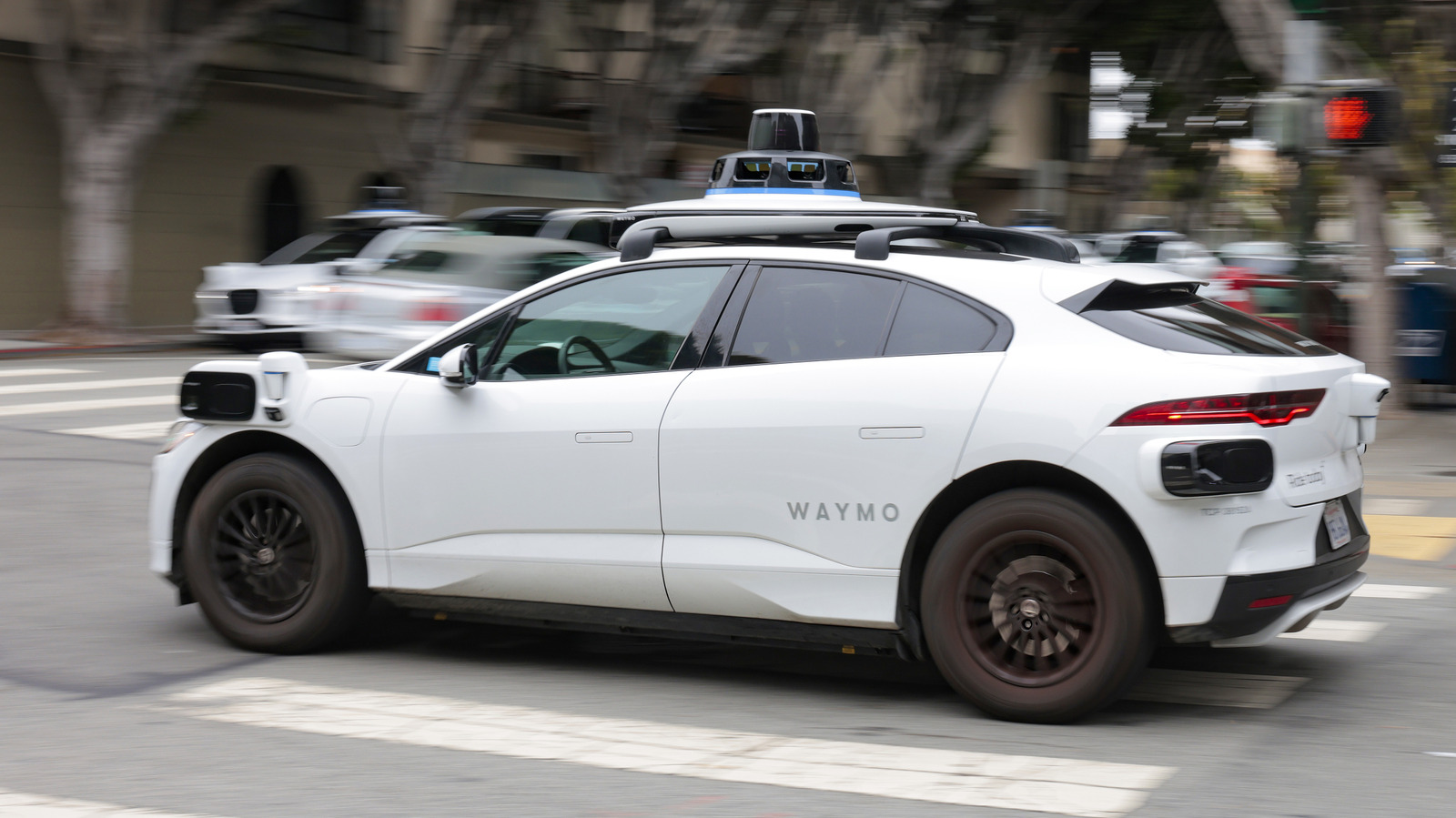
The Insurance Institute for Highway Safety has come out in favor of Waymo’s driverless vehicles, arguing that the company’s robotaxis crash less often than human drivers. But the case for that conclusion, as described in the source text, depends on a chain of assumptions and a dataset that is much narrower than the headline suggests.
That does not make the analysis meaningless. It does mean the result should be read as an early, conditional comparison rather than a clean verdict on autonomous driving safety. The central problem is simple: crash reporting for autonomous vehicles and crash reporting for human drivers are not directly aligned, and industrywide exposure data are incomplete.
California has required autonomous crash reporting since 2014, and the National Highway Traffic Safety Administration has required similar reporting since 2021. But those standards are different from the reporting systems used for conventional drivers. One of the most important normalizing measures, total vehicle miles traveled, is available at broad scale for human driving through Department of Transportation traffic reports. For autonomous vehicles, that figure is not generally required to be disclosed.
Waymo voluntarily publishes mileage data. Other autonomous vehicle companies generally do not. That single fact shaped the analysis and largely explains why the comparison focused on Waymo rather than on a wider autonomous vehicle field.
What IIHS actually compared
According to the source text, IIHS had to perform substantial data cleaning on autonomous crash reports from 2021 to 2024 before attempting any comparison. Researchers removed duplicate records and excluded events where the automation was not engaged, the vehicle was not on a public road, or no real crash had taken place.
That left another problem: not every reported autonomous-vehicle incident maps neatly onto the kinds of crashes that would normally appear in police-reportable human-driver datasets. So the institute applied a further screen based on whether a crash would likely have been reported to police under comparable human-driving circumstances.
The source text gives examples of those judgments. If someone complained of pain but left the scene, researchers coded that event as unlikely to be police-reportable. If an airbag deployed, they coded the crash as police-reportable because a higher-impact collision and repair costs would typically put it into that category regardless of other damage or injury details.
This process matters because it sharply reduced the usable dataset. In the end, the source text says, less than one-quarter of the autonomous crash data was considered usable for the final comparison. Out of 736 public-road crashes in which automation was engaged, IIHS estimated that only 22% were likely police-reportable.
Within that subset were 89 crashes involving Waymo vehicles, 50 involving Cruise vehicles, 10 involving Zoox vehicles, and 10 involving other companies. Because mileage figures were only available for Waymo, the institute used Waymo’s crash counts to calculate the self-driving comparison it wanted to make.
Why the result is narrower than the headline
On its face, an argument that Waymo crashes less often than human drivers sounds like a broad statement about autonomous driving. The underlying evidence described here is much narrower. It is specifically about a filtered subset of autonomous crashes, judged through a harmonized reporting standard, and paired with mileage exposure data from one company that chooses to disclose that information.
That means the analysis is not a general ranking of robotaxis versus people across every road, region, weather condition, and failure mode. It is better understood as an attempt to extract a like-for-like comparison from data systems that were not originally designed to support one.
The skepticism built into the source article reflects that problem. If a large share of incidents has to be discarded or reclassified before comparison is possible, readers should pay close attention to the construction of the dataset, not just the conclusion. A method can be reasonable and still be limited.
At the same time, the exercise highlights a real policy gap. Autonomous vehicle testing and deployment have moved far enough into public roads that crash claims now shape regulation, insurance, urban policy, and public trust. Yet the disclosure rules still make it difficult to compare autonomous systems with human drivers on a consistent basis.
The bigger issue is transparency
The strongest takeaway from the source text may not be that Waymo is safer or less safe than human drivers. It may be that the public still lacks a standardized, industrywide framework for evaluating such claims. Without required mileage reporting across companies, crash rates per mile cannot be calculated across the sector. Without common definitions for incident severity and reporting thresholds, even raw crash counts can mislead.
Waymo’s willingness to publish mileage data gives it an advantage in any discussion that depends on exposure-adjusted safety metrics. That is useful for researchers, but it also creates an uneven evidence landscape. Companies that disclose more can be studied more closely, while companies that disclose less remain harder to compare.
For regulators and safety researchers, that points to an obvious next step: reporting systems for autonomous vehicles need to mature beyond fragmented disclosure and category mismatches. A field that aims to replace or augment human driving at scale cannot rely on ad hoc comparisons indefinitely.
Better standards would also help companies that genuinely believe their systems outperform people. If the evidence is strong, a consistent public reporting regime would make that easier to show. If the evidence is weaker, the same standards would prevent premature claims from hardening into accepted wisdom.

What can be said now
Based on the supplied source text, IIHS has advanced a pro-Waymo safety conclusion using cleaned autonomous crash records from 2021 to 2024 and Waymo’s voluntarily shared mileage data. The institute estimated that only 22% of 736 public-road crashes with automation engaged were likely police-reportable under standards meant to resemble human-driver reporting. From that narrowed pool, 89 involved Waymo vehicles, and Waymo was the only company in the set with mileage data available for the safety comparison.
That is enough to make the study noteworthy. It is not enough to treat the result as a final answer about autonomous driving safety. The analysis shows both how far the industry has come and how much basic measurement infrastructure is still missing.
In that sense, the study may be most valuable not as a definitive scorecard, but as a demonstration of what researchers have to do today to compare robotaxis with human drivers at all. If autonomous vehicles are going to win public trust on safety, future studies will need less statistical triage and more standardized evidence.
This article is based on reporting by Jalopnik. Read the original article.
Originally published on jalopnik.com