US restrictions on Chinese vehicle tech are colliding with cost realities
Washington’s expanding effort to reduce Chinese involvement in the US auto market is starting to expose a difficult tradeoff: supply-chain decoupling may come with higher sticker prices for American car buyers. According to reporting summarized in The Drive, lawmakers and regulators are moving on multiple fronts to squeeze Chinese-linked technology and investment out of vehicles sold in the United States. The likely consequence, industry participants say, is that replacement systems will cost more.
The issue goes beyond a single brand or one isolated import category. It touches communications modules, location-tracking hardware, advanced driver-assistance systems, and the broader electronics stack that increasingly defines modern cars. As policymakers push for tighter controls, suppliers outside China are being asked to scale fast enough to fill a gap that was built over years of cost-driven global sourcing.
Several policy tracks are moving at once
The source text points to two separate government actions that together illustrate the scope of the shift. A Senate committee approved a bill targeting manufacturers that are more than 15% owned by Chinese entities. A different measure seeks to eliminate components made in China from cars sold in the US. The report says some of the hardware restrictions would begin affecting China-built components in 2030, while a separate software ban takes effect next year.
That sequencing matters because it suggests automakers are entering a multi-year transition rather than facing a one-time compliance event. Software, electronics sourcing, ownership structures, and model-level import strategies may all need revision. For companies that already rely heavily on Chinese suppliers or manufacturing, the cumulative burden could be substantial.
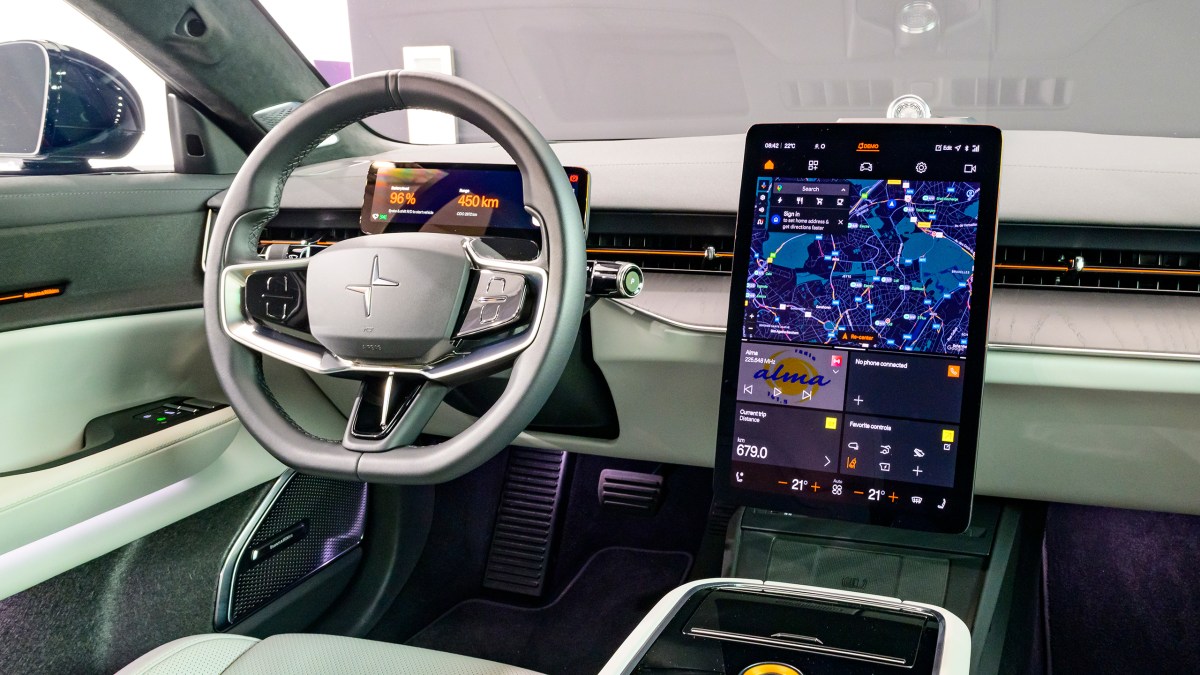
One immediate example cited in the source is Polestar, which is described as leaving the US market because of the coming software restrictions. Volvo, by contrast, is said to have obtained a waiver. Ford reportedly sought authorization to continue importing China-built models such as the Lincoln Nautilus, though that effort may not have succeeded.

Why costs are expected to rise
The most direct explanation is simple: equivalent non-Chinese systems currently cost more. The Drive cites Reuters reporting on Eagle Wireless, an Ohio-based automotive electronics startup trying to expand quickly enough to meet expected demand. The company says its modules still cost 5% to 15% more than comparable parts from China.
That gap may sound manageable in isolation, but modern vehicles contain layers of electronic components whose costs compound across a bill of materials. The burden could become even larger for higher-end systems. One former Detroit auto executive quoted in the report said his “jaw dropped” when comparing the price of a non-Chinese advanced driver-assistance system with one imported from China.
The policy push is therefore landing in a market that is already expensive. The source text cites Cox Automotive data putting the average new-car transaction price in May at $49,456. Even modest component inflation on top of that baseline can matter, especially in segments where affordability is already strained and financing costs remain high.
The challenge is not only cost but scale
Supporters of the restrictions are effectively betting that a domestic or allied supplier base can emerge quickly enough to replace Chinese capacity. That is not just a manufacturing problem. It is also a certification, engineering, procurement, and integration problem. Automotive supply chains are slow-moving by design because reliability, safety, and regulatory compliance all matter.
Eagle Wireless represents the kind of company policymakers hope can step in. But the report makes clear that opportunity alone does not erase the hard work ahead. Scaling production, improving cost competitiveness, and proving performance at automotive volumes are separate hurdles. The same modules that appear straightforward on paper often sit inside tightly validated vehicle architectures, which means carmakers cannot always swap suppliers overnight.
This is where company size and flexibility begin to matter. The report says Rivian’s software chief believes the EV maker may be better positioned than some rivals because it can shift suppliers more nimbly. That suggests vertically integrated or more software-centric automakers may adapt faster than companies tied to older sourcing patterns and higher-volume legacy model lines.
Security and industrial policy are driving the shift
The economic pain is not accidental. It is a byproduct of a broader policy decision that security concerns justify higher near-term costs. The components in question are not random commodity parts. The source text says the targeted hardware mostly relates to communications and location tracking, categories that policymakers increasingly view through a national-security lens.
That framing changes the debate. If officials conclude that connected vehicles create unacceptable exposure when key systems are sourced from or linked to China, then the question becomes less about whether prices will rise and more about how much political and market disruption Washington is willing to tolerate.
There is also an industrial-policy dimension. Restricting Chinese participation could redirect investment toward US-based suppliers and accelerate the growth of companies positioned as domestic alternatives. In that sense, higher prices in the short term may be treated as the cost of building a different supply chain over the long term.
What it means for automakers and buyers
For automakers, the path ahead likely involves a mix of redesign, supplier diversification, lobbying, and selective retreat from affected products. Some brands will have more room to maneuver than others depending on their sourcing footprints, software architectures, and model mix. Companies with global operations that rely on Chinese-built electronics may face particularly difficult choices about which products remain viable for the US market.
For consumers, the near-term implication is less abstract. Fewer low-cost sourcing options usually mean higher costs somewhere in the chain, and those costs often reach the showroom. In some cases, they may also reduce choice if certain models or trims become too expensive or too complicated to certify under new rules.
The larger significance is that the next phase of automotive competition may be shaped as much by geopolitics as by engineering. Cars are no longer just mechanical products. They are connected computing platforms, and governments are increasingly regulating them as such. The result is a market in which trade policy, software controls, ownership scrutiny, and electronics sourcing all influence what vehicles get built and how much they cost.

A structural shift, not a temporary disruption
Nothing in the supplied reporting suggests this is a short-lived policy flare-up. The measures under discussion fit a broader pattern of hardening US restrictions around Chinese technology. If that trajectory continues, automakers and suppliers will need to plan for a structurally different market rather than hope for a quick reversal.
That makes the current moment important. The cost increases being discussed today may be the first visible signal of a larger reordering of the auto industry’s supply base. For buyers, that could mean pricier vehicles. For manufacturers, it could mean a scramble to rebuild sourcing strategies around security constraints that are becoming central to doing business in the US.
This article is based on reporting by The Drive. Read the original article.
Originally published on thedrive.com