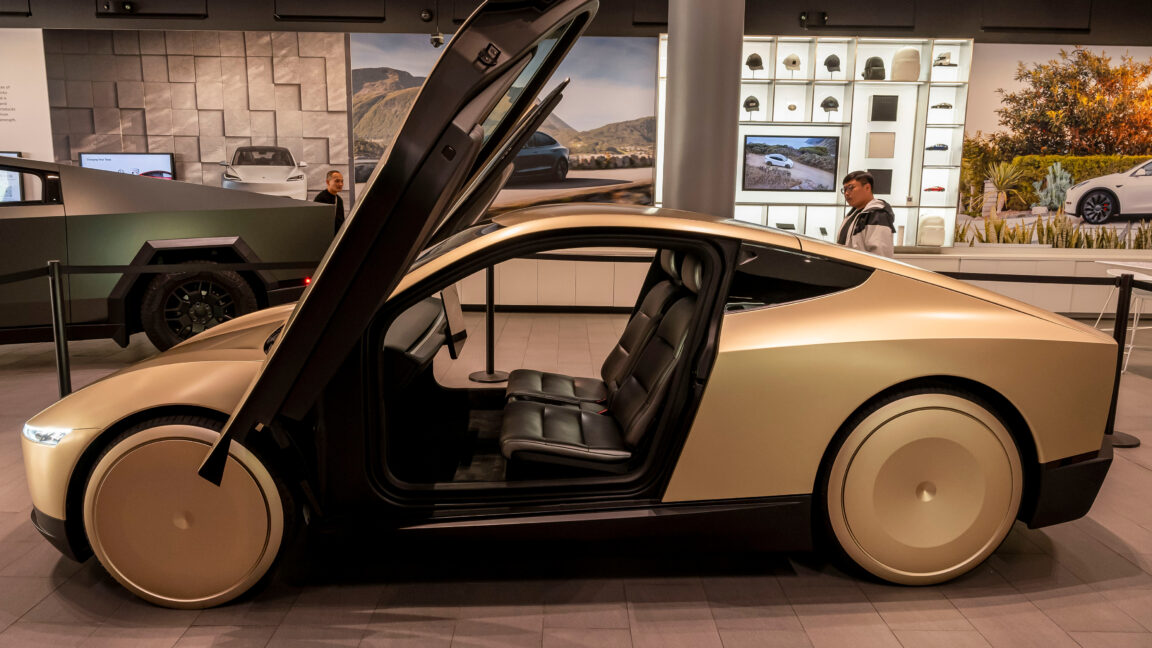
Federal regulators have opened a formal inquiry into Tesla's newly unveiled Cybercab just as the company began welcoming riders in its driverless robotaxi service. The probe centers on a deceptively simple question: Can a vehicle with no steering wheel and no brake pedals be considered legal under more than half a century of federal motor vehicle safety rules?
Tesla recently hosted hundreds of guests in downtown Austin for rides in the Cybercab, a pod-like two-seater that marks the company's most aggressive bet on fully autonomous transportation. The same vehicles are expected to join Tesla's Robotaxi ride-hail network, which already operates in a handful of cities across Texas and Florida. But instead of a triumphant rollout, the event has been followed by something more familiar for Tesla: a federal investigation.
Federal safety rules collide with driverless design
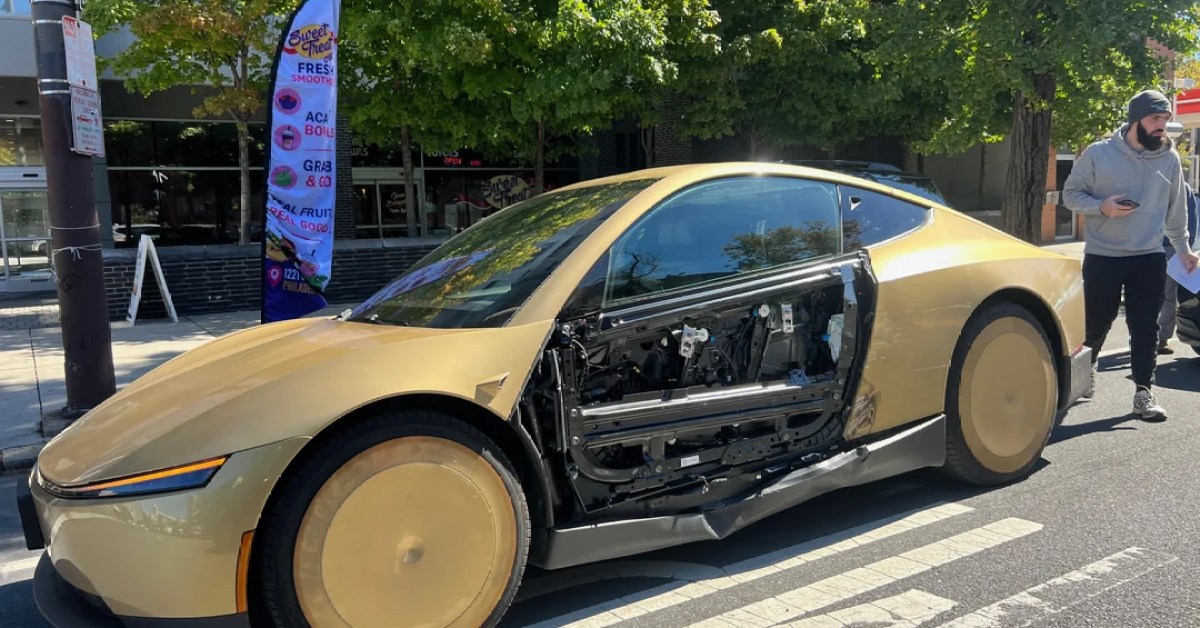
The Cybercab is not a conventional car. Its cabin was designed from the ground up for a future without human drivers, meaning it lacks the manual controls that have been a legal prerequisite for road vehicles since long before the first silicon chip was embedded in an ignition system. It is, as one observer joked, closer to a passenger pod than a traditional automobile.
That design philosophy is central to the regulatory dispute now unfolding. Modern vehicle safety standards were written with a human driver in mind. They require brake pedals, windshield wipers, rearview mirrors, and other features that serve no obvious purpose in a self-driving vehicle. Tesla and other robotaxi developers have long argued that these rules are obsolete barriers to deployment.
NHTSA has acknowledged as much. The agency is currently revising eight separate standards to make it easier for driverless cars to operate on public roadways. Those revisions would eliminate or relax requirements for parts like steering wheels and mirrors that may be unnecessary when no human is available to use them. But the rulemaking process is slow, and for now the old standards still carry the force of law.
The exemption precedent
For companies building vehicles that fall outside the traditional mold, there is a temporary path forward: an exemption from federal safety rules. That process exists precisely to allow innovative designs to be tested in limited numbers while regulators catch up.
Amazon's Zoox, which builds a toaster-shaped robotaxi with no manual controls, became the first company to win such an exemption earlier this summer. The NHTSA approval came with conditions, including a cap of 2,500 vehicles for the year. The message was clear: if your vehicle can't meet the existing standards, you need to ask for a waiver before you start moving passengers.
Tesla has taken a very different position. The company has said publicly that it does not need an exemption because its vehicles comply with all existing safety standards. In other words, Tesla claims that the Cybercab's lack of a steering wheel, pedals, and other conventional equipment still leaves the vehicle in full conformity with federal rules.
Federal investigators apparently want to see the math on that claim. The new inquiry, known as an Audit Query, will examine not only whether the Cybercab actually complies, but also the data and decision-making process Tesla used to reach its self-certification.
Tesla's compliance claim meets scrutiny
In announcing the investigation, NHTSA leadership appeared careful to balance support for autonomous vehicle innovation with the agency's statutory duties. NHTSA Administrator Jonathan Morrison said the agency fully supports the safe development and deployment of automated vehicles, but emphasized that as the federal regulator, it must ensure all federal laws are followed.
Tesla did not immediately respond to requests for comment, a silence that may speak to the tension between the company's customary confidence and the legal reality of the situation.
Ann Carlson, a former acting NHTSA administrator and now a professor of environmental law at UCLA, said the Audit Query is likely a sign that the agency is thoroughly frustrated with Tesla. Carlson pointed to the Zoox exemption as evidence that NHTSA expects driverless vehicle developers to come through the formal exemption process when they propose designs that don't fit existing categories. For Tesla to sidestep that process by declaring its own compliance is, in Carlson's view, an approach that regulators could not simply ignore.
What's at stake
The Cybercab probe is more than a squabble over paperwork. It raises fundamental questions about how innovation is regulated in a moment when technology is racing ahead of legal frameworks. If Tesla wins the argument that its driverless vehicle needs no exemption, it could open the door for other companies to skip the waiver process and bring unconventional vehicles to market more quickly.
If Tesla loses, the company may be forced to seek an exemption from NHTSA, which could come with operational restrictions that would slow its robotaxi ambitions. Either way, the investigation is likely to shape how the entire autonomous vehicle industry navigates the gap between what is technologically possible and what is legally permissible.
For now, the road ahead for the Cybercab remains uncertain. The NHTSA Audit Query is an early but significant step in what could become a lengthy regulatory process. It signals that federal overseers will not simply take a manufacturer's word for safety compliance when the vehicle in question is unlike anything else on the road.
Here is what to watch as the investigation unfolds:
- Whether NHTSA releases the findings of the Audit Query publicly or asks Tesla to suspend or modify Cybercab operations.
- Whether Tesla chooses to apply for an exemption as Zoox did, which could cap the number of vehicles it deploys.
- Whether the ongoing revision of federal safety standards moves quickly enough to resolve the discrepancy between old rules and new vehicle designs.
This article is based on reporting by Ars Technica. Read the original article.
Originally published on arstechnica.com