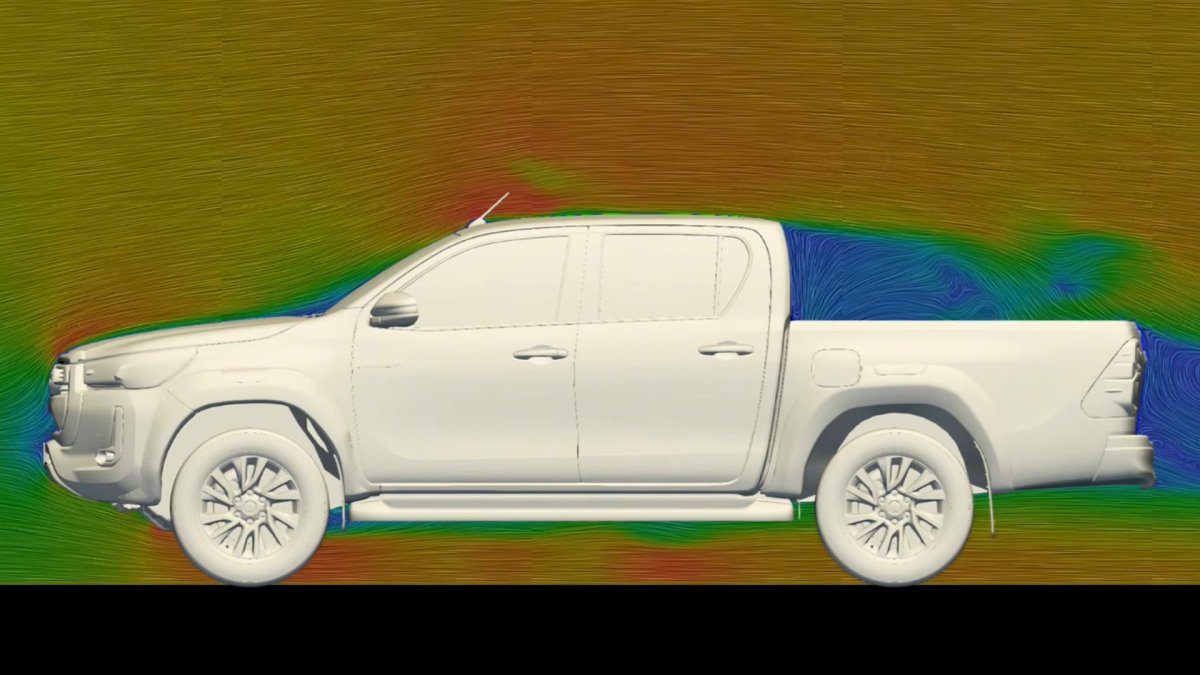
With fuel prices stubbornly high, every fraction of a mile per gallon counts. For pickup truck owners, the question is often whether simple accessories like mud flaps are secretly hurting fuel economy. A new computational fluid dynamics (CFD) analysis from Premier Aerodynamics, shared on YouTube, takes a scientific look at the problem using a Toyota Hilux as the test subject. The verdict? Mud flaps do increase aerodynamic drag, but the effect is modest—especially compared with the truck's other, much larger aerodynamic challenges.
Why Aerodynamics Matter for Pickup Trucks
Pickup trucks are inherently boxy vehicles that push a lot of air out of the way at highway speeds. At around 62 mph (100 kph), aerodynamic drag becomes the dominant force working against a vehicle's forward motion. Reducing drag directly translates to better fuel economy, which is why automakers spend countless hours in wind tunnels and virtual simulations. For owners of existing trucks, though, the options for aero improvement are limited to smaller modifications—things like bed covers, ride-height adjustments, or, yes, removing mud flaps.
Premier Aerodynamics, a specialist in airflow analysis, used OpenFOAM, an open-source CFD tool, to simulate the aerodynamics of an eighth-generation Toyota Hilux traveling at 100 kph. The Hilux is not sold in the United States, but it serves as a reasonable stand-in for popular midsize pickups like the Toyota Tacoma. The goal was to isolate the effect of the mud flaps and determine whether taking them off could actually save money.
The Drag Cost of Mud Flaps
The simulation revealed that mud flaps do generate measurable aerodynamic drag. The coefficient of drag increased from 0.37 with the flaps removed to 0.38 with them in place. That single-digit difference might sound small, but over the course of a year, it adds up. According to the host of the video explaining the findings, removing mud flaps could save roughly $70 per year in fuel, assuming a driver spends most of their time at highway speeds.
But here's the nuance: the mud flaps aren't the real villain. The analysis found that the Hilux's tall ride height creates large wakes around the wheels, and it is those wakes that dominate the truck's drag profile. The mud flaps simply add to the problem by disturbing airflow higher off the ground, essentially making an existing weakness worse. In other words, the flaps are a small contributor to a larger aerodynamic issue that stems from the truck's fundamental design.
Bigger Gains Elsewhere
The Premier Aerodynamics analysis suggests that owners looking for significant fuel economy improvements would be better served by addressing the truck's biggest aerodynamic liabilities. One of the most effective changes is covering the pickup bed—particularly with one of those sleek, fastback-style bed covers that slope down toward the tailgate. While these covers may look a bit goofy to some, they streamline the airflow over the rear of the truck, reducing the turbulent drag that forms in the open bed area.
Lowering the ride height is another recommendation that offers far larger gains than simply unbolting mud flaps. Reducing the gap between the truck's underbody and the road diminishes the size of the high-pressure zone and the resulting wakes around the wheels, which are the primary source of drag in the simulation.
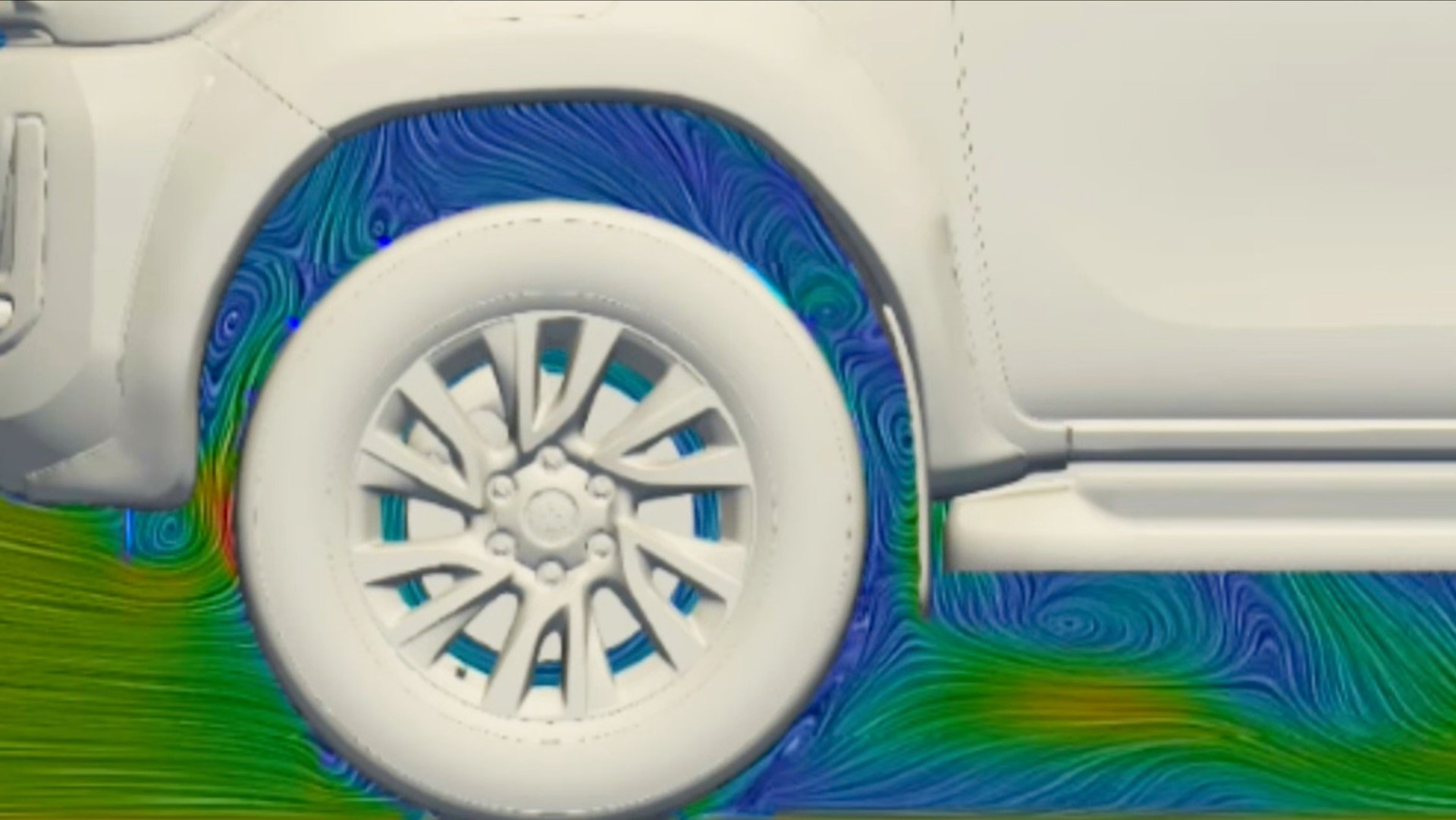
The analysis also critiqued certain styling elements on the eighth-generation Hilux that serve no functional purpose but come with an aerodynamic penalty. Pronounced wheel arches, for example, disrupt the smooth flow of air around the wheels, while sharply angled A-pillars create turbulence where the windshield meets the roof. These design choices may look aggressive or rugged, but they work against fuel efficiency.
The Hilux's Hidden Strengths
Despite those criticisms, the simulated truck performed better than one might expect based on appearances. Premier Aerodynamics noted that the front end does a solid job of keeping airflow attached to the body as it travels over the hood and windshield. That attachment only breaks down behind the front wheels, where the ride height-induced wakes begin to take over.
The truck also benefits from a body line between the rear wheel well and the tailgate that slopes upward, acting in a manner similar to a rear diffuser. This subtle shaping helps reduce the low-pressure zone behind the vehicle, easing the airflow back together more smoothly. And the airflow over the bed, even without a bed cover, is managed reasonably well by the cab's rear geometry and the bed's taller walls.
These factors combine to keep the Hilux's drag coefficient livable, even with its blocky silhouette and less-than-ideal ride height. The same could likely be said for comparable American trucks like the Tacoma, which share similar proportions and design trade-offs.
Practical Takeaways for Truck Owners
So, should you run out and pull your mud flaps off? If you spend a lot of time on the highway and want to squeeze every possible mile out of a gallon, removing them could save about $70 annually—not a fortune, but not nothing either. However, that change alone won't transform your truck into a fuel-sipping commuter. The simulation makes clear that the biggest drag reductions come from changes that affect the overall shape of the vehicle, such as bed covers and ride-height lowering.
For those who keep mud flaps for practical reasons—like protecting paint and windshields from flung debris—the fuel penalty is small enough that keeping them on isn't a huge sacrifice. But for owners willing to experiment with bed covers or who have the means to lower their truck slightly, the potential savings are far greater. And if you're considering a new truck, it might be worth paying attention to the aero-friendly details—like flush wheel arches and less aggressive A-pillar angles—that engineers and designers are increasingly adopting.
Premier Aerodynamics' analysis is a reminder that the road to better fuel economy isn't always about what you add to a vehicle. Sometimes, it's about what you subtract—or how you reshape the airflow around the things you have to keep.
This article is based on reporting by The Drive. Read the original article.
Originally published on thedrive.com