A Sub-Brand Emerges in 2014
The story of Mercedes-Maybach is a tale of two names destined to converge. While Mercedes-Benz has long dominated the luxury automotive landscape, the Maybach moniker carries a rich legacy that predates the modern sub-brand by more than a century. The question of when Mercedes-Maybach was born isn't just a matter of a single launch date; it's a saga of engineering genius, corporate maneuvers, and a persistent pursuit of exclusivity.
In 2014, Daimler AG's vehicle divisions were structured as Mercedes-Benz Car, Daimler Truck, Mercedes-Benz Vans, and Daimler Buses. Within that hierarchy, a new sub-brand emerged beneath Mercedes-Benz Cars: Mercedes-Maybach. At the time, Mercedes itself compared this new sub-brand to AMG, its performance arm, signaling a similar level of distinction—but with a focus on opulence rather than performance.
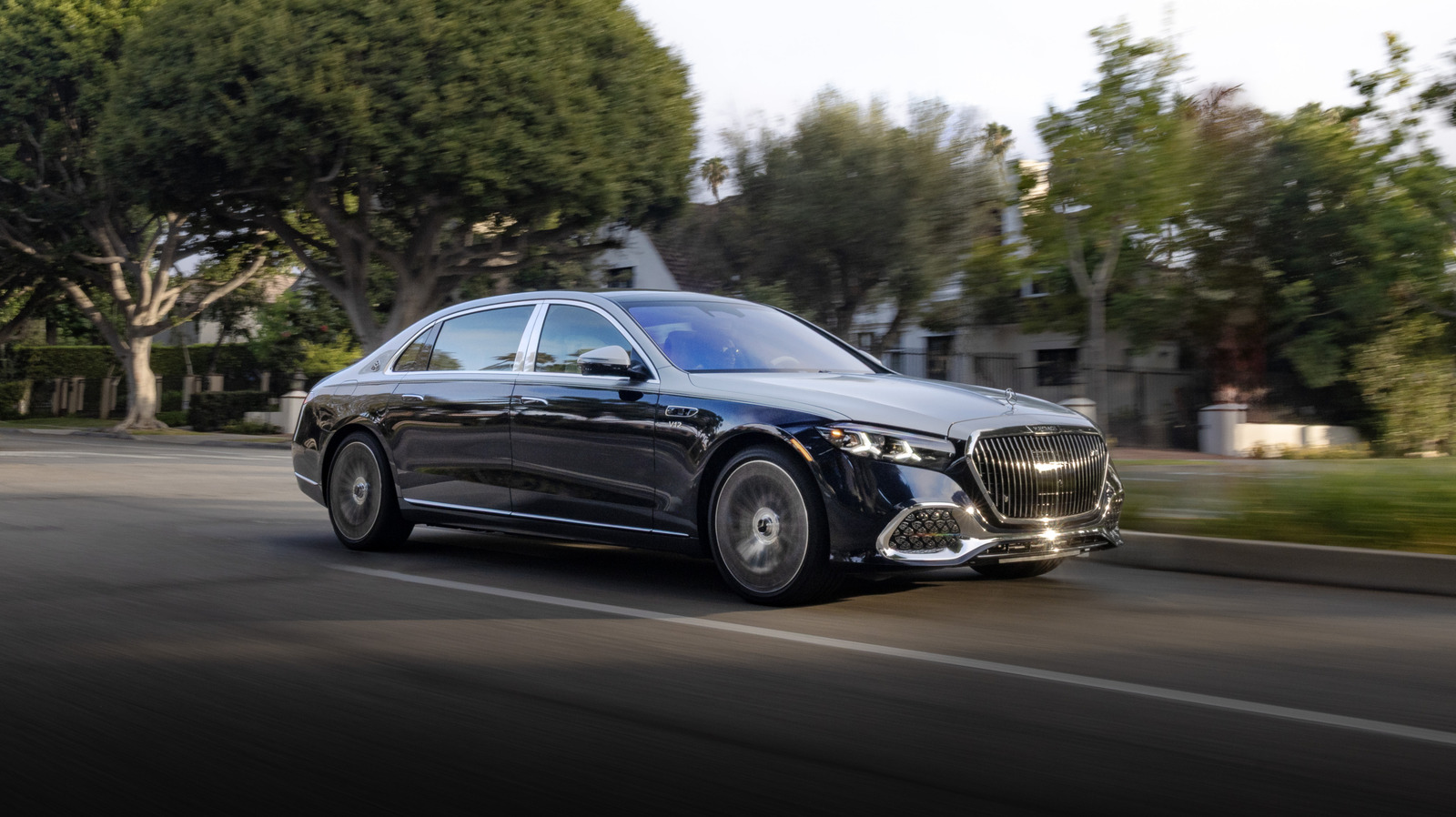
Despite being positioned under Mercedes-Benz, Mercedes-Maybach was never intended to play second fiddle. The first vehicle to wear the badge was the 2016 Mercedes-Maybach S-Class, a sedan aimed directly at status-seeking drivers who demanded the utmost in refinement. Mercedes touted the car as offering "peerless exclusivity," a claim backed by a suite of luxury details that set it apart from even the most lavishly equipped standard S-Class.
The First Mercedes-Maybach: A Statement of Opulence
The 2016 Mercedes-Maybach S-Class was designed to be the quietest place on four wheels. Its incredibly spacious rear cabin was among the most luxurious in the automotive world, and under the hood sat a twin-turbo V12 engine that delivered effortless power. Mercedes engineers focused on isolating passengers from the outside world, with acoustic treatments that made the cabin the quietest among production sedans of its time.
That V12 engine became a hallmark of the brand—a symbol that continues to define Mercedes-Maybach today. The 2027 Mercedes-Maybach S 680 carries on this tradition with a 12-cylinder engine, a nod to the enduring appeal of V12 fabulousness in an era increasingly dominated by electrification.
Wilhelm Maybach: The Man Behind the Name
The choice of the Maybach name was not arbitrary. Wilhelm Maybach stands as one of the most influential figures in early German automaking, a contemporary and collaborator of Gottlieb Daimler. Born in Heilbronn, Germany, in 1846, Maybach's path to automotive immortality was anything but straightforward. At the age of ten, he was sent to an orphanage, a stroke of fate that proved pivotal to his future success.
It was at the orphanage that Maybach began training in a local machine shop. That shop eventually came due for an inspection—and the inspector was none other than Gottlieb Daimler. The two men struck up a working relationship almost immediately, and by 1890, Daimler had formed Daimler-Motoren-Gesellschaft with Maybach as chief designer.
The partnership between Daimler and Maybach was passionate and occasionally turbulent, with an on-again, off-again dynamic that mirrored the early chaos of the automotive industry. By 1907, however, Daimler had passed away, and Maybach had resigned from the company, leaving behind a legacy of engineering brilliance but no clear path forward.
From Zeppelins to Automobiles
Maybach's next major venture took him to the skies rather than the roads. Together with his son Karl, he created a company that supplied engines for Zeppelins—the massive airships that were the cutting edge of early 20th-century aviation. This enterprise flourished until the end of World War I, when the demand for military airships collapsed.
Undeterred, the Maybachs pivoted back to engines, this time for automobiles. They acquired clients such as Spyker, a Dutch manufacturer that itself had invented the inline-6 engine. When Spyker went bankrupt, the Maybachs made a bold decision: rather than relying on another automaker's chassis, they would build their own cars. This marked the birth of the original Maybach automobile marque, a name that would remain synonymous with grand luxury for decades.
The 1960 Acquisition: Daimler-Benz Secures the Name
The independent Maybach company continued in various forms, but it took a significant turn in 1960 when Daimler-Benz—the company then known as Daimler-Benz—purchased Maybach-Motorenbau. This acquisition secured the rights to the Maybach name, bringing it firmly under the umbrella of the Stuttgart-based automaker. For decades, the name lay dormant, a relic of a bygone era, kept alive only in the annals of automotive history.
It wasn't until 2014 that Daimler decided to resurrect the Maybach name, not as a standalone marque but as an ultra-luxury sub-brand beneath its core Mercedes-Benz Cars division. The launch of the 2016 S-Class marked the first time in over half a century that a car wearing the Maybach name rolled off a production line, and it did so with the full weight of Mercedes-Benz engineering behind it.
Peerless Exclusivity and a Lasting Legacy
The modern Mercedes-Maybach is a masterclass in creating exclusivity. From the twin-turbo V12 to the silent, cavernous rear cabin, every detail is engineered to cater to a clientele that expects nothing less than the extraordinary. Mercedes has continued to refine the formula, with the 2027 S 680 proving that the V12 remains a cornerstone of the brand's identity.
- 2014: Mercedes-Maybach established as a sub-brand under Mercedes-Benz Cars.
- 2016: First model, the Mercedes-Maybach S-Class, debuts with V12 power and class-leading cabin quietness.
- 1960: Daimler-Benz acquires Maybach-Motorenbau, securing the rights to the name.
- 1907: Wilhelm Maybach resigns from Daimler-Motoren-Gesellschaft after Daimler's death.
- 2027: Mercedes-Maybach S 680 continues the V12 tradition.
In the end, the birth of Mercedes-Maybach is not a singular event but a convergence of history, ambition, and engineering prowess. It represents a deliberate effort to capture the spirit of Wilhelm Maybach and translate it for a modern audience—one that values tradition as much as innovation. As Mercedes-Maybach continues to evolve, its story remains a testament to the enduring power of a name that has always stood for the very pinnacle of luxury.
This article is based on reporting by Jalopnik. Read the original article.

Originally published on jalopnik.com