A Better Way to Stop a Fleeing Car
High-speed police pursuits can end in tragedy. Earlier this year, 10 people lost their lives in a single week due to police chases that, in many cases, may have been avoidable. When a suspect refuses to stop, officers have to weigh the danger of continued flight against the danger of a high-speed chase. For decades, one of the few physical tools available was the spike strip. These barriers could puncture tires and disable a vehicle, but they often did so violently. A torn tire at highway speed can cause a sudden, explosive blowout, sending the car careening out of control. That outcome is dangerous not just for the driver, but for officers, nearby motorists, and pedestrians.
Law enforcement has since turned to a more refined solution: the Stop Stick. This brand-name tire-deflation device is designed to release air from a tire gradually, rather than through a catastrophic rupture. The result is a safer way to end a pursuit while reducing the chance of a crash.
What Is a Stop Stick?
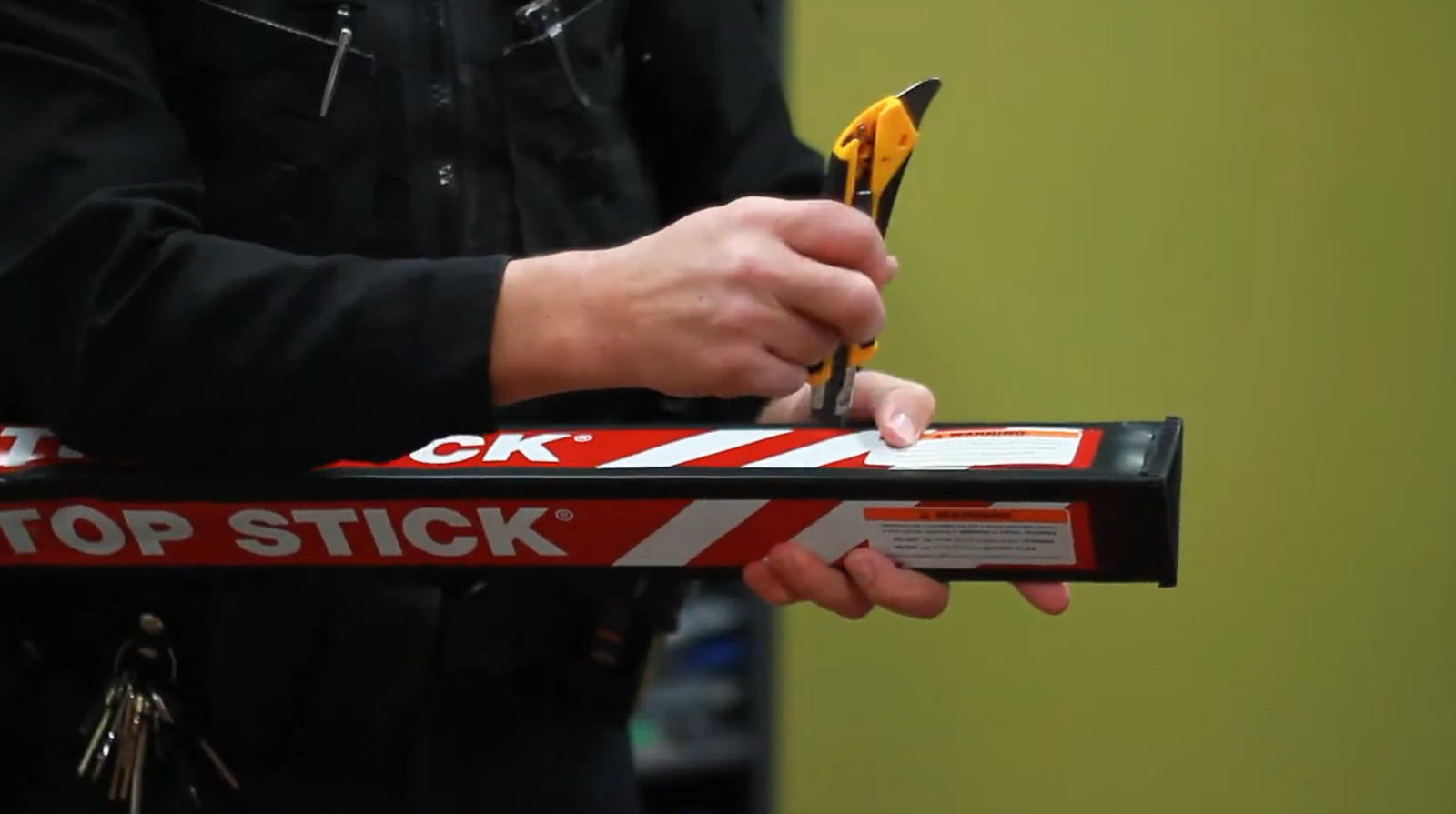
At first glance, a Stop Stick resembles a giant, three-foot-long Toblerone candy bar, with its familiar triangular shape. But its packaging contains no chocolate or nougat. Inside, there are 36 hollow steel quills coated in Teflon. Each quill is capped at both ends with detachable spiked tips. These quill assemblies are 2.625 inches long, arranged in 12 triangles that are evenly spaced along the length of the device. The quills sit on a collapsible polymer core, and the entire unit is wrapped in glass-filament tape before being slipped into a polypropylene plastic sleeve.
The device is lightweight and portable, allowing officers to carry it to a position ahead of the fleeing vehicle. Multiple units can be connected to cover a wider swath of road. In fact, up to four Stop Sticks can be strung together to create a 12-foot-long barrier across the pavement.
The Components
- Hollow steel quills: 36 per unit, coated with Teflon
- Detachable spiked tips: one at each end of every quill
- Triangular arrangement: 12 evenly spaced triangular clusters
- Polymer core: collapsible for easy storage and deployment
- Outer protection: glass-filament tape and a polypropylene sleeve

Why Slow Deflation Matters
The genius of the Stop Stick lies in its hollow quills. When a tire rolls over the device, the vehicle's weight forces one or more spike tips into the rubber. The tips are designed to detach, so one half remains anchored in the polymer core while the other breaks free and stays inside the tire. This leaves the hollow quill in place, creating a small, controlled opening. Air flows out through the tube like a relief valve, releasing pressure gradually over time.
This is a deliberate departure from older spike strips, which create large tears that can drain a tire in seconds. By slowing the deflation process, the Stop Stick gives the driver more time to react, brake, and bring the vehicle to a stop. It also makes it less likely that the car will swerve violently or flip. The company behind the device promotes this safety benefit, and the hollow-quill design has become common among tire-deflation tools, not just Stop Sticks. Rival manufacturers have adopted similar technology because controlled air release is more humane and effective than a blowout.
Officers Face Their Own Risks
While the design reduces some dangers, using a Stop Stick is not risk-free for police officers. The deployment procedure requires an officer to be in or near the roadway. One end of the connected sticks is attached to a cord that leads to a fishing-reel-style device. The officer stands on one side of the road and throws the Stop Stick across the pavement. Then, using the reel, they pull the sticks back to their side, lining them up perpendicular to the road. After the suspect vehicle passes, the officer must quickly pull the entire assembly off the road before any other traffic arrives.
This process is stressful and hazardous. The officer must pay close attention to oncoming vehicles, including the very car they are trying to stop. A miscalculation could leave the officer in the direct path of the fleeing vehicle. The manufacturer touts the Stop Stick as a safe, less-lethal option, and it certainly reduces the risk of tire-related crashes. But the physical act of deploying the device still places officers in a vulnerable position.
Less-Lethal Options in Policing
Stop Sticks are part of a broader shift toward less-lethal tools in law enforcement. Just as pepper spray, bean-bag rounds, and conducted-energy weapons offer alternatives to firearms, tire-deflation devices give officers a way to disable a vehicle without necessarily causing a high-speed disaster. The hollow quill is a simple but clever answer to the problem of ending a chase safely.
No solution is perfect, however. A tire deflation device can still affect a motorcycle or a vehicle with older tires in unpredictable ways. The driver's reaction matters too: a panicked motorist may overcorrect or brake suddenly, causing a collision. Police officers must evaluate each situation and decide whether deploying a Stop Stick is the right call.
As police departments rethink their pursuit policies, devices like the Stop Stick will likely play an important role. They offer a middle ground between letting a suspect escape and risking lives in a high-speed chase. By deflating tires slowly instead of blowing them out, these devices give everyone a better chance of walking away from a tense situation.
This article is based on reporting by Jalopnik. Read the original article.
Originally published on jalopnik.com