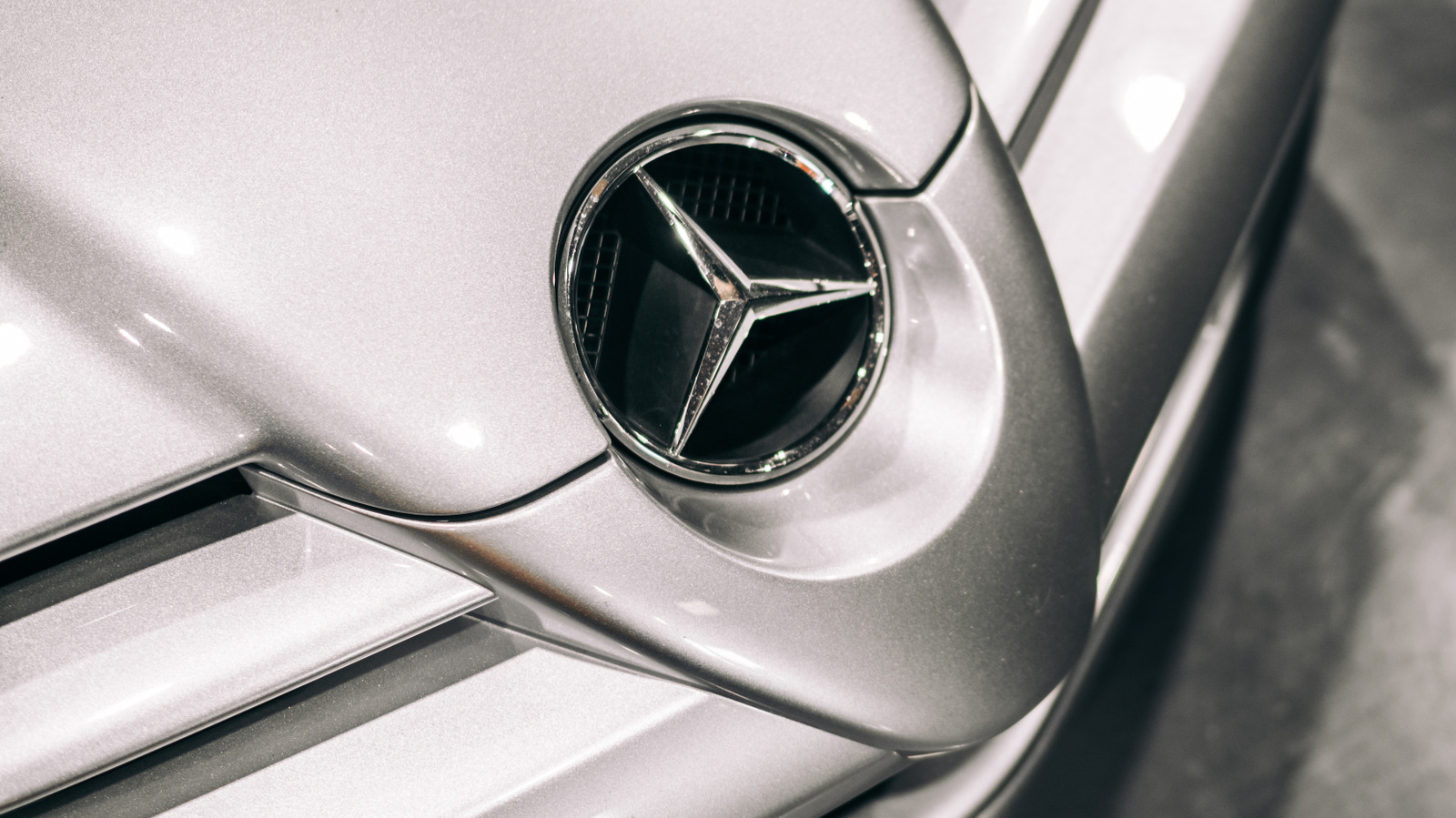
AMG Is Mercedes' Performance Division — Not Its Only Source of Speed
To understand what AMG stands for, it helps to start with a simple fact: Mercedes-Benz bought an entire company specifically to turn its luxury cars into proper sports cars. That acquisition shaped the brand's performance identity for decades. In practice, it means more power, sharper throttle response, more capable handling, generous use of carbon fiber to cut weight, and simply more of everything that makes a car thrilling to drive.
A large part of that formula lives under the hood. Range-topping Mercedes models receive hand-built engines, each one assembled from start to finish by a single technician under AMG's "one man, one engine" philosophy. That approach is as much about craftsmanship as it is about engineering, and it explains much of what the AMG badge actually represents to enthusiasts.
Since AMG was fully folded into Mercedes in 1999, the performance division has stayed busy. Yet it has never held a monopoly on fast Mercedes cars — not even within its own corporate home. Mercedes has continued to produce genuinely quick, genuinely powerful machines that never received the AMG badge at all.
Those cars arrived in several flavors. Some buried AMG hardware beneath sensible limousine bodywork. Others were motorsport experiments, electric SUVs, or range-topping luxury flagships that simply never needed the AMG treatment.
The Mercedes-Benz SLR McLaren: AMG Engine, No AMG Badge
The most striking example is the Mercedes-Benz SLR McLaren, a car jointly developed by McLaren and Mercedes that wears no AMG badges anywhere. That absence is deliberate, and it makes the SLR a neat case study in how some of the fastest Mercedes models hide AMG engineering behind a completely different identity.
The engine itself was developed and hand-built by AMG in Affalterbach, which means the SLR carried AMG's workmanship without carrying AMG's name. The badge question was settled by the structure of the project rather than by its performance.
Why the Badge Went to McLaren Instead
The SLR was conceived as a joint Mercedes–McLaren halo car and a modern tribute to the 300SLR racer of the 1950s. It was built during the years Mercedes ran its Formula 1 program alongside McLaren, and that partnership shaped how the car came together. McLaren handled the carbon-fiber monocoque and the final assembly in Woking, England.
Because the SLR was a shared effort with its own distinct identity, the finished car carried the SLR and McLaren names rather than the branding of Mercedes' in-house performance division. AMG's assignment on the project was the engine — not the lettering on the trunk lid.
Supercharged V8, Rear-Wheel Drive, Limited Production
What AMG delivered was substantial. The SLR uses a supercharged 5.4-liter V8 rated at 617 horsepower and 575 lb-ft of torque. In the range-topping 722 Edition, output rises to 641 horsepower and 605 lb-ft. A five-speed automatic transmission sends everything to the rear wheels only, with no all-wheel-drive system to blunt the experience.
Production was tightly limited. The consensus is that just 2,157 SLRs were built between 2003 and 2010, split across the coupe, the roadster, and the open-top Stirling Moss speedster. And when it comes to outright velocity, not many AMGs can match what the SLR is capable of.
The 722 Edition stands out as the one to have if you have the space to use it — a reminder that the fastest car in a Mercedes showroom hasn't always been the one wearing the three-letter badge.
The Broader Pattern: Fast Mercedes Without the Badge
The SLR is the headline act, but it isn't an isolated anomaly. Mercedes has spent decades building cars that deliver serious performance without the AMG label, often for reasons that have nothing to do with engineering capability.
- Luxury flagships with hidden muscle. Some of the quickest non-AMG Mercedes models buried AMG hardware beneath sensible limousine bodywork, keeping their executive manners intact while hiding serious output underneath.
- Motorsport experiments. Other entries in this category were racing-derived projects that existed to explore engineering limits rather than to sell a performance sub-brand.
- Electric SUVs. The shift toward electrification opened another path to rapid acceleration, and not every quick electric Mercedes needed AMG tuning to be fast.
- Range-topping flagships. Some cars sat at the very top of the lineup and simply didn't need the AMG treatment to justify either their position or their performance.
What ties these cars together is a simple point: the AMG badge is a signifier of engineering and marketing intent, but it is not the only measure of what Mercedes can build. When a project demanded speed for reasons unrelated to selling a performance division, the company proved perfectly willing to deliver it under a different name.
Why the Badge Isn't the Whole Story
For buyers and enthusiasts, the lesson is straightforward. An AMG badge tells you a great deal — about hand-built engines, about a specific approach to tuning, and about a division built around adding more of everything. But it doesn't tell you everything about how fast a Mercedes can be.
The SLR McLaren makes that case better than any other car in the lineup. Its engine came from AMG's workshops in Affalterbach, hand-assembled under the same philosophy that defines the division's own models. Its carbon-fiber structure and final assembly came from McLaren in England. Its name came from a 1950s racing legend. Only the badge was missing.
That combination explains why the SLR remains such a compelling outlier: a Mercedes supercar with AMG at its heart, McLaren in its bones, and no interest in advertising either through the usual channels. Mercedes, it turns out, knows exactly how to go fast even when it isn't actively trying to sell you its performance division.
This article is based on reporting by Jalopnik. Read the original article.
Originally published on jalopnik.com