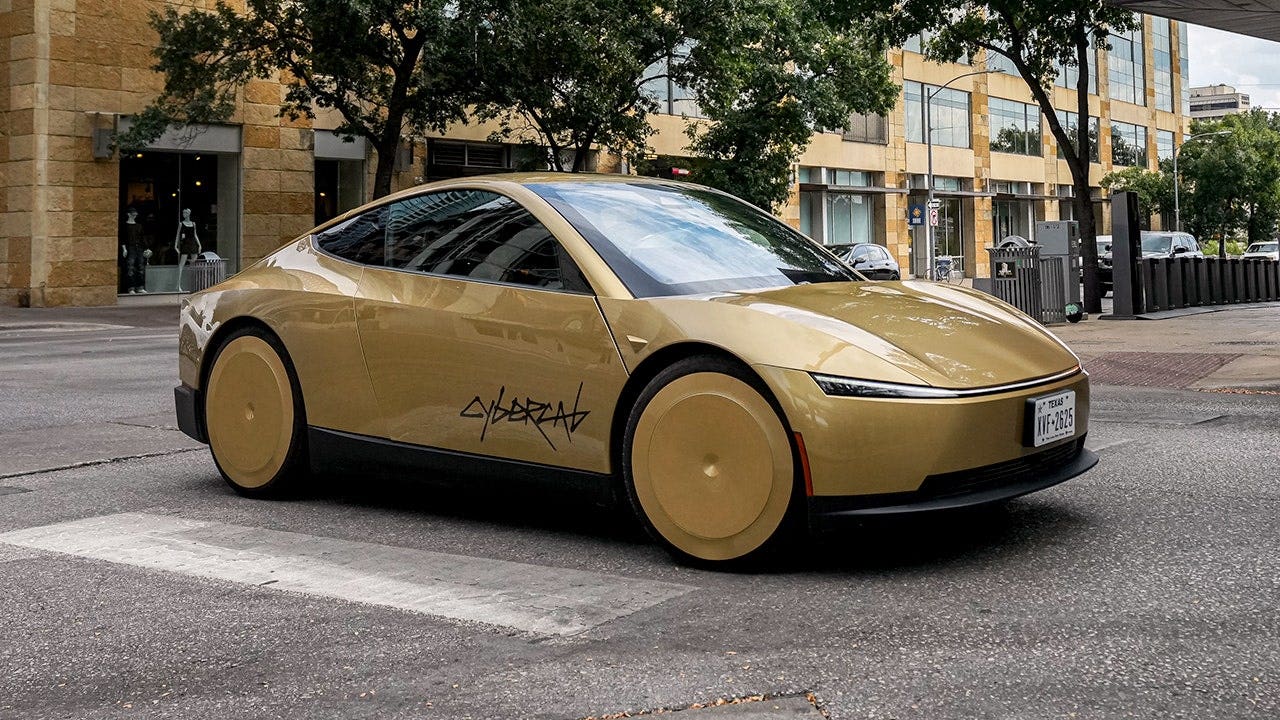
A Debut Complicated by a Federal Inquiry
Tesla has finally unveiled the Cybercab, the vehicle meant to anchor its long-promised push into autonomous ride-hailing. But the launch did not arrive on a clean slate. At roughly the same moment, the National Highway Traffic Safety Administration opened an investigation into the vehicle's lack of compliance with federal standards, according to Automotive News. The juxtaposition is striking: a product debut framed as a leap forward, shadowed by a regulator asking whether it meets the rules that govern every car sold in the United States.
It is a combination that neatly captures the gap between ambition and execution in the autonomous vehicle business. Tesla has spent years positioning the Cybercab as the centerpiece of a driverless future. Federal investigators, meanwhile, are focused on something far more ordinary and far more consequential — whether the vehicle satisfies the baseline requirements that apply to motor vehicles on American roads.
Why the Compliance Question Is So Load-Bearing
Federal motor vehicle safety standards exist to ensure that vehicles sold to the public meet minimum benchmarks for crash protection, occupant safety, and other core requirements. When a regulator questions whether a vehicle complies, it is not a stylistic quibble. It goes to whether the product can be sold, deployed, and scaled at all.
For a conventional automaker, a compliance dispute is a costly headache. For a company staking its identity on a vehicle with no steering wheel or pedals in its intended form, it is existential. Autonomous platforms designed around novel architectures can struggle to map onto standards written with human-driven cars in mind. The resolution of that mismatch — through redesign, exemption, or regulatory adaptation — typically takes years, not quarters.
That is what makes the timing of the investigation so damaging to the Cybercab narrative. A launch is supposed to mark the beginning of a commercialization curve. An open compliance inquiry instead marks the beginning of an uncertain regulatory process with no guaranteed end date.
Waymo Remains the Benchmark Tesla Must Beat
The headline framing from Automotive News — that the Cybercab has a long way to go to beat Waymo — places the competition exactly where observers of the sector have long expected it. Waymo has built its position by accumulating operational experience in driverless service, with a service-first mindset and a hardware-and-software stack developed in parallel with real-world deployment.
Tesla's approach has been different in philosophy. It has leaned on its consumer fleet, its software pipeline, and its manufacturing scale as sources of advantage. Those are real assets. But they are not the same as a fully validated driverless service operating at commercial scale, and they do not shorten the path through a federal compliance review.
That is the practical meaning of the gap the publication highlights. Beating Waymo would require Tesla to out-execute an incumbent not just on software capability, but on regulatory clearance, safety validation, and operational reliability — three areas where the Cybercab story is currently defined by open questions rather than demonstrated results.
What the Launch Does and Does Not Establish
A reveal event establishes intent. It does not establish readiness, and it certainly does not establish compliance. The value of the Cybercab moment therefore depends heavily on what follows.
- Regulatory clarity: Until the federal standards question is resolved, deployment timelines remain speculative.
- Safety validation: An investigation into compliance puts additional scrutiny on how the vehicle's design was assessed before launch.
- Competitive position: Waymo's operational head start is measured in service experience, not in announcements.
- Commercial credibility: Investors and partners will weigh the launch against the unresolved federal inquiry, not in isolation from it.
None of these are fatal on their own. Together they describe a program whose near-term trajectory is now partly controlled by a regulator rather than by Tesla's own product roadmap.

The Wider Stakes for Autonomous Ride-Hailing
The Cybercab's regulatory trouble also matters beyond Tesla. Every company pursuing driverless commercial service is watching how federal authorities handle vehicles that do not fit the traditional mold. A strict reading of existing standards could force broader design changes across the industry. A flexible interpretation could open the door wider for novel architectures.
Either way, the episode reinforces a lesson the sector keeps relearning: autonomy is not primarily a software problem at the point of commercialization. It is a validation, documentation, and compliance problem, and it rewards the patient operator over the fast announcer.
The discussion featured on Automotive News' Shift podcast, with Mike Nefkens, lands on the same tension. A compelling product vision can generate enormous attention. It still has to survive contact with the rulebook.
What to Watch Next
The coming months will reveal whether the investigation produces a narrow, technical finding or a broader challenge to the Cybercab's design assumptions. Watch how Tesla responds publicly, whether any design or documentation changes are signaled, and whether deployment targets shift as a result.
Watch, too, how Waymo's position evolves in the meantime. Every month Tesla spends in regulatory limbo is a month its rival spends accumulating the operational track record that the Cybercab still lacks. That is the real scoreboard, and right now it does not favor the newcomer.
This article is based on reporting by Automotive News. Read the original article.

Originally published on autonews.com