A Celestial Spectacle Over Spain
On August 12, 2026, the Moon moved directly between the Sun and Earth, casting a shadow that traversed Siberia, Greenland, Iceland, Spain, and Portugal. For Spain, this was a momentous occasion—the first major total solar eclipse since 1905. The event drew thousands of spectators and scientists alike, all eager to witness the awe-inspiring phenomenon.
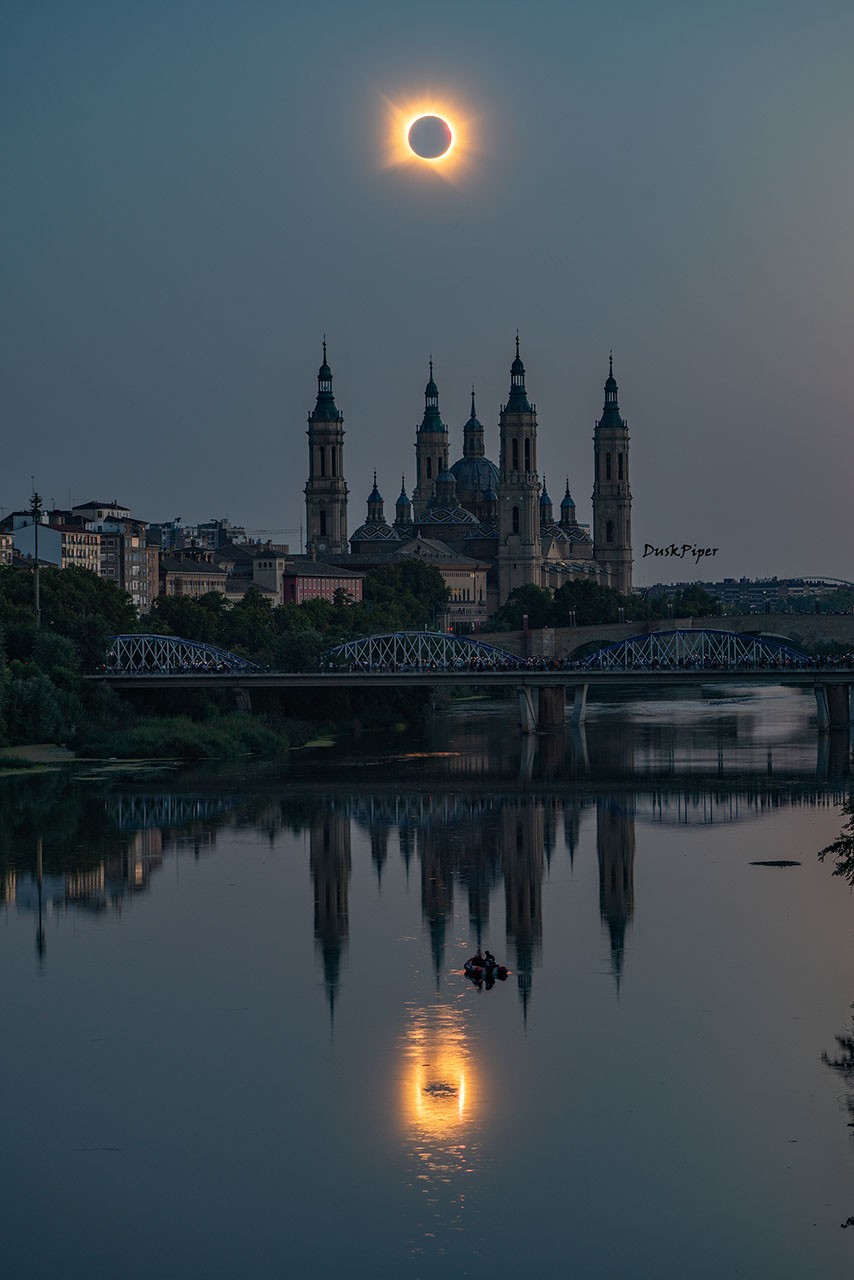
The Astronomy Picture of the Day (APOD) for August 13, 2026, showcases a remarkable image taken in Zaragoza, Spain. The photograph captures two views of the eclipse: one over the iconic Cathedral-Basilica of Our Lady of the Pillar, and another reflected in the tranquil waters of the Ebro River. This dual perspective offers a unique artistic and scientific representation of the event.
The Science Behind the Shadow
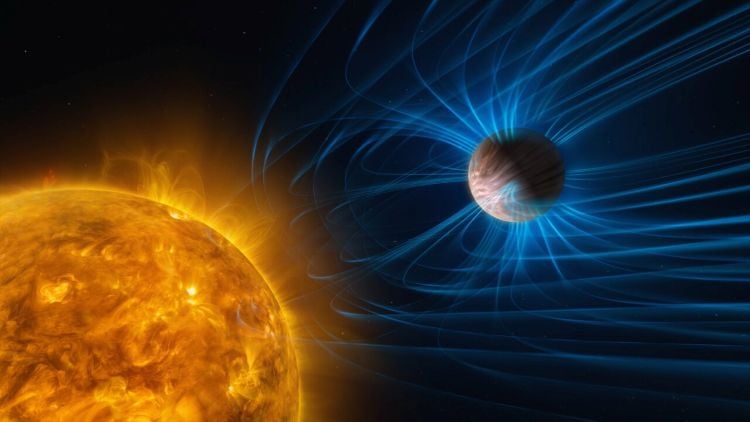
Total solar eclipses occur when the Moon completely blocks the Sun's bright disk, revealing the Sun's outer atmosphere, known as the corona. This ethereal halo is normally invisible due to the Sun's overwhelming brightness. During totality, the corona shines in all its glory, providing scientists with a rare opportunity to study its structure and dynamics.
One of the enduring mysteries of the Sun is why the corona is millions of degrees hotter than the Sun's surface. The Sun's surface temperature is about 5,500 degrees Celsius, but the corona can reach temperatures of several million degrees. Eclipses allow researchers to observe the corona in detail, gathering data that may help explain this puzzling phenomenon. By studying the corona's magnetic fields and plasma dynamics, scientists hope to unlock the secrets of solar heating.
Observing Wildlife and Environmental Changes
Eclipses are not just a treat for astronomers; they also offer a unique opportunity to study how animals and the environment respond to sudden darkness. During the eclipse, observers reported a noticeable chill in the air, as the Sun's heat was temporarily blocked. Birds quieted down, and insects emitted confused chirps, as if unsure whether it was day or night.
Citizen scientists played a vital role in documenting these changes. Enthusiasts were encouraged to record wildlife behavior, image the corona, and monitor air temperature and cloud patterns. This collective effort contributes valuable data to scientific studies, helping researchers understand how ecosystems react to unusual events.
The Cultural and Historical Significance
For Spain, the 2026 eclipse was a historic event. The last time the country experienced a major total solar eclipse was in 1905, over a century ago. The 2026 eclipse brought people together in shared wonder, as communities gathered to witness the celestial alignment. In Zaragoza, the sight of the eclipse over the Cathedral-Basilica of Our Lady of the Pillar added a spiritual dimension to the event, blending science with cultural heritage.
The image featured on APOD, credited to photographer Ruiyu Zhang, captures the eclipse in a way that resonates with both scientists and the public. It serves as a reminder of the beauty and complexity of our universe.

How to View and Study Eclipses Safely
While the next total solar eclipse may be years away, there are always partial eclipses and other astronomical events to observe. It is crucial to use proper eye protection when viewing any solar eclipse, as looking directly at the Sun can cause permanent eye damage. Specialized eclipse glasses or solar filters are essential for safe viewing.
For those interested in contributing to scientific research, organizations like NASA often provide guidelines for citizen science projects during eclipses. Recording observations of wildlife, temperature changes, and the corona can all be valuable contributions to our understanding of the Sun and its effects on Earth.
Conclusion
The total solar eclipse of August 12, 2026, was a spectacular event that captivated millions. From its stunning visual representation in APOD to the scientific insights it provided, the eclipse highlighted the importance of continued observation and study of our universe. As we look forward to future eclipses, we carry with us the memories and knowledge gained from this remarkable day.
This article is based on reporting by science.nasa.gov. Read the original article.
Originally published on science.nasa.gov