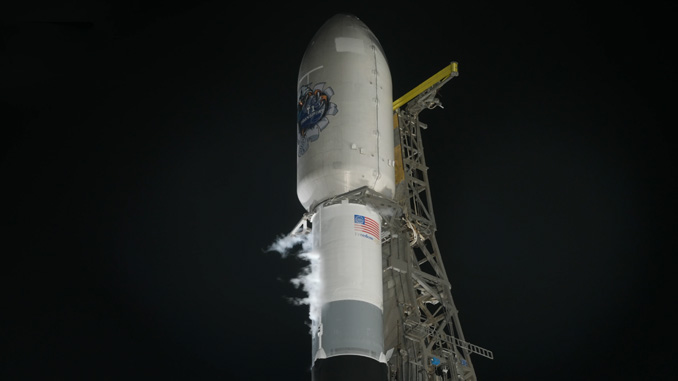
SpaceX is preparing a new launch attempt for a Falcon 9 mission carrying 21 data satellites for the U.S. Space Development Agency, part of a growing military constellation intended to support secure communications and other space-based capabilities.
The mission, designated Tranche 1 Transport Layer A, is scheduled to lift off from Space Launch Complex 4E at Vandenberg Space Force Base in California. The planned launch time is 12:39 a.m. Pacific time on Saturday, or 0739 UTC.
A second attempt after an automated abort
The new target follows an aborted attempt five days earlier. That countdown stopped automatically with 58 seconds remaining, shortly after the rocket's onboard computers assumed control. SpaceX did not publicly identify the cause of the abort, but said at the time that the vehicle and payload were in good health.
Afterward, the rocket was returned to a horizontal position at the pad and the launch was delayed repeatedly. Spaceflight Now reported that a missile test from Vandenberg using the Western Test Range on Friday may also have contributed to the final timing of the new attempt.
For a launch operation that serves a national-security customer, the reset illustrates how range availability, vehicle readiness and payload requirements can all affect scheduling. The available reporting does not establish that the earlier abort was connected to the later delays, and SpaceX has not disclosed a technical explanation.

Building a distributed military network
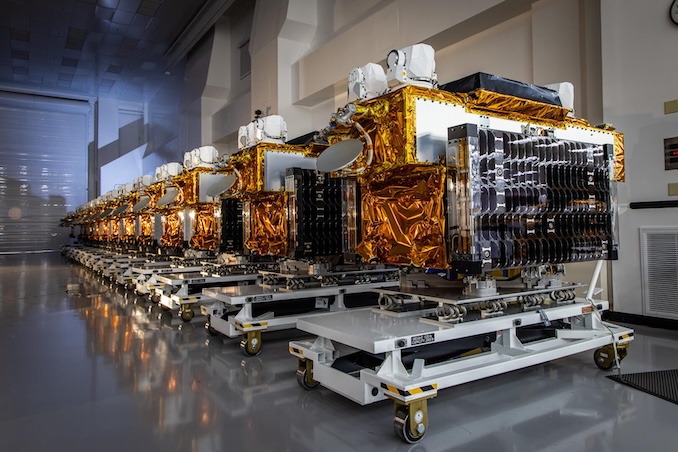
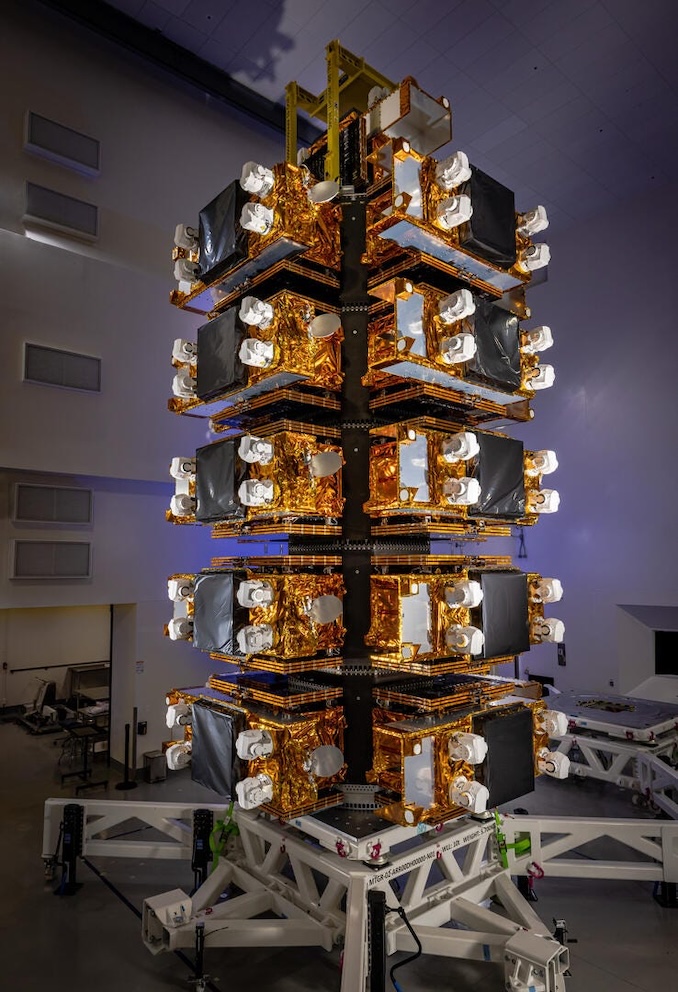
The 21 satellites are headed for the Space Development Agency's Proliferated Warfighter Space Architecture, or PWSA. The constellation is intended to provide the U.S. military and its allies with capabilities including secure communications and missile tracking.
The word “proliferated” is central to the architecture's approach. Rather than concentrating capability in a small number of large spacecraft, the program is deploying many satellites in orbit. The Transport Layer is the communications-focused component of that broader effort, while the overall architecture is designed to support military users through space-based services.
T1TL-A is the fourth mission sending production satellites to orbit for the agency. Earlier launches included T1TL-B in September 2025, T1TL-C in October 2025 and T1TL-E in July 2026. Spaceflight Now reported that the B and E missions included satellites manufactured by York Space Systems, while the C mission used Lockheed Martin-built satellites.
The launch is also one of 23 missions awarded to SpaceX under the National Security Space Launch Phase 2 contract, granted in August 2020 and managed by the U.S. Space Force's Space Systems Command. That connection places the flight within a longer-running procurement and launch campaign rather than a one-off mission.
Falcon 9 booster set for sixth flight
SpaceX plans to use first-stage booster B1103 for the mission. If it launches as planned, the flight will be the booster’s sixth. Its previous missions include the SDA's T1TL-E flight, the NROL-179 mission and three Starlink launches.
Following liftoff, the Falcon 9 is expected to fly south from Vandenberg. SpaceX plans to return the first stage to Landing Zone 4 less than seven and a half minutes after launch. A successful recovery would mark the 37th landing at that site and the 668th Falcon booster landing overall, according to the launch report.
Reusing a first stage on a national-security mission has become a visible part of SpaceX's launch model. For the SDA, repeatable launch access is especially relevant because its planned architecture calls for numerous spacecraft and multiple deployment missions, not a single flagship satellite.

What to watch
The immediate question is whether the rescheduled countdown proceeds beyond the point at which the first attempt stopped. If it does, the mission would add another batch of data satellites to the Transport Layer and advance the deployment of the PWSA.
Even if the flight succeeds, it represents one increment in a much wider military space buildout. The constellation's usefulness will depend on the deployment of further satellites, the integration of network capabilities and the continued availability of launches. For now, the scheduled Falcon 9 flight is the next operational step in that effort.
This article is based on reporting by Spaceflight Now. Read the original article.
Originally published on spaceflightnow.com