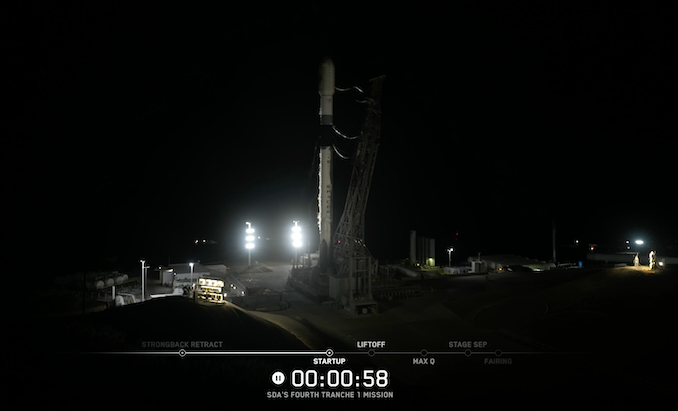
SpaceX has delayed the launch of 21 data-transport satellites for the U.S. Space Force’s Space Development Agency after a Falcon 9 launch attempt was scrubbed in the final minute of the countdown. The mission, known as Tranche 1 Transport Layer A, is part of the Space Development Agency’s effort to build a large, distributed military space architecture in low Earth orbit.
Spaceflight Now reported that the rocket was shifting into its automated startup sequence when the attempt was called off. SpaceX did not provide a reason for the abort. After initially targeting another opportunity and then waiving it off, the company moved its target to no earlier than Saturday, October 10.
The delay does not change the purpose of the mission, but it underlines the operational demands of deploying a growing constellation of national-security satellites. The 21 spacecraft are intended to become one part of the Proliferated Warfighter Space Architecture, or PWSA, a network designed to provide capabilities including secure communications and missile tracking for the United States and its allies.
A launch for the transport layer
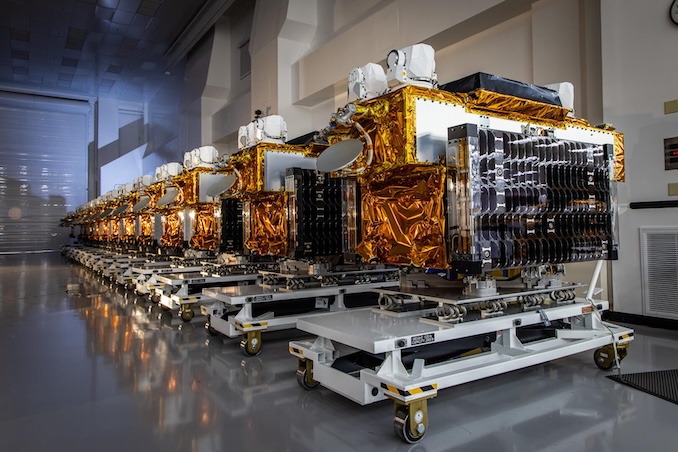
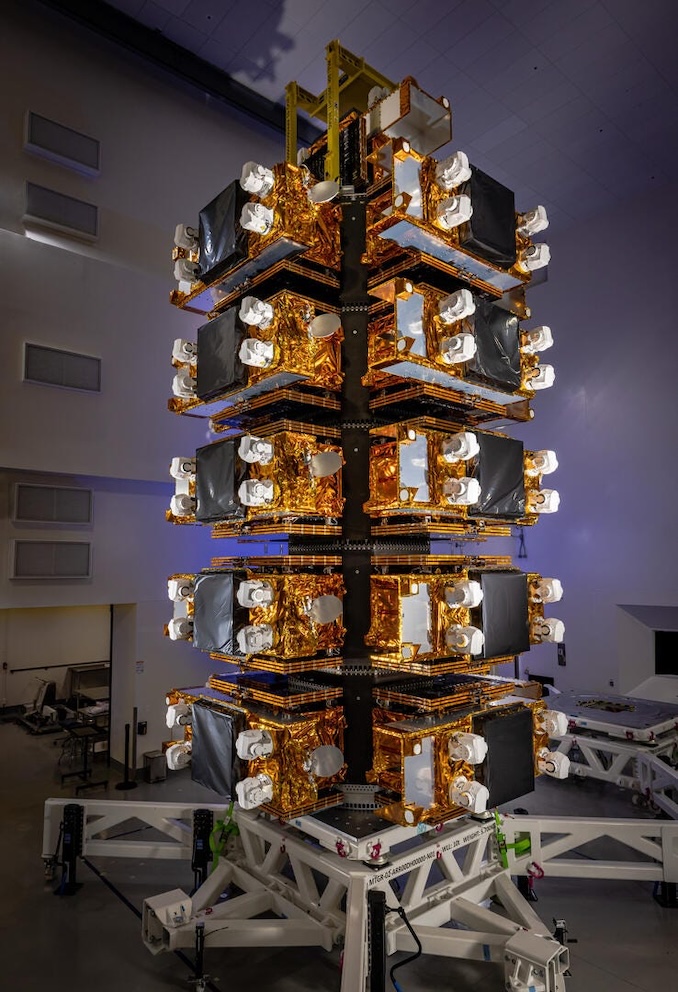
The Tranche 1 Transport Layer A mission is the fourth flight sending production satellites into orbit for the Space Development Agency. Its payload consists of 21 satellites built by Northrop Grumman. The spacecraft were delivered to Vandenberg Space Force Base on September 28.
The transport layer is a foundational portion of the wider PWSA concept. Rather than relying on a small number of very large satellites, the architecture is intended to use a proliferated constellation: many satellites distributed across low Earth orbit. The mission’s stated role within that architecture is to help support space-based capabilities such as secure communications and missile tracking.
That makes each launch part of a larger deployment effort, not an isolated satellite mission. Spaceflight Now described T1TL-A as one of 23 missions awarded to SpaceX under the National Security Space Launch Phase 2 contract, which was awarded in August 2020 and is managed by the U.S. Space Force’s Space Systems Command.
Previous SDA transport missions are already in orbit
Three earlier Tranche 1 Transport Layer missions have launched. T1TL-B flew on September 10, 2025; T1TL-C on October 15, 2025; and T1TL-E on July 16, 2026. The B and E missions carried satellites manufactured by York Space Systems, while the C mission carried Lockheed Martin spacecraft.
The A mission will add Northrop Grumman-built satellites to that set of production launches. Space Force Col. Ryan Hiserote, the Space Systems Command division chief for Assured Access to Space, told Spaceflight Now in September 2025 that the initial T1TL missions could launch in any order. That flexibility is useful for a program made up of multiple manufacturers, missions and batches of spacecraft.
The approach also illustrates the industrial structure behind the constellation. Different companies are manufacturing spacecraft for related missions, while SpaceX is conducting the launches. The Space Force and Space Development Agency are pursuing the constellation as an operational architecture rather than as a single platform.
Falcon 9 booster set for a sixth flight
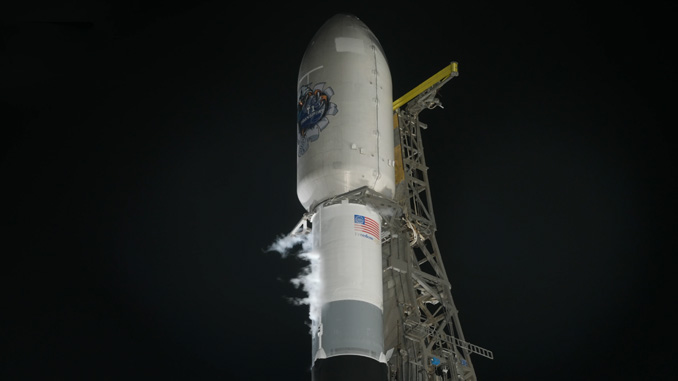
For T1TL-A, SpaceX plans to use Falcon 9 first-stage booster B1103. The flight would be its sixth. Its previous missions include launches of the SDA’s T1TL-E mission, NROL-179 and three batches of Starlink satellites.
After liftoff, SpaceX plans to land the booster at Landing Zone 4 less than seven and a half minutes later. A successful recovery would be the 37th landing at Landing Zone 4 and the 668th Falcon booster landing to date, according to Spaceflight Now.
Booster reuse is operationally relevant for missions of this kind because it allows a previously flown first stage to return for another launch. In this case, the same booster previously flew an earlier SDA transport-layer mission, T1TL-E. The planned landing would extend its record while keeping the immediate focus on delivering the Northrop Grumman satellites to orbit.

Why the scrub matters
A scrub close to launch is a visible interruption, but it is not unusual for a mission moving through the final automated sequence. The available reporting does not identify the cause, so it would be premature to draw conclusions about the rocket, payload or weather. What is known is that SpaceX stood down and later set a new target no earlier than October 10.
The more significant story is the deployment campaign behind the countdown. T1TL-A is intended to expand a transport layer within an architecture built for military communications and missile-tracking support. Previous Tranche 1 launches have already delivered spacecraft from York Space Systems and Lockheed Martin, while this flight would carry a Northrop Grumman-built batch.
Once it flies, the mission will contribute another 21 satellites to that broader effort. Until then, the program remains in a launch pause, with SpaceX providing no public reason for the final-minute abort and a revised target set for the next attempt.
This article is based on reporting by Spaceflight Now. Read the original article.
Originally published on spaceflightnow.com