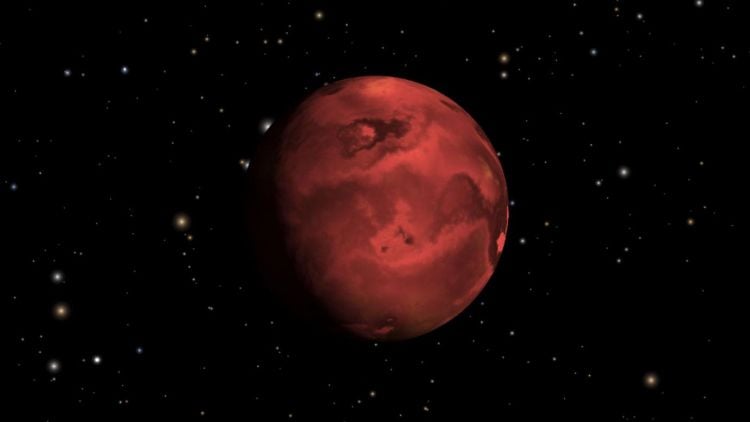
Exoplanet researchers have grown accustomed to surprises, but lava worlds hold a special place in the catalog of planetary oddities. These are planets that orbit so close to their stars that their surfaces may be molten rock. The closer and hotter they get, the more astronomers have come to expect them to be wrapped in a gaseous envelope produced by vaporized surface material.
That expectation is now being tested. A newly published study in The Astrophysical Journal Letters describes observations of HD 3167 b, an Earth-sized lava world that sits on the cooler end of the temperature spectrum yet appears as though it might still possess an atmosphere. The work, carried out by a team of researchers from the United States, United Kingdom, China, and Spain, relies on NASA's James Webb Space Telescope (JWST) to probe how the planet behaves thermally.
Why Lava Worlds Matter to Planetary Science
Exoplanets continue to challenge our understanding of planetary formation, planetary evolution, and whether distant worlds might be able to support life as we know it. Scientists often turn to the planets in our own solar system as analogs, but those comparisons only stretch so far. Studying exoplanets with extremely short orbital periods repeatedly forces researchers to rethink what a planet can withstand over the course of its lifetime.
Lava worlds have entered that conversation in a serious way in recent years, and the most extreme examples are those that circle dangerously close to their host stars. For the hotter members of this class, the physics seemed relatively tidy: extreme temperatures melt the surface, the molten material turns to gas, and that gas envelops the planet as an atmosphere. Colder lava worlds, by contrast, had generally been observed as bare rock, apparently stripped of any atmosphere at all.
HD 3167 b complicates that clean division. It belongs to the cooler end of the lava-world range, yet the new observations hint that it may not be as barren as its temperature would suggest.

Inside the HD 3167 b Observations
HD 3167 b lies roughly 154 light-years from Earth. It has a radius about 1.6 times that of Earth and a mass about 4.8 times Earth's, and it completes an orbit around its K-type star in approximately 0.96 Earth days — a year shorter than a single day on our own planet.
Its host is a K-type star, a class that is both smaller and cooler than the Sun. Astronomers estimate that K-type stars make up the largest population of stars in the Milky Way Galaxy, which makes the planets orbiting them especially interesting to researchers trying to understand how common particular planetary conditions might be across the galaxy.
Reading a Planet's Heat With a Secondary Eclipse
To investigate whether HD 3167 b holds an atmosphere, the research team relied on JWST observations of a secondary eclipse. This geometry differs from the more familiar transit. A transit occurs when a planet passes in front of its star, briefly dimming the starlight. A secondary eclipse happens when the planet passes behind its star instead, allowing the star's light to be separated from whatever the planet itself is emitting.
That distinction is what made the new result possible. When JWST observed HD 3167 b during its secondary eclipse, the planet's surface turned out to be much cooler than researchers had previously hypothesized.

What a Surprisingly Cool Surface Could Mean
According to the researchers, that unexpectedly low temperature may point to something happening across the planet's surface: heat from the dayside could be redistributed to the night side. In other words, the planet may not be radiating its heat back to space the way a bare, airless rock would.
The dayside-versus-night-side distinction matters a great deal here. Planets orbiting this close to their stars are tidally locked, meaning one hemisphere permanently faces the star while the other remains in perpetual darkness. On a world without an atmosphere, that configuration would produce an enormous temperature contrast between the two halves — a scorching day side and a frigid night side. A mechanism that moves heat from one hemisphere to the other would soften that contrast, and an atmosphere is one of the most natural candidates for doing exactly that.
A Colder Lava World That Might Still Hold an Atmosphere
Taken together, the observations point toward a possibility rather than a proven fact. HD 3167 b could possess an atmosphere even though it is colder than the lava worlds normally associated with gaseous envelopes. If that interpretation holds up, it would challenge the straightforward assumption that temperature alone decides whether a lava world keeps an atmosphere or loses it.
The finding does not overturn the existing framework so much as strain it. Hotter lava worlds have been confirmed to carry atmospheres, and colder ones have been found to lack them. HD 3167 b sits in the awkward space between those two groups, and that is precisely why it is interesting.
Key Facts at a Glance
- Planet: HD 3167 b, an Earth-sized lava world
- Distance: approximately 154 light-years from Earth
- Size and mass: about 1.6 times Earth's radius and 4.8 times Earth's mass
- Orbit: roughly 0.96 Earth days around a K-type star
- Instrument: NASA's James Webb Space Telescope
- Technique: secondary eclipse observation, when the planet passes behind its star
- Key result: the surface is cooler than previously hypothesized, hinting at heat redistribution and a possible atmosphere
- Publication: The Astrophysical Journal Letters
- Research team: scientists from the United States, United Kingdom, China, and Spain
Why This Result Matters
Lava worlds are natural laboratories for extreme planetary physics. Because they orbit so close to their stars, they experience irradiation that no planet in our solar system endures, and their short years mean researchers can observe repeated cycles of heating and cooling relatively quickly. Every new measurement of one of these planets adds a data point to a picture that is still very much under construction.
HD 3167 b is particularly valuable because it broadens the sample in a direction that had been largely empty. If cooler lava worlds can retain atmospheres, even intermittently, then the boundary between "bare rock" and "gas-shrouded world" is blurrier than the simple temperature-based rule suggests. That, in turn, affects how astronomers model the loss and retention of atmospheres over a planet's lifetime.
Open Questions That Remain
The most pressing question is whether HD 3167 b genuinely has an atmosphere or whether some other process explains its cooler-than-expected surface. Confirming the presence of a gas envelope, and identifying what that envelope is made of, would require additional observations and analysis. The team's evidence is intriguing, but it is evidence for a possibility rather than a verdict.
A second question concerns how such an atmosphere could persist at all. Colder lava worlds were thought to lack atmospheres for a reason, and understanding what allows a planet like HD 3167 b to hold onto one — if it does — would sharpen models of atmospheric escape and surface interactions on short-period planets.
For now, HD 3167 b stands as a reminder that the galaxy's most extreme planets rarely follow the rules scientists write for them. With JWST continuing to observe lava worlds, the coming years should reveal whether this cooler outlier is an exception or the first sign that the category itself needs rethinking.
This article is based on reporting by Universe Today. Read the original article.
Originally published on universetoday.com