Another dense launch cadence milestone
SpaceX is set to continue the expansion of its Starlink broadband network with the Starlink 10-47 mission from Cape Canaveral Space Force Station. According to Spaceflight Now, the Falcon 9 launch is scheduled to carry 29 Starlink V2 Mini Optimized satellites into low Earth orbit. If it proceeds as planned, it will mark the company’s 60th orbital flight of 2026, a tally that includes 59 Falcon 9 launches and one Falcon Heavy mission.
That figure alone is the headline. The payload matters, but the deeper story is cadence. Reaching 60 orbital flights before the end of May underscores how aggressively SpaceX has industrialized launch operations. The company is no longer simply launching satellites; it is running a repeatable, high-frequency transportation system that supports its own constellation while also reinforcing its lead in launch tempo.
What the mission is carrying
The 10-47 mission will add another 29 spacecraft to the Starlink network, which Spaceflight Now says already consists of more than 10,000 satellites. The satellites on this flight are identified as V2 Mini Optimized vehicles, part of the continuing evolution of the constellation as SpaceX works to increase capability while fitting within the constraints of Falcon 9 launches.
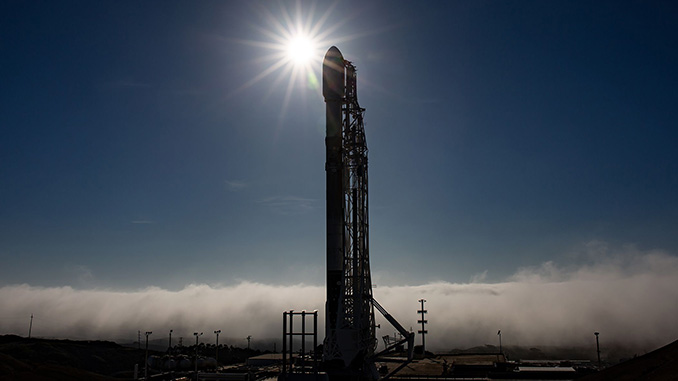
Liftoff is scheduled from Space Launch Complex 40 at Cape Canaveral on a north-easterly trajectory. Weather appears broadly favorable. The 45th Weather Squadron forecast an 85 percent chance of acceptable conditions, with cumulus clouds described as the main possible issue near the opening of the launch window.

Reusability remains central
The first-stage booster assigned to the mission is B1078, making its 28th flight. Spaceflight Now notes a varied mission history for this vehicle, including NASA’s Crew-6, USSF-124, SES’s O3b mPOWER-B, BlueBird 1-5, Nusantara Lima, and multiple earlier Starlink missions. That record illustrates the degree to which booster reuse has moved from demonstration to routine infrastructure.
After stage separation, B1078 is expected to land on the drone ship A Shortfall of Gravitas in the Atlantic off South Carolina. If successful, it would be the 151st landing for that vessel and the 614th booster landing overall for SpaceX. Those counts matter because they show how reusability has become cumulative operational capital rather than a one-off engineering stunt.
The broader significance for the space sector
Starlink launches can start to look repetitive, but repetition is part of the point. The network grows because launches are frequent, standardized, and tightly integrated with spacecraft production. Each mission adds capacity, resilience, and coverage to a system that SpaceX is still scaling even after crossing the 10,000-satellite threshold cited in the report.
For the wider space industry, the significance is less about one stack of satellites than about the model behind it. SpaceX is using a reusable rocket fleet to feed a vertically integrated communications constellation at a pace few competitors can match. That combination affects launch pricing, competitive expectations, and the timeline on which broadband, defense, and remote-connectivity markets evolve.
If the mission proceeds on schedule, the second stage is expected to deploy the satellites a little more than an hour after liftoff. By then, another routine Starlink mission will also have served as a fresh data point in a much larger story: orbital launch is becoming something closer to continuous industrial activity, and SpaceX is setting the tempo.
This article is based on reporting by Spaceflight Now. Read the original article.

Originally published on spaceflightnow.com