Astrobiology's Other Error Problem
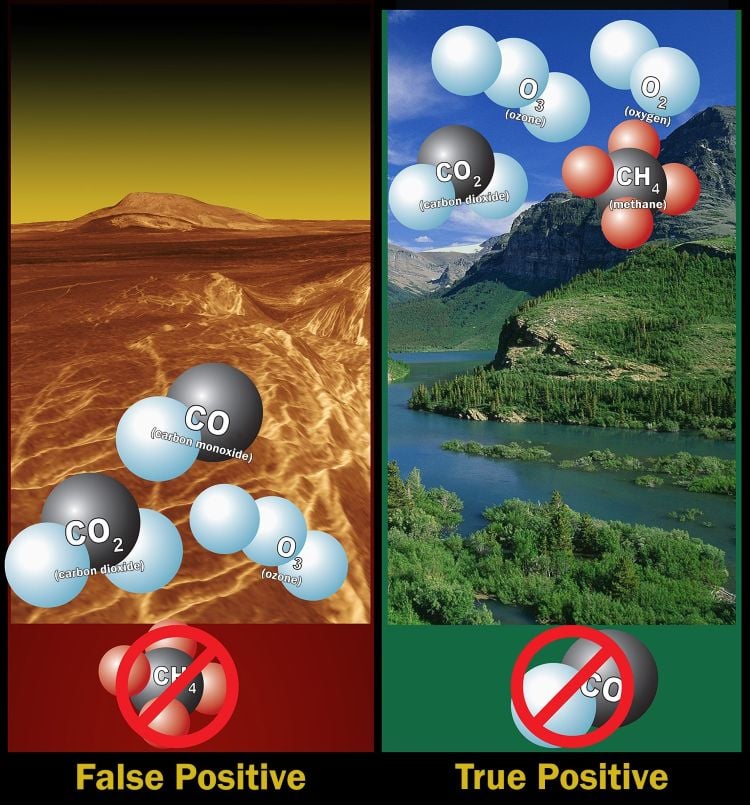
Space agencies have spent decades preparing for one kind of mistake in the search for extraterrestrial life: the false alarm. A strange chemical signature, an unexpected image pattern, or an unusual reading from an instrument can all appear to point to biology and later prove to be contamination, noise, or ordinary geology. A recent study highlighted by Universe Today argues that this long-standing focus may have left another risk underexamined: the possibility that missions will encounter real signs of life and fail to recognize them.
The study, published in Nature Astronomy, examines false negatives in astrobiology. In simple terms, a false negative happens when meaningful evidence is present but dismissed, overlooked, or never prioritized. That matters because the environments now being explored, or planned for exploration, may not present life in familiar forms. If the search is built too narrowly around Earth-like assumptions, scientists could miss the very discovery they are trying to make.
Why False Negatives Matter
Researchers note that false positives usually receive greater scrutiny because they are common and embarrassing. Instruments can misfire, procedures can introduce contamination, and humans can overinterpret ambiguous data. That history has trained mission teams to be cautious. But caution has a tradeoff. If investigators are primarily organized to reject weak signals, they may undervalue evidence that is incomplete, rare, or difficult to classify.
The study points to several ways life could escape detection. There may simply be too little of it in a sample. Organisms could be inactive or hibernating when measurements are taken. Life elsewhere may not resemble terrestrial biology closely enough to trigger standard tests. Or crucial evidence may sit just beyond the reach of the instruments carried on a spacecraft, lander, or rover.
Those are not abstract concerns. Mission hardware operates under severe limits in mass, power, time, and bandwidth. Instruments must be tuned to specific targets. Sampling opportunities are finite. A spacecraft may get only a few chances to drill, image, heat, or chemically analyze a site before moving on. In that context, anything unusual that fails to fit existing templates can be downgraded too quickly.
What an Overlooked Discovery Could Look Like
Universe Today's framing uses a future mission to Saturn's moon Titan to illustrate the issue. The example is imaginative, but its underlying point is serious: a mission could collect real evidence that remains unrecognized because analysts classify it as noise or as a known nonbiological process. That risk grows when worlds differ sharply from Earth in chemistry, temperature, atmosphere, or surface conditions.
Astrobiology has long recognized that life detection is not a single measurement but a chain of judgments. A sample has to be collected properly, processed correctly, compared against expectations, and interpreted within context. Any weak link can erase a genuine signal. The new emphasis on false negatives suggests that the field may need more procedures for asking not just, "Is this result trustworthy?" but also, "What are we failing to see?"
A Case for Broader Search Strategies
The researchers call for a more extensive and thorough investigative approach to life detection. That does not mean lowering evidentiary standards. It means designing missions and analysis pipelines that keep alternative explanations open longer, explore anomalies more systematically, and account for the possibility that alien biology may not announce itself in ways humans already know how to recognize.
In practice, that could influence both mission planning and post-flight analysis. Teams may need to revisit low-priority data, compare unusual results across instruments, and build workflows that preserve ambiguous signals rather than filtering them out too early. It could also affect how future instruments are designed, especially for missions targeting oceans, thick atmospheres, buried environments, or complex organic chemistry.
Where AI Fits In
One of the study's proposed tools is artificial intelligence. Rather than searching only for a few large, obvious indicators of life, AI systems could help identify subtle patterns, sequences, or combinations of signals that human analysts might miss. This would be particularly valuable in datasets that are large, multimodal, and difficult to inspect exhaustively by hand.
AI is not presented as an oracle. It would still operate within the limits of training data, model design, and instrument quality. But it could serve as a second layer of scrutiny, highlighting correlations or anomalies that deserve human review. In a field where missing a faint signal may be as consequential as misreading a noisy one, that kind of pattern detection has clear appeal.
The broader implication is that life detection may need to evolve from a checklist mindset to a probability mindset. Instead of asking whether a single instrument produced a definitive answer, missions may need to assess whether many small pieces of evidence, taken together, point toward biology. AI could help assemble that picture.
The Next Phase of the Search
The search for life beyond Earth has always carried asymmetrical risks. A false claim can damage credibility. A missed discovery can delay one of science's most important breakthroughs, perhaps by decades. The new study does not argue that astrobiologists should become less skeptical. It argues they should widen the definition of what skepticism includes.
That is likely to resonate as agencies prepare more ambitious planetary missions and as data volumes continue to rise. The farther exploration pushes into unfamiliar environments, the less safe it will be to assume that life, if it exists, will look chemically, structurally, or behaviorally familiar.
If that lesson sticks, future missions may be built not only to avoid being fooled, but also to avoid fooling themselves into overlooking what is already there.
This article is based on reporting by Universe Today. Read the original article.
Originally published on universetoday.com