Record-Breaking Launch Attempt
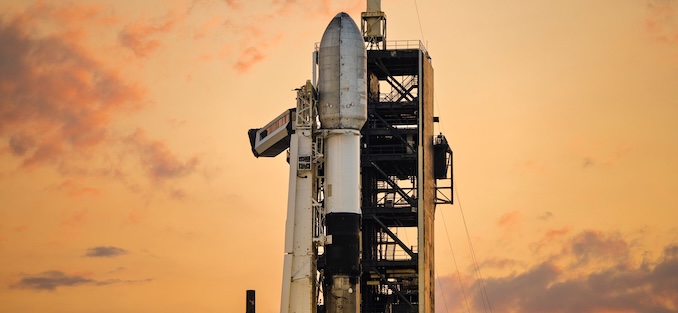
SpaceX is poised to break its own rocket reuse record early Thursday morning when the Falcon 9 first-stage booster B1067 lifts off for the 36th time. The milestone flight, designated Starlink 10-42, will deliver 29 broadband internet satellites to low Earth orbit, further expanding the company's growing constellation. Launch is scheduled for 5:25 a.m. EDT (0925 UTC) from Space Launch Complex 40 at Cape Canaveral Space Force Station in Florida.
The 45th Weather Squadron has forecast a 90 percent chance of favorable weather conditions for the launch window, with only a slight concern for cumulus clouds. Meteorologists noted that light southwesterly winds and a few offshore Atlantic showers could trigger the Cumulus Cloud Rule, but overall conditions are expected to be favorable. A backup opportunity on Friday would see similar weather, with Saharan dust potentially inhibiting cloud development.
Booster B1067: A Workhorse of the Fleet
Booster B1067 first flew in June 2021 on SpaceX's 22nd Dragon cargo mission under NASA's Commercial Resupply Services-2 contract. Since then, it has accumulated an impressive resume, including the Crew-3 and Crew-4 astronaut missions, as well as 24 dedicated Starlink launches. This booster has become a symbol of SpaceX's commitment to reusability, demonstrating that orbital-class rockets can be flown repeatedly with minimal refurbishment.
After launching the 29 Starlink satellites, B1067 will attempt a landing on the drone ship 'A Shortfall of Gravitas' stationed in the Atlantic Ocean, about eight minutes after liftoff. If successful, this will mark the 160th landing for that particular drone ship and the 635th overall booster landing for SpaceX. The company has perfected the art of vertical landings, enabling rapid reuse and cost reduction.

Starlink Constellation Growth
The Starlink 10-42 mission will add 29 satellites to the ever-expanding Starlink network, which now numbers more than 10,700 operational satellites in orbit. This massive constellation provides high-speed internet access to users around the globe, particularly in remote and underserved areas. Each satellite is designed to operate in low Earth orbit, reducing latency compared to traditional geostationary satellites.
SpaceX continues to launch Starlink missions at a rapid cadence, often multiple times per week. The company has regulatory approval for up to 12,000 satellites, with plans for a second-generation constellation of up to 30,000 satellites. The Starlink system has already proven vital for disaster response, rural connectivity, and even military applications.
Launch Trajectory and Coverage
The Falcon 9 rocket will follow a north-easterly trajectory after lifting off from pad 40. Spaceflight Now will provide live coverage beginning approximately one hour before launch. The mission is expected to proceed smoothly given the favorable weather outlook and the booster's proven track record.
SpaceX's ability to reuse boosters multiple times has revolutionized the space industry, drastically reducing the cost of access to space. The record 36th flight of B1067 underscores the reliability of the Falcon 9 design and the company's operational expertise. Each successful landing brings SpaceX closer to its goal of rapid and complete reusability, a key enabler for future missions to the Moon, Mars, and beyond.
Looking Ahead
As SpaceX pushes the boundaries of rocket reuse, the industry watches closely. The company has already flown other boosters more than 20 times, and B1067's 36th flight sets a new benchmark. Future missions may see even higher flight counts as SpaceX continues to refine its refurbishment processes. The Starlink constellation itself is a critical revenue generator, funding development of the Starship system, which aims to be fully reusable and capable of carrying large payloads to deep space.
Thursday's launch is not just a routine satellite deployment; it is a testament to the engineering and operational excellence that has made SpaceX a leader in spaceflight. With each record broken, the company demonstrates that the era of disposable rockets is giving way to a sustainable, reusable future.
This article is based on reporting by Spaceflight Now. Read the original article.
Originally published on spaceflightnow.com