Another Starlink launch, and a notable California milestone
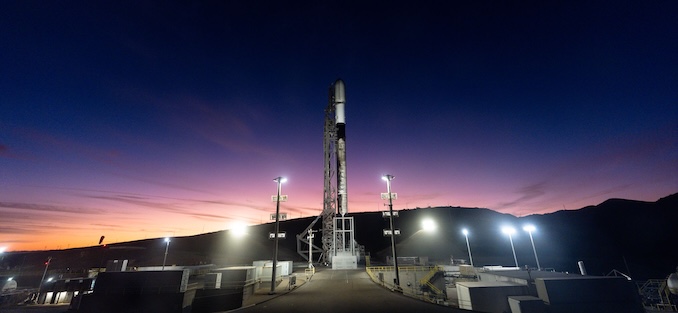
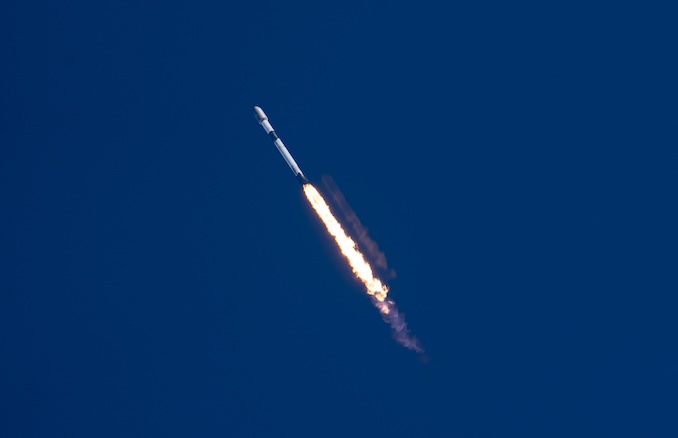
SpaceX added another batch of Starlink satellites to orbit on August 8, launching a Falcon 9 from Vandenberg Space Force Base in California in what became a meaningful marker for the company’s West Coast operations. According to Spaceflight Now, the mission, designated Starlink 17-38, lifted off at 9:35 a.m. PDT, or 1635 UTC, carrying 24 satellites.
The flight was more than another routine deployment in the company’s internet-satellite campaign. It was SpaceX’s 50th launch from California in 2026, underscoring how heavily the company is leaning on Vandenberg as it sustains a high-cadence launch schedule. Spaceflight Now reported that the increase in West Coast activity has come while East Coast flight rates have fallen as SpaceX focuses attention on ramping up Starship preparations.
That shift does not mean the California missions are replacing the company’s broader launch architecture. But it does highlight a change in operational emphasis: Vandenberg is handling an outsized share of ongoing Starlink work during a period when another part of SpaceX’s system is being shaped around future heavy-lift ambitions.
The mission profile was highly familiar, but still operationally important
From a technical standpoint, the flight followed the now-standard Falcon 9 template that has made Starlink deployment a repeatable exercise. After departing Space Launch Complex 4E, the rocket’s first stage, booster B1093, took a south-southwesterly trajectory and returned to land on the drone ship Of Course I Still Love You in the Pacific Ocean about eight minutes and 19 seconds after liftoff.
The second stage then continued to orbit, with satellite deployment taking place a little more than an hour into flight. SpaceX later confirmed the successful deployment of all 24 spacecraft at 1831 UTC, according to the source text.
There was little drama in the sequence, and that is part of the story. SpaceX’s launch system is designed to turn a once-rare complex operation into a frequent, tightly managed service. Each mission still requires precise execution, but the company’s cadence increasingly depends on the ability to treat launches, recoveries and satellite deployments as repeatable industrial processes rather than singular spectacles.

Reusable hardware remains central to the pace
The first-stage booster assigned to the mission, B1093, reflects that industrial logic. Spaceflight Now reported that the booster joined the Falcon 9 fleet in April 2025 and had already flown 15 previous missions before this launch. Those prior flights included missions for the Space Development Agency, the Transporter-16 rideshare mission and a dozen earlier Starlink deliveries.
That history matters because it shows how reuse is functioning in practice, not just in theory. The same booster has already moved across government, rideshare and internal constellation work. In the Starlink program especially, booster reusability helps support a schedule that would be difficult and expensive to sustain if every launch required a newly built first stage.
The recovery of B1093 after the August 8 mission reinforced that model. Returning the booster to a drone ship preserves a core piece of hardware for future flights, supporting the company’s cadence and lowering the friction between one mission and the next. Although the article does not speculate about the booster’s next assignment, its record already places it among the routinely reused workhorses of the Falcon 9 fleet.
Starlink remains one of the year’s busiest operational campaigns
The 24 satellites deployed on Starlink 17-38 were not described in the source text as a technology step-change. Instead, the story’s importance comes from what the numbers say about scale. Spaceflight Now identified this launch as the 71st operational Starlink delivery mission of 2026.
That figure illustrates how quickly the constellation continues to grow and how central Starlink remains to SpaceX’s overall launch manifest. The company is not merely using Falcon 9 to serve outside customers while occasionally adding its own satellites. In practice, Starlink itself has become one of the dominant drivers of launch frequency.
That in-house demand gives SpaceX a degree of control unusual in the launch market. Because it is both launch provider and constellation operator, it can schedule missions around its own deployment priorities. This vertical integration helps explain why the company can maintain such a rapid pace even when launch patterns shift between coasts.
The Vandenberg milestone therefore points to two overlapping realities: the resilience of Falcon 9 as a reusable launch system and the continued intensity of Starlink deployment as a business and infrastructure project.
Why the West Coast number matters
Fifty California launches in a single year is more than a statistic for SpaceX’s internal records. It signals how mature the company’s West Coast launch operations have become. Vandenberg has long been valuable for certain orbital inclinations, and the Starlink program has increasingly used those advantages. Hitting 50 launches by early August suggests sustained operational throughput, not just occasional bursts.
The source text also ties that surge to a strategic rebalancing. As East Coast flight activity eases during a period of Starship preparation, the West Coast is absorbing more of the ongoing launch demand. That indicates flexibility across SpaceX’s infrastructure, with one launch region maintaining mission tempo while another supports future vehicle development work.
For the broader space sector, this is another reminder that launch cadence has become a competitive variable in its own right. It is not only about whether a rocket can reach orbit. It is also about how frequently the operator can repeat the full cycle of launch, recovery and payload deployment.
A routine mission that still says something larger
Starlink 17-38 did not introduce a new rocket, a new pad or a new mission class. On its face, it was a standard operational deployment: 24 satellites up, first stage down safely, constellation expansion continues. Yet routine missions like this one are where SpaceX’s larger strategy becomes visible.
The company is showing that a launch system built around reuse can support very high internal demand while also shifting operations geographically as broader priorities change. The 50th California launch of 2026 is therefore less about one individual mission than about what sustained repetition reveals. SpaceX is still turning launch cadence into infrastructure.
And with this flight marking the year’s 71st operational Starlink delivery mission, the message is clear: the company’s satellite network buildout remains one of the defining engines behind today’s launch tempo.
This article is based on reporting by Spaceflight Now. Read the original article.

Originally published on spaceflightnow.com