Progress M-35 Reaches the International Space Station
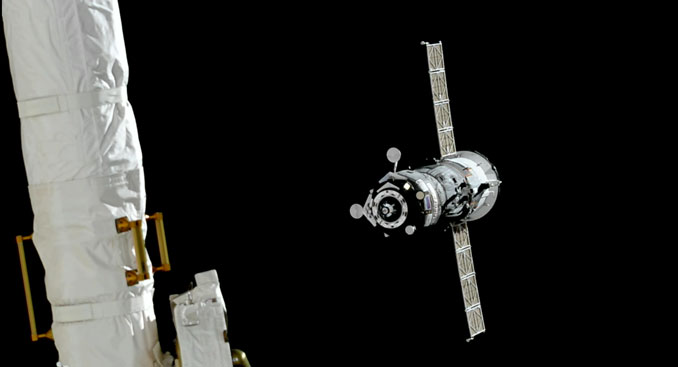
An unpiloted Russian cargo freighter arrived at the International Space Station on Saturday, Sept. 19, 2026, hauling supplies and equipment to the orbiting outpost after a week of delays on the ground. The spacecraft, Progress M-35, docked at the space-facing port of Russia's Poisk module at 9:44 a.m. EDT, or 1344 UTC, as the station sailed roughly 260 miles above the Black Sea.
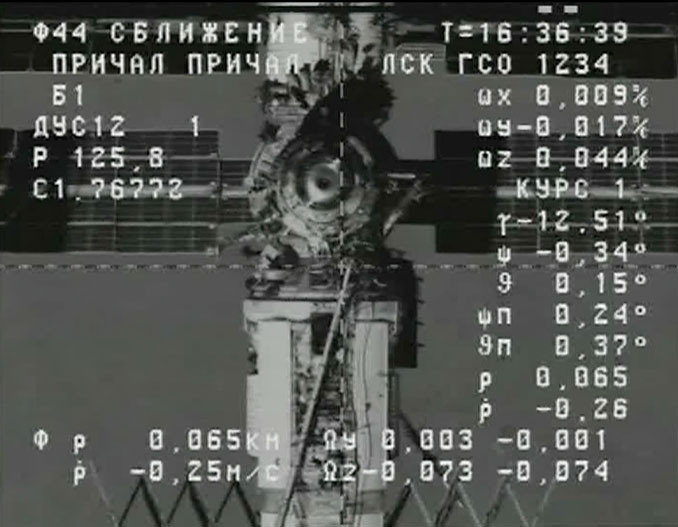
Approaching from behind, the freighter circled the complex before beginning its final run in toward the module. The closing sequence was handled by the automated Kurs rendezvous system, the standard Russian navigation suite used for autonomous dockings. Inside the station, cosmonauts Pyotr Dubrov and Anna Kikina stood by with remote controls, ready to seize manual command of the approach if the automation ran into difficulty. According to mission control, no intervention was needed; the craft closed the gap cleanly, and once contact was made, a set of hooks inside the docking mechanism was driven shut to lock the two vehicles together.
NASA refers to the flight as Progress 96, while Roscosmos identifies the spacecraft itself as Progress M-35. Either way, the arrival marked the end of a resupply journey that had already slipped once before it ever left the pad.
A Week-Long Hold at Baikonur
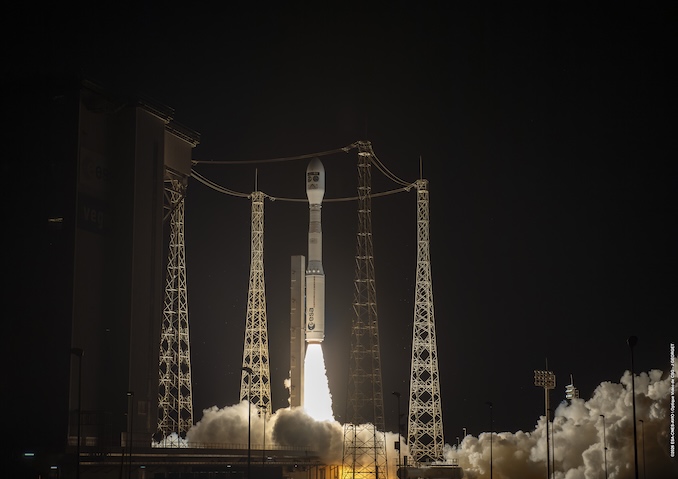
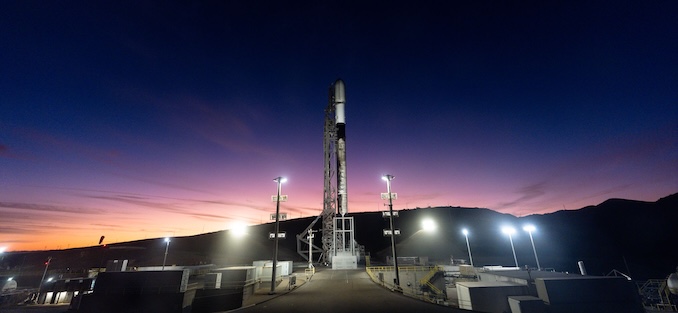
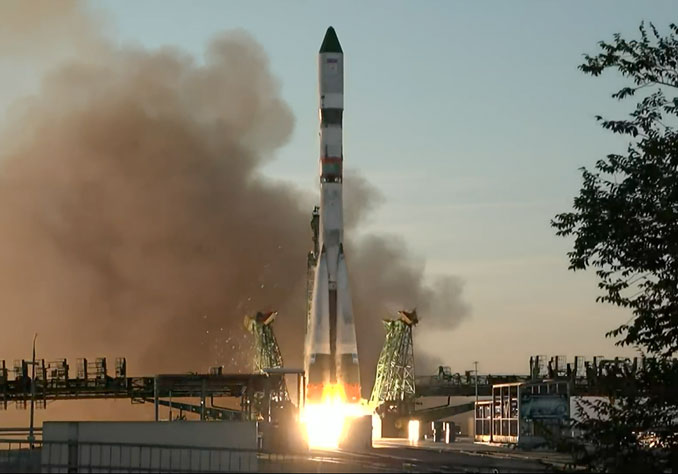
The freighter, operated by the Russian space agency Roscosmos, lifted off from the Baikonur Cosmodrome in Kazakhstan on Wednesday, Sept. 16, 2026, at 9:33 a.m. EDT (1333 UTC). That launch date represented a postponement of roughly one week from the mission's original schedule, the result of a problem with the third stage of the Soyuz-2-1b rocket assigned to carry the cargo ship uphill.
Roscosmos did not disclose the nature of the technical issue publicly. Whatever the fault was, it was significant enough that the rocket had to be rolled off the launch pad and returned to its hangar for attention before a second launch attempt could be mounted. Such rollbacks are a costly and time-consuming step, requiring the vehicle to be cycled back through processing facilities and then returned to the pad once engineers were satisfied.
The mission also carried a small piece of history with it: this was the first time the Soyuz-2-1b variant had been used to launch a Progress resupply flight. The rocket family has long served Russian launch needs, but pairing this particular configuration with a Progress mission was a new combination for the program.
An Uncommon but Not Unprecedented Rendezvous
From liftoff to docking, the journey took three days — longer than the more typical two-day rendezvous sequence that Progress vehicles usually fly to reach the station. The extended profile was not a sign of trouble but a consequence of orbital geometry dictated by the launch date.
"Uncommon but not unprecedented," said Rob Navias, NASA's commentator in mission control. "The orbital mechanics for this particular launch date of September 16th drove the Progress to a three-day, 49-orbit rendezvous profile."
In practical terms, that meant the freighter spent an extra day chasing the station around the planet, phasing its orbit gradually until the geometry lined up for a final approach. The automated Kurs system handled the terminal phase, with the crew monitoring from inside the outpost and flight controllers tracking the vehicle's progress from the ground. The successful hook closure at 1344 UTC capped a chase that spanned 49 trips around Earth.
What the Freighter Brought
The cargo mission carried 2.8 tons of food, fuel and supplies to the station, a load that will help sustain the crew and keep the outpost's systems running. Resupply flights of this kind are the logistical backbone of a permanently crewed orbital laboratory, delivering everything from crew provisions to propellant and hardware that cannot be manufactured on orbit.
Progress M-35 is expected to remain docked to the Poisk module for about five months. During that time it will serve as both a storage annex and, eventually, as a disposal vehicle — a role Russian Progress craft have filled for decades, taking on trash and unneeded equipment before departing to burn up in Earth's atmosphere. For now, though, its job is simpler: stay attached, stay pressurized, and give the crew access to several tons of fresh cargo.
Expedition 75 Looks On
The docking unfolded with the station's full complement aboard. The crew making up Expedition 75 includes NASA astronauts Jessica Meir, Anil Menon and Jack Hathaway, along with Russia's Andrey Fedyaev and the European Space Agency's Sophie Adenot. Dubrov and Kikina, who monitored the approach from the Russian segment, round out the multinational team.
With the freighter secured, the crew can begin the process of opening hatches, equalizing pressure and unloading the newly arrived supplies — work that typically begins within hours of a successful docking and continues over the following days and weeks as cargo is inventoried and stowed throughout the station.
The arrival also clears the way for the outpost's regular rhythm of operations to continue, with the Progress now counted among the vehicles parked at the station's various ports. Its five-month stay will overlap with a portion of Expedition 75's mission, and its eventual departure will free the Poisk port for the next Russian cargo ship in the queue.
For Roscosmos, the flight closes out a launch campaign that began with a rocket rolled back to its hangar and ended with a clean automated docking high above the Black Sea — a reminder that even routine resupply runs can test a program's patience before the hardware ever leaves the ground.
This article is based on reporting by Spaceflight Now. Read the original article.
Originally published on spaceflightnow.com