When relativity runs out of road
Universe Today has published the opening installment of a series revisiting one of cosmology's most difficult questions: what happened at the beginning of the universe, and whether that question even makes sense. The piece starts from a familiar problem in modern physics. If general relativity is run backward through cosmic expansion, it points toward a singularity, a place where the equations stop working rather than deliver a usable description.
That is the central tension in the article. The problem is not simply that physicists do not know what came before the big bang. It is that the mathematical framework used to describe gravity and cosmic evolution appears to fail at exactly the point where the question becomes most urgent.
Enter Wheeler and DeWitt
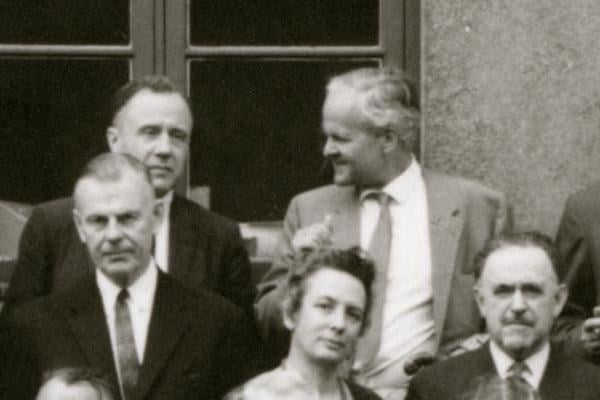
The article traces the story back to the 1960s and to physicist John Wheeler, described as one of the rare figures able to move confidently between general relativity and quantum mechanics. At a time when physicists were successfully quantizing many small, high-energy systems, Wheeler and Bryce DeWitt developed mathematical machinery that treated the universe itself as a quantum object.
That work is associated with the Wheeler-DeWitt equation, a foundational concept in quantum cosmology. The candidate source text presents it as an early attempt to push past the singularity problem by bringing quantum ideas to the entire universe rather than just to particles or fields inside it. In other words, if classical gravity fails at the beginning, perhaps the beginning has to be described in an entirely different language.

Why Hawking comes later
Although Stephen Hawking is the more famous name in popular discussions of cosmic origins, Universe Today makes clear that his later proposal did not emerge in a vacuum. The article positions Hawking's argument that the universe had no beginning as part of a longer effort to understand what the question of a beginning means once quantum mechanics enters the picture.
The key idea, as the source frames it, is not merely that the universe has existed forever. It is the more radical suggestion that asking what came before the beginning may be like asking a malformed question. In that view, the notion of a conventional temporal starting point could break down under a quantum description of the cosmos.
An old debate with modern staying power
The significance of the piece lies in its reminder that some of the deepest scientific problems do not yield to straightforward extrapolation. Running the equations backward works only up to a point. After that, the failure of the mathematics becomes part of the story. That is why quantum cosmology remains so compelling: it tries to address not just an unanswered problem, but a problem whose classical framing may be incomplete.
Universe Today also takes care not to present Hawking's view as settled fact. The source text explicitly notes that he was not infallible and that the journey through these ideas may still end in disagreement. That caution is important. Questions about the beginning of the universe sit at the boundary between physical theory, mathematical consistency, and philosophical interpretation.
Still, the revival of interest in these concepts shows why they continue to matter. They force physics to confront its own limits. They also test whether human intuitions about time, beginnings, and causation survive contact with the deepest levels of theory.
In that sense, this is not just a retrospective on famous names in cosmology. It is a reminder that one of science's oldest questions may depend on whether the question itself is well-posed. That is why the Wheeler-DeWitt framework and Hawking's later arguments continue to attract attention decades after they were first proposed.
This article is based on reporting by Universe Today. Read the original article.
Originally published on universetoday.com